Overview
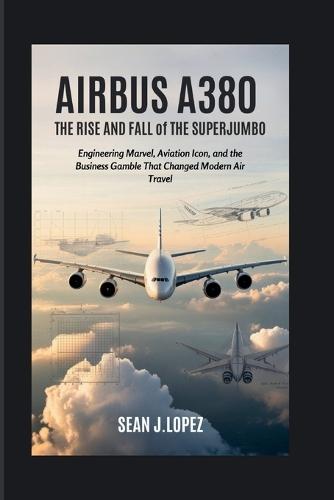
The Airbus A380 was the largest passenger aircraft ever built, a double-deck, four-engine giant designed to carry more than 800 passengers in an all-economy layout or around 500 in typical airline service. Launched in 2000 and entering commercial service in 2007 with Singapore Airlines, it represented the most ambitious civil aerospace project undertaken in Europe. The A380 was created to challenge Boeing's dominance with the 747 and to meet forecasts that global air travel would increasingly rely on high-capacity aircraft flying between major hubs. To make it possible, Airbus developed new materials, advanced aerodynamics, the quietest long-haul engines of its time, and a cockpit designed for commonality with other Airbus models. Its production required cooperation across Europe: wings were built in the United Kingdom, fuselage sections in Germany, the tail in Spain, and final assembly in Toulouse, France. A special logistics network-using ships, barges, and custom road convoys-was built to transport its oversized parts. Despite its technical achievements and popularity with passengers, the A380 faced major challenges. Airlines increasingly favored smaller, fuel-efficient twinjets such as the Boeing 787 and Airbus A350, which could fly directly between more cities at lower cost. The A380's high operating expenses, limited flexibility, and reliance on a hub-and-spoke model reduced its appeal. By 2019, Airbus announced the end of production, closing the chapter on the superjumbo after just 251 deliveries. Inside you will discover: How Airbus engineers solved unprecedented challenges in aerodynamics, weight, and materials. The role of each European factory and the complex logistics that made the aircraft possible. Why airlines such as Emirates championed the A380, while others avoided it. The market forces and strategic decisions that limited its long-term success. How the end of A380 production reflects broader changes in global aviation. Airbus A380: The Rise and Fall of the Superjumbo is a detailed account of the aircraft's conception, development, service history, and legacy. It combines engineering, business strategy, and aviation history to explain how one of the greatest achievements in aerospace became a symbol of both innovation and miscalculation.
Full Product Details
Author: Sean J Lopez
Publisher: Independently Published
Imprint: Independently Published
Dimensions:
Width: 15.20cm
, Height: 1.30cm
, Length: 22.90cm
Weight: 0.336kg
ISBN: 9798266883185
Pages: 246
Publication Date: 24 September 2025
Audience:
General/trade
,
General
Format: Paperback
Publisher's Status: Active
Availability: Available To Order

We have confirmation that this item is in stock with the supplier. It will be ordered in for you and dispatched immediately.