Overview
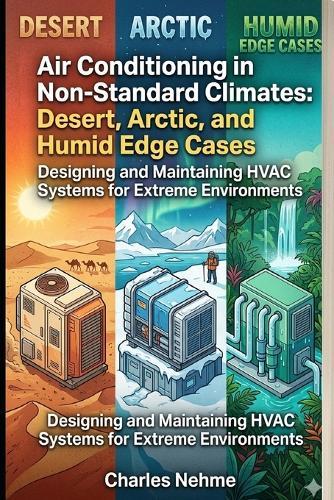
Heating, ventilation, and air conditioning systems are traditionally designed using standardized climatic assumptions, predictable seasonal patterns, and established engineering norms. Most HVAC textbooks, standards, and design references rely heavily on ""typical"" weather conditions and generalized ASHRAE design data. Yet, in reality, many parts of the world operate far outside these assumptions. Engineers today increasingly face projects located in deserts with extreme solar loads and sandstorms, arctic regions with prolonged subzero temperatures and freezing ventilation systems, coastal tropical climates with relentless humidity and corrosion, and hybrid climates where buildings may require cooling during the day and heating at night. Climate volatility, urbanization, sustainability demands, and global infrastructure expansion are pushing HVAC systems into environments that conventional design methods were never fully intended to address. This book was written to bridge that gap. Air Conditioning in Non-Standard Climates: Desert, Arctic, and Humid Edge Cases explores the realities of HVAC engineering in some of the harshest and most complex environmental conditions on Earth. Rather than focusing solely on textbook theory, this book emphasizes practical engineering adaptation, operational reliability, psychrometric behavior under extreme conditions, and resilient HVAC strategies for unusual climates. The content combines engineering fundamentals with field-oriented problem solving. It examines how environmental extremes influence cooling loads, humidity control, refrigerant performance, ventilation reliability, energy efficiency, corrosion, filtration, controls, and long-term system durability. Special attention is given to climate edge cases that are often overlooked in conventional HVAC literature, including: Desert climates with intense solar gain and airborne dust Arctic and subarctic conditions with freeze protection challenges Humid tropical regions dominated by latent loads Coastal environments with severe corrosion risks Hybrid climates with seasonal reversals and unstable weather patterns Remote and mission-critical facilities operating under environmental stress As climate conditions continue to evolve globally, HVAC engineers must move beyond rigid assumptions and develop systems that are adaptable, resilient, energy conscious, and capable of operating under uncertainty. The future of HVAC engineering will not be defined only by efficiency, but also by survivability, flexibility, and environmental responsiveness. This book aims to contribute to that future. It is my hope that the material presented here helps engineers, designers, operators, and students better understand the complexities of extreme climate HVAC applications and inspires more innovative approaches to environmental control in challenging regions worldwide.
Full Product Details
Author: Charles Nehme
Publisher: Independently Published
Imprint: Independently Published
Dimensions:
Width: 15.20cm
, Height: 1.40cm
, Length: 22.90cm
Weight: 0.363kg
ISBN: 9798197422583
Pages: 268
Publication Date: 18 May 2026
Audience:
General/trade
,
General
Format: Paperback
Publisher's Status: Active
Availability: Available To Order

We have confirmation that this item is in stock with the supplier. It will be ordered in for you and dispatched immediately.