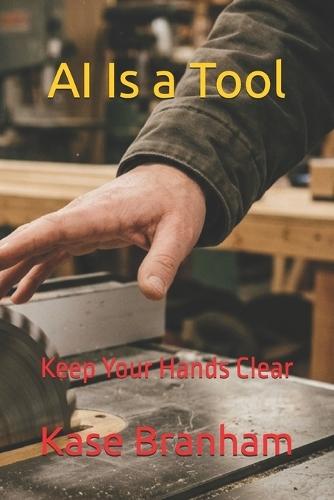
Overview
AI is not thinking. It is not making mistakes. It is not hallucinating, getting confused, or trying its best. It is executing a mathematical function on the input you gave it - and the output you got is the direct consequence of what you typed, how you structured it, and what you understood about the tool you were using. Most people do not understand this. Most people treat AI the way a child treats a video game that just beat them: the system cheated, the system is broken, the system failed. It did none of these things. It followed its rules exactly. The user just didn't know what the rules were. This book is an operator's manual for the most misunderstood tool ever built. Written by an independent researcher and construction contractor with over two decades of hands-on trade experience, AI Is a Tool approaches language models the same way a journeyman approaches any unfamiliar piece of equipment: learn what it actually does, learn what it cannot do, learn the safety rules, and then put it to work. No hype. No mysticism. No prompt engineering tricks. Just the discipline of understanding a tool well enough to produce real work with it. The book begins with a mindset reset. If you are blaming the AI for bad output, you are in the same phase as every novice who ever blamed a dull knife, a broken sewing machine, or an unfair video game. The tool is not broken. Your mental model of the tool is incomplete. Every master of every tool in history has crossed this gap, and this book shows you how to cross it with AI. From there, the book maps the specific limits of language models - where they fail at math, lose track of time, and cannot recognize something they have never seen before - not to discourage use, but to establish where verification is required and where the operator must supply what the tool cannot. The practical core of the book introduces a universal production framework built on a single insight from manufacturing: there are exactly two methods of making anything. Additive - building up from nothing. Subtractive - cutting away from a block. AI workflows follow the same binary. The context window is your workbench. If the piece fits on the bench, work it whole. If it doesn't, modularize it, inspect each module, and inspect the assembly. Quality control is not a final step - it is a discipline applied at every stage, at the correct detail level, with a lower bound set before moving on. The final sections examine how language models function as components in larger systems - documents as programmable endpoints, access control for AI-readable content, security vulnerabilities in conversational interfaces - and look ahead to the commerce, identity, and trust infrastructure that is being built around them. This book was itself produced using the workflow it describes. Every chapter was researched, drafted, revised, and verified through AI-assisted production directed by a human operator who made every structural decision, performed every verification pass, and takes full responsibility for the final text. The book is the proof of its own argument. AI Is a Tool is for anyone who uses language models and suspects they are not getting what they should. It is for professionals producing real work, not researchers building models. It is for the skeptic who has tried AI and walked away unimpressed, and for the daily user who has never examined the mechanics underneath. Stop blaming the tool. Learn the tool. Keep your hands clear.
Full Product Details
Author: Kase Branham
Publisher: Independently Published
Imprint: Independently Published
Dimensions:
Width: 15.20cm
, Height: 0.90cm
, Length: 22.90cm
Weight: 0.236kg
ISBN: 9798255269297
Pages: 170
Publication Date: 07 April 2026
Audience:
General/trade
,
General
Format: Paperback
Publisher's Status: Active
Availability: Available To Order

We have confirmation that this item is in stock with the supplier. It will be ordered in for you and dispatched immediately.