Overview
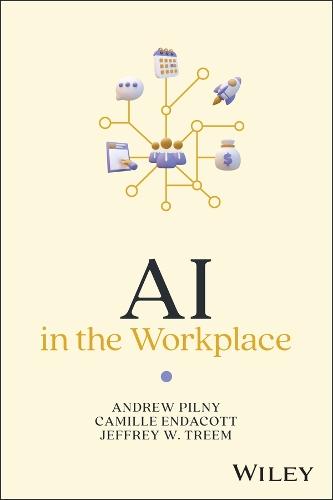
Offers a smart, witty guide to understanding AI's role in the future of work With AI tools now integrated into everything from hiring systems and team collaboration platforms to strategic decision-making processes, there’s a pressing need to move beyond either fear or hype. AI in the Workplace explores how artificial intelligence is reshaping organizational life, often in ways that are subtle yet deeply consequential. This book answers that need by providing an accessible, critical, and often humorous guide for understanding what AI is, how it works, and what it means for the ways we work and interact in professional settings. AI in the Workplace demystifies AI through a blend of theory, storytelling, and practical insight. Readers are introduced to foundational AI concepts without overwhelming technical detail and are given frameworks to think through pressing questions of algorithmic management, workplace surveillance, bias, and ethics. Through contemporary case studies, real-world examples, reflective exercises, and actionable strategies, the book equips readers to think critically and act thoughtfully in the evolving AI landscape, whether that means embracing tools, resisting trends, or something in between. Helping readers grasp how AI is not simply replacing human labor, but reorganizing work itself, AI in the Workplace: Introduces the novel Human-Story-Text-AI Network model to conceptualize AI's integration into organizational life Examines algorithmic management through a critical lens to offer a fresh perspective on emerging managerial practices Discusses overlooked issues such as bias in training data and the sociopolitical dimensions of data-centric AI Includes hands-on thought experiments at the end of each chapter to stimulate discussion and critical thinking Explores “Singularity Management” and the implications of AI on human roles, ethics, and empathy in organizations Offers a five-part framework (the ”5 Es”) to guide ethical and strategic decision-making in AI-driven environments Provides a strategy that balances innovation and safety for regulating AI in the workplace Perfect for students and professionals alike, AI in the Workplace serves advanced undergraduate and graduate courses in Communication, Business, Technology Management, and related fields. It is also an invaluable resource for executive education and professional development in AI adoption, leadership, and organizational change.
Full Product Details
Author: Andrew Pilny (University of Kentucky) ,
Camille Endacott (University of North Carolina Charlotte) ,
Jeffrey W. Treem (Northwestern University)
Publisher: John Wiley & Sons Inc
Imprint: Wiley-Blackwell
Dimensions:
Width: 14.70cm
, Height: 1.80cm
, Length: 22.40cm
Weight: 0.340kg
ISBN: 9781394247561
ISBN 10: 1394247567
Pages: 208
Publication Date: 26 November 2025
Audience:
Professional and scholarly
,
Professional & Vocational
Format: Paperback
Publisher's Status: Active
Availability: Out of stock

The supplier is temporarily out of stock of this item. It will be ordered for you on backorder and shipped when it becomes available.
Author Information
ANDREW PILNY, is an Associate Professor in the departments of Communication and Sociology at the University of Kentucky. CAMILLE ENDACOTT, is an Assistant Professor in the Department of Communication Studies at the University of North Carolina, Charlotte. JEFFREY W. TREEM, is the Theodore R. and Annie Laurie Sills Professor at the Northwestern University Medill School of Journalism, Media, Integrated Marketing Communications.