Overview
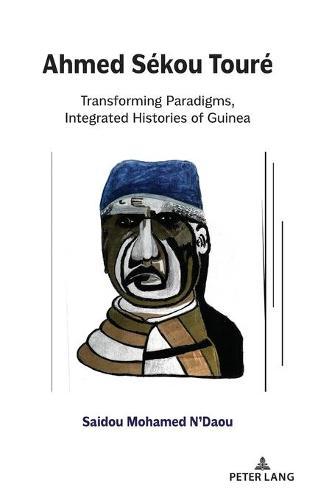
This book is different from existing works on Ahmed Sékou Touré and the Guinean Democratic Party (PDG) and their struggle for national independence. Its uniqueness stems from the fact that all the chapters focus on the Guinean traditions of struggle over memories between the elites and the subordinates, highlighting the independent initiatives of the latter. Other books on Ahmed Sékou Touré are primarily based on their writers’ political or social history perspectives. This is the first study that equally integrates political and social history to address the theoretical and methodological issues of identity and construction of identity as necessary for understanding the roles of the elites and the subordinates in their struggles for access to power and resources in colonial and postcolonial Guinea. In this book, Saidou Mohamed N’Daou provides equal space for the initiatives and interests of the elites and the subordinates. Ahmed Sékou Touré used the ideology of the PDG as a mirror reflection of the social changes that he and his party intended to create. N’Daou argues that one must displace the ideology of the PDG from the center to understand Ahmed Sékou Touré's personality, his role in Guinea’s independence and his leadership of the PDG as well as expand the analytical space to allow other voices to be heard. N’Daou reaches this goal by discovering Ahmed Sékou Touré’s first order of knowledge, another unique feature of this book.
Full Product Details
Author: Saidou Mohamed N’Daou
Publisher: Peter Lang Publishing Inc
Imprint: Peter Lang Publishing Inc
Edition: New edition
Weight: 0.557kg
ISBN: 9781433183232
ISBN 10: 1433183234
Pages: 322
Publication Date: 24 August 2021
Audience:
Professional and scholarly
,
Professional & Vocational
Format: Hardback
Publisher's Status: Active
Availability: Manufactured on demand

We will order this item for you from a manufactured on demand supplier.
Reviews
Based on long-term ethnographic fieldwork, archival research, and autobiographical analysis, Saidou Mohamed N'Daou offers unique insights by his rich descriptions of the struggles over memories in Guinea, from the precolonial to the postcolonial, socialist era. N'Daou convincingly shows that the elite and the rest of the population had competing nationalist agendas in which both mobilized images of great Mande empires. -Jan Jansen, Leiden University, The Netherlands Saidou Mohamed N'Daou offers a unique and well-informed perspective on multiple aspects of the political and cultural history of Guinea, focused on the time of Ahmed Sekou Toure, who led the nation into independence and later dictatorship. He combines his autobiographical perspective, as a student inculcated with the ideology put forth by Ahmed Sekou Toure, with an analysis of that ideology. His record of that historical development leads to a sort of intellectual autobiography, illustrating the steps by which he cast off the indoctrination. The book crosses generic lines: it is documentary, philosophical, autobiographical, and in places speculative. In this amalgam lies its value. One might here offer a disquisition on how the political history of African states has been ignored. Saidou Mohamed N'Daou's book is a corrective to that blindness. -Stephen Belcher has taught at the University of Nouakchott (Mauritania), The Pennsylvania State University, and The Julius Nyerere University in Kankan (Guinea)
“Based on long-term ethnographic fieldwork, archival research, and autobiographical analysis, Saidou Mohamed N’Daou offers unique insights by his rich descriptions of the struggles over memories in Guinea, from the precolonial to the postcolonial, socialist era. N’Daou convincingly shows that the elite and the rest of the population had competing nationalist agendas in which both mobilized images of great Mande empires.” —Jan Jansen, Leiden University, The Netherlands “Saidou Mohamed N’Daou offers a unique and well-informed perspective on multiple aspects of the political and cultural history of Guinea, focused on the time of Ahmed Sékou Touré, who led the nation into independence and later dictatorship. He combines his autobiographical perspective, as a student inculcated with the ideology put forth by Ahmed Sékou Touré, with an analysis of that ideology. His record of that historical development leads to a sort of intellectual autobiography, illustrating the steps by which he cast off the indoctrination. The book crosses generic lines: it is documentary, philosophical, autobiographical, and in places speculative. In this amalgam lies its value. One might here offer a disquisition on how the political history of African states has been ignored. Saidou Mohamed N’Daou’s book is a corrective to that blindness.” —Stephen Belcher has taught at the University of Nouakchott (Mauritania), The Pennsylvania State University, and The Julius Nyerere University in Kankan (Guinea)
Mohamed N'Daou offers a unique and well-informed perspective on multiple aspects of the political and cultural history of Guinea, focused on the time of Ahmed Sekou Toure, who led the nation into independence and later dictatorship. He combines his autobiographical perspective, as a student inculcated with the ideology put forth by Ahmed Sekou Toure, with an analysis of that ideology. His record of that historical development leads to a sort of intellectual autobiography, illustrating the steps by which he cast off the indoctrination. The book crosses generic lines: it is documentary, philosophical, autobiographical, and in places speculative. In this amalgam lies its value. One might here offer a disquisition on how the political history of African states has been ignored. Saidou Mohamed N'Daou's book is a corrective to that blindness. -Stephen Belcher has taught at the University of Nouakchott (Mauritania), The Pennsylvania State University, and The Julius Nyerere University in Kankan (Guinea) Based on long-term ethnographic fieldwork, archival research, and autobiographical analysis, Saidou Mohamed N'Daou offers unique insights by his rich descriptions of the struggles over memories in Guinea, from the precolonial to the postcolonial, socialist era. N'Daou convincingly shows that the elite and the rest of the population had competing nationalist agendas in which both mobilized images of great Mande empires. -Jan Jansen, Leiden University, The Netherlands
Based on long-term ethnographic fieldwork, archival research, and autobiographical analysis, Saidou Mohamed N'Daou offers unique insights by his rich descriptions of the struggles over memories in Guinea, from the precolonial to the postcolonial, socialist era. N'Daou convincingly shows that the elite and the rest of the population had competing nationalist agendas in which both mobilized images of great Mande empires. -Jan Jansen, Leiden University, The Netherlands Mohamed N'Daou offers a unique and well-informed perspective on multiple aspects of the political and cultural history of Guinea, focused on the time of Ahmed Sekou Toure, who led the nation into independence and later dictatorship. He combines his autobiographical perspective, as a student inculcated with the ideology put forth by Ahmed Sekou Toure, with an analysis of that ideology. His record of that historical development leads to a sort of intellectual autobiography, illustrating the steps by which he cast off the indoctrination. The book crosses generic lines: it is documentary, philosophical, autobiographical, and in places speculative. In this amalgam lies its value. One might here offer a disquisition on how the political history of African states has been ignored. Saidou Mohamed N'Daou's book is a corrective to that blindness. -Stephen Belcher has taught at the University of Nouakchott (Mauritania), The Pennsylvania State University, and The Julius Nyerere University in Kankan (Guinea)
Saidou Mohamed N'Daou offers a unique and well-informed perspective on multiple aspects of the political and cultural history of Guinea, focused on the time of Ahmed Sekou Toure, who led the nation into independence and later dictatorship. He combines his autobiographical perspective, as a student inculcated with the ideology put forth by Ahmed Sekou Toure, with an analysis of that ideology. His record of that historical development leads to a sort of intellectual autobiography, illustrating the steps by which he cast off the indoctrination. The book crosses generic lines: it is documentary, philosophical, autobiographical, and in places speculative. In this amalgam lies its value. One might here offer a disquisition on how the political history of African states has been ignored. Saidou Mohamed N'Daou's book is a corrective to that blindness. -Stephen Belcher has taught at the University of Nouakchott (Mauritania), The Pennsylvania State University, and The Julius Nyerere University in Kankan (Guinea) Based on long-term ethnographic fieldwork, archival research, and autobiographical analysis, Saidou Mohamed N'Daou offers unique insights by his rich descriptions of the struggles over memories in Guinea, from the precolonial to the postcolonial, socialist era. N'Daou convincingly shows that the elite and the rest of the population had competing nationalist agendas in which both mobilized images of great Mande empires. -Jan Jansen, Leiden University, The Netherlands
Author Information
Saidou Mohamed N’Daou (PhD, University of Minnesota) is Professor of History at Chicago State University. He is the author of Sangalan Oral Traditions and co-editor of Mande Mansa.