|
|
|||
|
||||
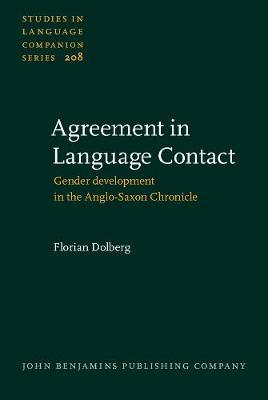
OverviewGender in English changed dramatically from the elaborate system found in Old English to the very simple he/she/it-alternation in use from (late) Middle English onwards. While either system is well described and understood, the change from one to the other is anything but: more than 120 years of research into the matter provided no prevailing opinion - let alone a consensus - regarding how it proceeded or why it occurred. The present study is the first to address this issue in the context of language contact with Old Norse, assessing this contact influence in relation to both language-formal and semantico-cognitive factors. This empirical, functional account uses rigorous, innovative methodology, interdisciplinary evidence, and well-established models of synchronic variation in diachronic application to draw a fine-grained picture of the variation, change, and loss of gender from Old to Middle English and its underlying mainsprings. The resulting plausible and parsimonious explanations will prove relevant to students and scholars of historical linguistics, morpho-syntax, language variation and change, or language contact, to name but a few. Full Product DetailsAuthor: Florian Dolberg (TU Dortmund University)Publisher: John Benjamins Publishing Co Imprint: John Benjamins Publishing Co Volume: 208 Weight: 0.810kg ISBN: 9789027203298ISBN 10: 9027203296 Pages: 351 Publication Date: 18 June 2019 Audience: Professional and scholarly , Professional & Vocational Format: Hardback Publisher's Status: Active Availability: Available To Order We have confirmation that this item is in stock with the supplier. It will be ordered in for you and dispatched immediately. Table of ContentsReviewsAuthor InformationTab Content 6Author Website:Countries AvailableAll regions |
||||