Overview
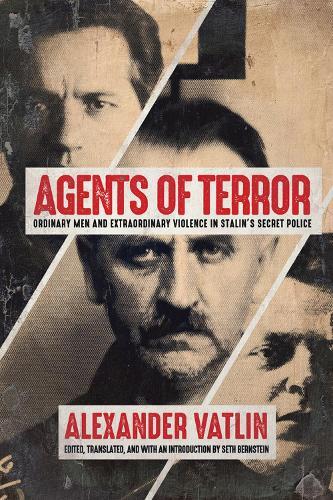
In the Great Terror of 1937–38 more than a million Soviet citizens were arrested or killed for political crimes they didn’t commit. What kind of people carried out this violent purge, and what motivated them? This book opens up the world of the Soviet perpetrator for the first time. Focusing on Kuntsevo, the Moscow suburb where Stalin had a dacha, Alexander Vatlin shows how Stalinism rewarded local officials for inventing enemies. Agents of Terror reveals stunning, detailed evidence from archives available for a limited time in the 1990s. Going beyond the central figures of the terror, Vatlin takes readers into the offices and interrogation rooms of secret police at the district level. Spurred at times by ambition, and at times by fear for their own lives, agents rushed to fulfill quotas for arresting “enemies of the people” —even when it meant fabricating the evidence. Vatlin pulls back the curtain on a Kafkaesque system, forcing readers to reassess notions of historical agency and moral responsibility in Stalin-era crimes.
Full Product Details
Author: Alexander Vatlin ,
Seth Bernstein ,
Oleg Khlevniuk
Publisher: University of Wisconsin Press
Imprint: University of Wisconsin Press
Dimensions:
Width: 15.20cm
, Height: 1.70cm
, Length: 22.80cm
Weight: 0.421kg
ISBN: 9780299310806
ISBN 10: 0299310809
Pages: 216
Publication Date: 30 October 2016
Audience:
Professional and scholarly
,
Professional & Vocational
Format: Hardback
Publisher's Status: Active
Availability: In Print

This item will be ordered in for you from one of our suppliers. Upon receipt, we will promptly dispatch it out to you. For in store availability, please contact us.
Reviews
Groundbreaking. In the first detailed description of Stalin's mass terror, Vatlin unfolds the day-to-day working of the Soviet political police who carried out orders to select, arrest, interrogate, and often murder their fellow citizens. An absorbing, heartrending account. -David Shearer, author of Policing Stalin's Socialism Although the literature on the Great Terror has improved markedly over the past twenty-five years, only a handful of case studies consider how the purges took place at the grassroots level. Thankfully, Alexander Vatlin's pathbreaking work has now become available to English-speaking audiences. One can only hope that Agents of Terror will inspire more research on the purge's perpetrators and victims as well as on the broader sociology of this brutal period. -David Brandenberger, author of Propaganda State in Crisis A sensationally significant, detailed microhistory of Stalin's Great Terror, based on the criminal files of NKVD agents who were arrested as scapegoats at the end of the terror-what some historians have called the purge of the purgers. -Lynne Viola, author of The Unknown Gulag Make[s] a vital contribution to the growing literature on perpetrators under Stalin. - The Times Literary Supplement A landmark work that introduces new dimensions to the study of Stalinist terror. - Canadian Slavonic Papers
Groundbreaking. In the first detailed description of Stalin's mass terror, Vatlin unfolds the day-to-day working of the Soviet political police who carried out orders to select, arrest, interrogate, and often murder their fellow citizens. An absorbing, heartrending account. -David Shearer, author of Policing Stalin's Socialism Although the literature on the Great Terror has improved markedly over the past twenty-five years, only a handful of case studies consider how the purges took place at the grassroots level. Thankfully, Alexander Vatlin's pathbreaking work has now become available to English-speaking audiences. One can only hope that Agents of Terror will inspire more research on the purge's perpetrators and victims as well as on the broader sociology of this brutal period. -David Brandenberger, author of Propaganda State in Crisis A sensationally significant, detailed microhistory of Stalin's Great Terror, based on the criminal files of NKVD agents who were arrested as scapegoats at the end of the terror-what some historians have called the purge of the purgers. -Lynne Viola, author of The Unknown Gulag
Author Information
Alexander Vatlin is a professor of history at Moscow State University. The author of many works in Russian, he is the editor of Piggy Foxy and the Sword of Revolution: Bolshevik Self Portraits. Seth Bernstein is an assistant professor of history at the Higher School of Economics in Moscow.