|
|
|||
|
||||
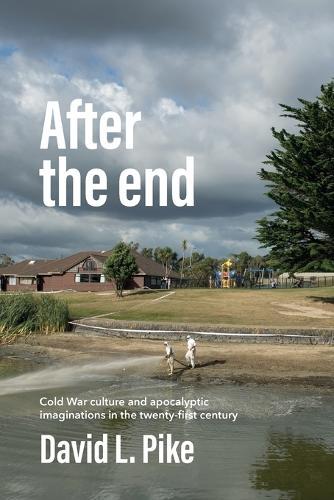
OverviewAfter the End argues that the cultural imaginaries and practices of the Cold War continue to deeply shape the present in profound but largely unnoticed ways across the global North and in the global South. The argument draws examples from literature and literary criticism, film, music, the historical and social scientific record and past and present physical sites to consider the bunker as a material form, an image and as a fantasy that took shape in the global North in the 1960s and that spread globally into the twenty-first century. After the End reminds us not only that most of the world's peoples have lived with or died from apocalyptic conditions for centuries, but that the Cold War imaginaries that grew from and fed those conditions, continue to survive as well. Full Product DetailsAuthor: David L. PikePublisher: Manchester University Press Imprint: Manchester University Press Dimensions: Width: 15.60cm , Height: 2.50cm , Length: 23.40cm Weight: 0.680kg ISBN: 9781526195395ISBN 10: 1526195399 Pages: 360 Publication Date: 20 January 2026 Audience: College/higher education , Professional and scholarly , Tertiary & Higher Education , Professional & Vocational Format: Paperback Publisher's Status: Forthcoming Availability: Not yet available, will be POD This item is yet to be released. You can pre-order this item and we will dispatch it to you upon it's release. This is a print on demand item which is still yet to be released. Table of ContentsReviews'Pike examines the legacy of the Cold War through what he calls “the bunker fantasy,” an ambivalent desire containing not only the promise of safety and shelter but also the prospect of fear, isolation, and confinement.' —CHOICE 'Throughout the book, Pike turns to a dizzying assortment of “contradictory” yet illuminating examples, from Afrofuturism to Albanian civil defence architecture. His chapters on twenty-first-century adaptations of the Cold War built environment offer a particularly useful model for what a post-Cold War formalism might look like.' — Brian K Goodman, Arizona State University -- . 'Pike examines the legacy of the Cold War through what he calls “the bunker fantasy,” an ambivalent desire containing not only the promise of safety and shelter but also the prospect of fear, isolation, and confinement.' CHOICE -- . Author InformationDavid L. Pike is a Professor of Literature at American University Tab Content 6Author Website:Countries AvailableAll regions |
||||