Overview
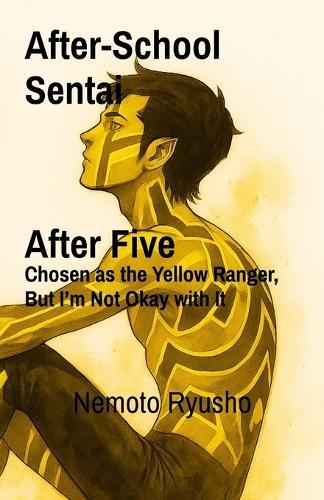
A Sentai Hero who never wanted to be one - and a world that runs on pure absurdity. When high school student Ieji Calcium saves a stray cat from being hit by a car, he wakes up not in a hospital, but in his school's infirmary - only to discover he's been illegally resurrected and forcibly transformed into a Sentai Hero. His new identity? Yellow, the least glamorous color on the team, the forgotten hue of every sidekick's jumpsuit. Guided - or perhaps condemned - by a delusional school principal who believes heroes must absorb the world's evil to maintain balance, and a narcotic-addicted, unlicensed surgeon who claims to have infused him with Gandhi's DNA, Ieji finds himself unwillingly enrolled in a bizarre underground hero program. By day, he attends classes and fails math tests; by night, he fights black-suited monsters whose true nature may be closer to bureaucracy, despair, or human loneliness than any alien threat. Through absurd missions, curry-related jokes, and existential arguments in the locker room, Ieji begins to sense that something deeper is wrong - not just with his world, but with reality itself. His teammates are walking contradictions: the hot-blooded leader with depression, the overachiever who fakes courage for likes, the mysterious girl who believes every battle resets time, and a silent cyborg who writes poetry about the moon. Together, they form After-Five Sentai, a dysfunctional squad bound not by justice, but by exhaustion. As the story spirals between cosmic nonsense and aching sincerity, Ieji's struggle becomes a mirror of a generation caught between irony and meaning. Each monster they face seems less like an enemy and more like a symptom: stress, conformity, algorithmic surveillance, and the slow death of empathy. Even the battles begin to feel like metaphors - stage plays performed to keep society from collapsing into silence. Yet amid the absurdity, After-School Sentai: After Five finds unexpected beauty. Behind the comedy lies a quiet sadness - the pain of those who still want to believe in something pure, even when purity has become a punchline. The novel dissects the anatomy of modern heroism, showing that the true enemy may not be evil itself, but indifference. Written with a sharp balance of satire and sincerity, the book blends elements of Japanese tokusatsu tradition with existential comedy, postmodern philosophy, and a touch of surreal tenderness. It draws influence from writers like Haruki Murakami and Kurt Vonnegut, as well as the tragic absurdity of Hideaki Anno's heroes, yet stands wholly on its own: a uniquely Japanese vision of what happens when the myth of justice collides with the chaos of everyday life. By the end, Ieji's journey becomes less about saving others and more about understanding what it means to exist at all. In a collapsing world where meaning flickers like a faulty neon sign, After-Five suggests that maybe heroism isn't about triumph or glory - but about continuing to care when everything feels pointless. This is not a parody alone, but an elegy for youth, idealism, and the fragile courage to laugh at the void. After-School Sentai: After Five turns color-coded justice into a philosophical kaleidoscope, transforming absurd comedy into a mirror of the modern soul.
Full Product Details
Author: Nemoto Ryusho ,
Luna R
Publisher: Ryusho Nemoto Works
Imprint: Ryusho Nemoto Works
Dimensions:
Width: 14.00cm
, Height: 2.40cm
, Length: 21.60cm
Weight: 0.490kg
ISBN: 9798994071205
Pages: 424
Publication Date: 27 November 2025
Audience:
General/trade
,
General
Format: Paperback
Publisher's Status: Active
Availability: Available To Order

We have confirmation that this item is in stock with the supplier. It will be ordered in for you and dispatched immediately.