|
|
|||
|
||||
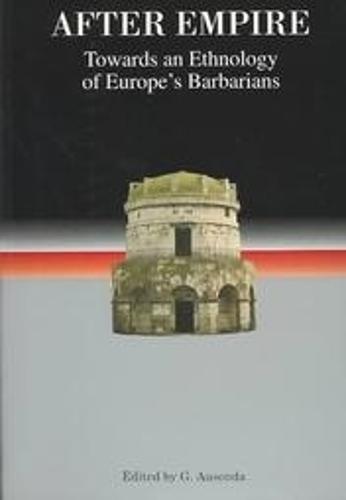
OverviewThe decline of the Roman Empire was compounded by the spread westwards of tribes from Eastern Europe, settling areas from which the indigenous populations had been cleared by the spread of the power of Rome; those populations themselves, notably the Celts, were pushed to the fringes of the former empire. These migrations of barbarian peoples between the fourth and ninth centuries left no historical record in the accepted sense, but it is the recovery of the customs and beliefs of these populations that forms the common purpose of the studies in this book, for during these centuries the traits and attitudes developed which are at the root of present-day Europe: feudalism, the status level achieved by the merchant class, the beginnings of an ideology that led to the separation of church and state, the demise of slavery as an inefficient mode of production, the origin of national identities. GIORGIO AUSENDA teaches at the Center for Interdisciplinary Research on Social Stress, San Marino. The Contributors are: GIORGIO AUSENDA, JULIAN D. RICHARDS, JOHN HINES, DAVID TURTON, ROSS BALZARETTI, DENNIS H. GREEN, SVEN SCHUTTE, DAVID N. DUMVILLE, MORTEM AXBOE, IAN N. WOOD. Full Product DetailsAuthor: Giorgio AusendaPublisher: Boydell & Brewer Ltd Imprint: The Boydell Press Edition: New edition Volume: v. 1 Dimensions: Width: 17.20cm , Height: 1.80cm , Length: 24.00cm Weight: 0.560kg ISBN: 9780851158532ISBN 10: 0851158536 Pages: 326 Publication Date: 05 October 1995 Audience: Professional and scholarly , Professional & Vocational Format: Paperback Publisher's Status: Active Availability: Out of stock The supplier is temporarily out of stock of this item. It will be ordered for you on backorder and shipped when it becomes available. Table of ContentsThe segmentary lineage in contemporary anthropology and among the Langobards, G. Ausenda; an archaeology of Anglo-Saxon England, J.D. Richards; cultural change and social organization in early Anglo-Saxon England, J. Hines; history, age and the anthropologists, D. Turton; cities and markets in the early Middle Ages, R. Balzaretti; the rise of Germania in the light of linguistic evidence, D.H. Green; continuity problems and authority structures in Cologne, Sven Schutte; the idea of government in sub-Roman Britain, D.N. Dumville; Danish kings and dendrochronology - archaeological insights into the early history of the Danish state, M. Axboe; pagan religion and superstitions east of the Rhine from the 5th to the 9th century, Ian W. Wood.ReviewsAuthor InformationTab Content 6Author Website:Countries AvailableAll regions |
||||