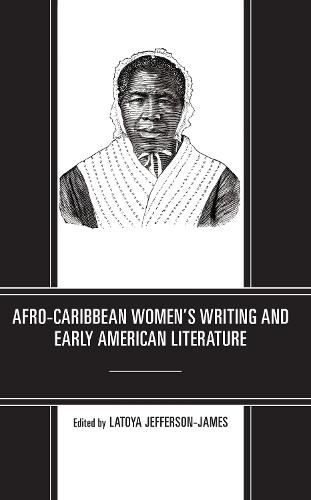
Full Product Details
Author: LaToya Jefferson-James ,
Tajanae Barnes ,
Regis Fox ,
Jacinth Howard
Publisher: Bloomsbury Publishing Plc
Imprint: Lexington Books
Dimensions:
Width: 15.70cm
, Height: 2.40cm
, Length: 23.80cm
Weight: 0.535kg
ISBN: 9781793606679
ISBN 10: 1793606676
Pages: 236
Publication Date: 12 August 2022
Audience:
Professional and scholarly
,
Professional & Vocational
Format: Hardback
Publisher's Status: Active
Availability: Manufactured on demand

We will order this item for you from a manufactured on demand supplier.
Reviews
"Afro-Caribbean Women's Writing and Early American Literature entices us with its title, but it delivers more than it promises. The collection covers more ground and interrogates more traditions than its name suggests. The essays in this volume engage the ""work"" of writers that obviously span, but the conversation the essays organize move us through the African diaspora, between realist and speculative fictions, into young adult literature, poetry, drama and journalism, to articulate black women's voice in the communal conversation of writing and the liberatory work writing both embodies and narrates. Offering new readings of old debates, the essays demand that we remember Phillis Wheatley as politically aware and philosophically astute, defamiliarizes the ""artistic genius"" familiars like Maria Stewart, Zora Neale Hurston and Ida B Wells as it recuperates journalist Gertrude (N. F.) Mossell and dramatists Mary Burill and Mercedes Gilbert, restores broadcaster Una Marson and recognizes to the tradition of intertextual liberatory work that is black women writers ""claiming an identity they [were] taught [they should] despise"". I paraphrase Michelle Cliff to emphasize this collection takes on the tough task of recalibrating the lens through which we read black women's writing not only by offering new theoretical frames but by moving us away from ""theoriz[ing] Black Women's literature"" through ""too few examples."" Whether seasoned scholar or first year English major, this volume breaks the basic rules of anthology as it anthologizes. By (re)constructing and allowing us to eavesdrop on the ""dialectal beauty and richness"" of conversations between African diaspora women writers, the essays in this volume take us deeper into this belletristic tradition."
"Afro-Caribbean Women's Writing and Early American Literature entices us with its title, but it delivers more than it promises. The collection covers more ground and interrogates more traditions than its name suggests. The essays in this volume engage the ""work"" of writers that obviously span, but the conversation the essays organize move us through the African diaspora, between realist and speculative fictions, into young adult literature, poetry, drama and journalism, to articulate black women's voice in the communal conversation of writing and the liberatory work writing both embodies and narrates. Offering new readings of old debates, the essays demand that we remember Phillis Wheatley as politically aware and philosophically astute, defamiliarizes the ""artistic genius"" familiars like Maria Stewart, Zora Neale Hurston and Ida B Wells as it recuperates journalist Gertrude (N. F.) Mossell and dramatists Mary Burill and Mercedes Gilbert, restores broadcaster Una Marson and recognizes to the tradition of intertextual liberatory work that is black women writers ""claiming an identity they [were] taught [they should] despise"". I paraphrase Michelle Cliff to emphasize this collection takes on the tough task of recalibrating the lens through which we read black women's writing not only by offering new theoretical frames but by moving us away from ""theoriz[ing] Black Women's literature"" through ""too few examples."" Whether seasoned scholar or first year English major, this volume breaks the basic rules of anthology as it anthologizes. By (re)constructing and allowing us to eavesdrop on the ""dialectal beauty and richness"" of conversations between African diaspora women writers, the essays in this volume take us deeper into this belletristic tradition. --Angeletta KM Gourdine, Louisiana State University"
Afro-Caribbean Women's Writing and Early American Literature entices us with its title, but it delivers more than it promises. The collection covers more ground and interrogates more traditions than its name suggests. The essays in this volume engage the work of writers that obviously span, but the conversation the essays organize move us through the African diaspora, between realist and speculative fictions, into young adult literature, poetry, drama and journalism, to articulate black women's voice in the communal conversation of writing and the liberatory work writing both embodies and narrates. Offering new readings of old debates, the essays demand that we remember Phillis Wheatley as politically aware and philosophically astute, defamiliarizes the artistic genius familiars like Maria Stewart, Zora Neale Hurston and Ida B Wells as it recuperates journalist Gertrude (N. F.) Mossell and dramatists Mary Burill and Mercedes Gilbert, restores broadcaster Una Marson and recognizes to the tradition of intertextual liberatory work that is black women writers claiming an identity they [were] taught [they should] despise . I paraphrase Michelle Cliff to emphasize this collection takes on the tough task of recalibrating the lens through which we read black women's writing not only by offering new theoretical frames but by moving us away from theoriz[ing] Black Women's literature through too few examples. Whether seasoned scholar or first year English major, this volume breaks the basic rules of anthology as it anthologizes. By (re)constructing and allowing us to eavesdrop on the dialectal beauty and richness of conversations between African diaspora women writers, the essays in this volume take us deeper into this belletristic tradition.--Angeletta KM Gourdine, Louisiana State University
"Afro-Caribbean Women's Writing and Early American Literature entices us with its title, but it delivers more than it promises. The collection covers more ground and interrogates more traditions than its name suggests. The essays in this volume engage the ""work"" of writers that obviously span, but the conversation the essays organize move us through the African diaspora, between realist and speculative fictions, into young adult literature, poetry, drama and journalism, to articulate black women's voice in the communal conversation of writing and the liberatory work writing both embodies and narrates. Offering new readings of old debates, the essays demand that we remember Phillis Wheatley as politically aware and philosophically astute, defamiliarizes the ""artistic genius"" familiars like Maria Stewart, Zora Neale Hurston and Ida B Wells as it recuperates journalist Gertrude (N. F.) Mossell and dramatists Mary Burill and Mercedes Gilbert, restores broadcaster Una Marson and recognizes to the tradition of intertextual liberatory work that is black women writers ""claiming an identity they [were] taught [they should] despise"". I paraphrase Michelle Cliff to emphasize this collection takes on the tough task of recalibrating the lens through which we read black women's writing not only by offering new theoretical frames but by moving us away from ""theoriz[ing] Black Women's literature"" through ""too few examples."" Whether seasoned scholar or first year English major, this volume breaks the basic rules of anthology as it anthologizes. By (re)constructing and allowing us to eavesdrop on the ""dialectal beauty and richness"" of conversations between African diaspora women writers, the essays in this volume take us deeper into this belletristic tradition.--Angeletta KM Gourdine, Louisiana State University"
Author Information
LaToya Jefferson-James is assistant professor of composition and world literature at Mississippi Valley State University.