Overview
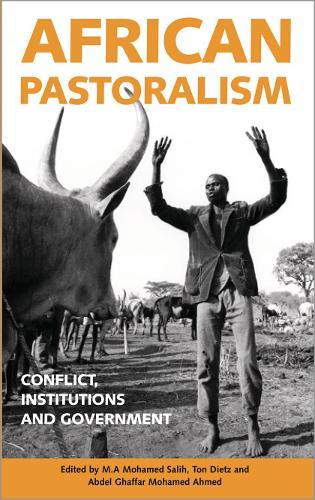
Although many countries in Africa are devastated by poverty and famine, and are desperately in need of aid, it is generally recognized that programmes of aid and development in Africa are imposed upon local communities with little regard for their traditional values and way of life. This is true of development schemes imposed by national African governments, just as it is true of international aid schemes. This book provides a look at these intricate issues, and explores the way in which farming and traditional pastoral livelihoods have strengthened rather than weakened in the face of government reforms. It reveals how traditional institutions and resource management strategies within local African communities continue to endure, in spite of the enormous pressure that development programmes assert, as pastoralists resolve to confront coercive state policies designed to privilege the interests of the wealthy and powerful elite. Revealing the link between the structure of power relations in pastoral societies and the shrinking of environmental space, the contributors demonstrate the intractable problems of the sustainability of pastoral development in situations characterized by increasing land appropriation and conflicts over resources. The book introduces 13 case studies from Botswana, Ethiopia, Eritrea, Kenya, Somalia, Sudan and Uganda and various other parts of the African continent.
Full Product Details
Author: M. A. Mohamed Salih ,
Ton Dietz ,
Abdel Ghaffar Mohamed Ahmed ,
Ton Ditez
Publisher: Pluto Press
Imprint: Pluto Press
Dimensions:
Width: 13.50cm
, Height: 2.80cm
, Length: 21.50cm
Weight: 0.535kg
ISBN: 9780745317878
ISBN 10: 0745317871
Pages: 320
Publication Date: 20 July 2001
Audience:
Professional and scholarly
,
Professional & Vocational
Format: Hardback
Publisher's Status: Out of Stock Indefinitely
Availability: Out of stock

Reviews
"""This volume, primarily by African scholars, represents an overview of pastoral societies in Eastern Africa and in Botswana. The papers (12 plus an introduction), from a conference organized by the Organization of Social Science Research in Eastern and Southern Africa, are uniformly succinct and well written. The book provides a threaded theme based on sustainability of development among pastoral groups increasingly threatened by environmental changes and civil strife. Most of the chapters are country or ethnographic case studies that illustrate this theme. Not only do pastoral and agripastoral societies have intrinsic value, but this volume illustrates their value to and their continued potential for the economies and culture of their respective countries. These are thoughtful works of scholarship, which, as a whole, cannot help but provide an important insight into the evolution of the life of pastoral peoples. Libraries, scholars, and individuals interested in the history, anthropology, or the political and economic development of Africa, Eastern and Southern particularly, should take a serious look at this book. Lower-division undergraduates and above."" -- R. M. Fulton, Northwest Missouri State University in CHOICE"
This volume, primarily by African scholars, represents an overview of pastoral societies in Eastern Africa and in Botswana. The papers (12 plus an introduction), from a conference organized by the Organization of Social Science Research in Eastern and Southern Africa, are uniformly succinct and well written. The book provides a threaded theme based on sustainability of development among pastoral groups increasingly threatened by environmental changes and civil strife. Most of the chapters are country or ethnographic case studies that illustrate this theme. Not only do pastoral and agripastoral societies have intrinsic value, but this volume illustrates their value to and their continued potential for the economies and culture of their respective countries. These are thoughtful works of scholarship, which, as a whole, cannot help but provide an important insight into the evolution of the life of pastoral peoples. Libraries, scholars, and individuals interested in the history, anthropology, or the political and economic development of Africa, Eastern and Southern particularly, should take a serious look at this book. Lower-division undergraduates and above. -- R. M. Fulton, Northwest Missouri State University in CHOICE
Author Information
Mohamed Salih is Professor of Politics at the Institute of Social Studies and the Department of Political Science at the University of Leiden, The Netherlands. He is also a board member of the International African Institute.