Awards
- Winner of <DIV>Cheikh Anta Diop Award for Outstanding Scholarship in the field of Africana Studies, National Council for Black Studies (NCBS), 2010.</DIV> 2010
Overview
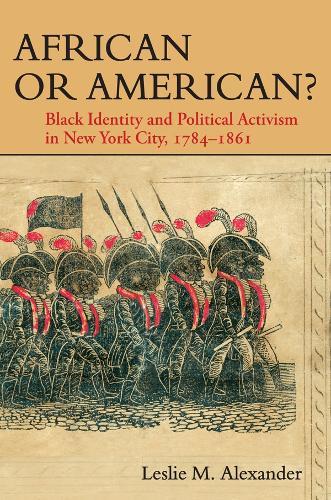
During the early national and antebellum eras, black leaders in New York City confronted the tenuous nature of Northern emancipation. Despite the hope of freedom, black New Yorkers faced a series of sociopolitical issues including the persistence of Southern slavery, the threat of forced removal, racial violence, and the denial of American citizenship. Even efforts to create community space within the urban landscape, such as the African Burial Ground and Seneca Village, were eventually demolished to make way for the city's rapid development. In this illuminating history, Leslie M. Alexander chronicles the growth and development of black activism in New York from the formation of the first black organization, the African Society, in 1784 to the eve of the Civil War in 1861. In this critical period, black activists sought to formulate an effective response to their unequal freedom. Examining black newspapers, speeches, and organizational records, this study documents the creation of mutual relief, religious, and political associations, which black men and women infused with African cultural traditions and values. As Alexander reveals, conflicts over early black political strategy foreshadowed critical ideological struggles that would bedevil the black leadership for generations to come. Initially, black leaders advocated racial uplift through a sense of communalism and connection to their African heritage. Yet by the antebellum era, black activists struggled to reconcile their African identity with a growing desire to gain American citizenship. Ultimately, this battle resulted in competing agendas; while some leaders argued that the black community should dedicate themselves to moral improvement and American citizenship, others began to consider emigrating to Africa or Haiti. In the end, the black leadership resolved to assert an American identity and to expand their mission for full equality and citizenship in the United States. This decision marked a crucial turning point in black political strategy, for it signaled a new phase in the quest for racial advancement and fostered the creation of a nascent Black Nationalism.
Full Product Details
Author: Leslie M. Alexander
Publisher: University of Illinois Press
Imprint: University of Illinois Press
Dimensions:
Width: 15.60cm
, Height: 2.30cm
, Length: 23.50cm
Weight: 0.454kg
ISBN: 9780252078538
ISBN 10: 0252078535
Pages: 288
Publication Date: 21 December 2011
Audience:
Professional and scholarly
,
Professional & Vocational
Format: Paperback
Publisher's Status: Active
Availability: Out of stock

The supplier is temporarily out of stock of this item. It will be ordered for you on backorder and shipped when it becomes available.
Reviews
Alexander brilliantly examines this topic for black people in antebellum New York City. . . . An important contribution. Highly recommended. -- Choice
Author Information
Leslie M. Alexander is an associate professor of history at the Ohio State University and the coeditor of We Shall Independent Be: African American Place Making and the Struggle to Claim Space in the U.S.