Overview
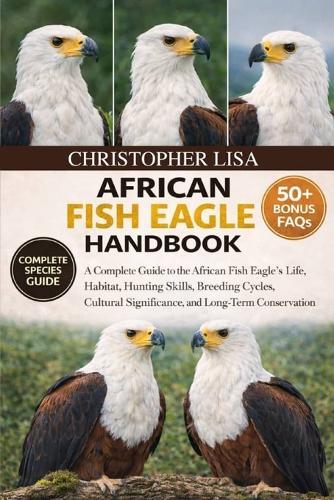
Introduction to the African Fish Eagle There are certain animals whose presence feels larger than their body. The African fish eagle is one of them. Even before a person sees its white head against the sky or the broad wings cutting across a lake, they often hear it first-an unmistakable, ringing call that seems to travel farther than it should. In many parts of Africa, that voice is not simply a bird sound. It is a signal that water is near, that the shoreline is alive, and that the day has a watchful hunter overhead. The African fish eagle stands apart because it occupies a rare space where biology, landscape, and human meaning overlap. It is a real predator with precise ecological roles, and at the same time it has become an emblem-of wilderness, of rivers and lakes, of national identity, and of the kind of freedom people imagine when they look up and see a raptor riding open air. To introduce this species well is to treat it as both what it is and what it has become in the minds of those who live alongside it. The African fish eagle is not just ""an eagle that eats fish."" It is a specialist shaped by water, light, and motion, designed to patrol the edges where land and water meet. Its entire lifestyle is built around a narrow but powerful idea: the surface of water is both pantry and battlefield, offering food but demanding skill. That narrowness is not limitation. It is focus, and focus is what produces excellence. Many raptors hunt in complicated forests or open grasslands and must master a wide range of prey. The fish eagle's world is simpler in one sense, but it is unforgiving. Fish are fast, slippery, and often protected by depth, speed, or sudden turns. To take fish consistently, an eagle must combine sharp vision, control of flight, timing, and the ability to read wind and water in a single decision. That is why the African fish eagle stands apart. It is a hunter whose success is visible in a way many predators are not-because its stage is the open shoreline and its targets are revealed by flashes in the shallows. Identity: A Raptor Built Around Water The African fish eagle carries the unmistakable silhouette of a powerful raptor: broad wings, a strong chest, and a head that turns with deliberate attention. Yet what defines its identity most is how naturally it belongs to waterways. When people imagine this bird, they picture it near lakes and rivers, perched in a tall tree that gives it a commanding view. That image is accurate because the fish eagle's life depends on vantage. It is a predator that thrives on the ability to see far and respond quickly. From a high perch, it surveys not only for prey but for opportunities-small disturbances on the water, fish rising near the surface, other birds moving as if something edible has appeared. It watches the way a person watches a busy street, reading small signals that most passersby never notice. This identity also includes patience. The fish eagle is not always in motion. It can hold still for long stretches, conserving energy and waiting for the right moment. That patience is part of its success. In the heat of a day, when thermals and wind patterns change, when fish behavior shifts with temperature and light, the eagle's ability to wait and then act precisely becomes a form of mastery. It is not simply strong. It is efficient. In a landscape where energy matters, efficiency is power.
Full Product Details
Author: Christopher Lisa
Publisher: Independently Published
Imprint: Independently Published
Dimensions:
Width: 15.20cm
, Height: 0.70cm
, Length: 22.90cm
Weight: 0.177kg
ISBN: 9798248531318
Pages: 124
Publication Date: 18 February 2026
Audience:
General/trade
,
General
Format: Paperback
Publisher's Status: Active
Availability: Available To Order

We have confirmation that this item is in stock with the supplier. It will be ordered in for you and dispatched immediately.