Overview
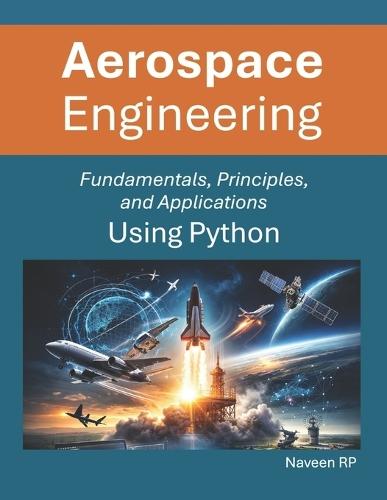
Aerospace engineering stands at the intersection of scientific theory, mathematical rigor, and technological innovation. From the first powered flights to modern reusable launch vehicles and interplanetary missions, the discipline has continuously evolved through advances in analysis, computation, and design methodology. Aerospace Engineering: Fundamentals, Principles, and Applications Using Python is written to bridge classical aerospace theory with modern computational practice. This book presents foundational principles of flight, propulsion, structures, and space dynamics while demonstrating how Python can be used as a powerful engineering tool for modeling, simulation, and analysis. The motivation for this text arises from a growing need to integrate programming fluency into aerospace education and professional practice. Traditional analytical methods remain essential, yet contemporary aerospace problems demand simulation, automation, data processing, and visualization at scale. By introducing Python early-alongside libraries such as NumPy and Matplotlib-this book empowers readers to translate theoretical equations into working computational models. Rather than treating programming as a separate skill, the text embeds coding directly within aerospace problem-solving workflows. Each chapter is structured to connect theory with application. Aircraft performance is explored through atmospheric modeling and thrust analysis, including case studies such as flight envelope evaluation and dynamic pressure modeling during launch. Aerodynamics chapters guide readers through airfoil geometry analysis, lift and drag estimation, and optimization techniques. Orbital mechanics is presented not only through classical two-body solutions but also through numerical simulation, orbit decay modeling, and trajectory planning. Propulsion systems are examined from rocket fundamentals to gas turbine cycle comparisons, with computational tools reinforcing thermodynamic principles. Beyond core aerospace domains, the book addresses structural analysis, control systems, and advanced simulation techniques. Finite Element Method (FEM) fundamentals and eigenvalue-based stability analysis are introduced in a computational framework, allowing readers to visualize stresses, vibrations, and system dynamics. The final chapter expands into data-driven aerospace engineering, demonstrating how machine learning, Monte Carlo simulations, data fusion, and project management tools such as the Critical Path Method can support modern aerospace systems design and decision-making. This text is intended for undergraduate and graduate students, educators, and practicing engineers who seek a unified approach to aerospace fundamentals and computational application. A basic knowledge of mathematics and physics is assumed, while programming concepts are developed progressively. It is my hope that this book not only strengthens conceptual understanding but also cultivates analytical confidence-enabling readers to move from equations on paper to executable models that simulate real aerospace systems.
Full Product Details
Author: Naveen Rp
Publisher: Independently Published
Imprint: Independently Published
Dimensions:
Width: 21.60cm
, Height: 2.90cm
, Length: 27.90cm
Weight: 1.284kg
ISBN: 9798248917778
Pages: 562
Publication Date: 18 February 2026
Audience:
General/trade
,
General
Format: Paperback
Publisher's Status: Active
Availability: Available To Order

We have confirmation that this item is in stock with the supplier. It will be ordered in for you and dispatched immediately.