Overview
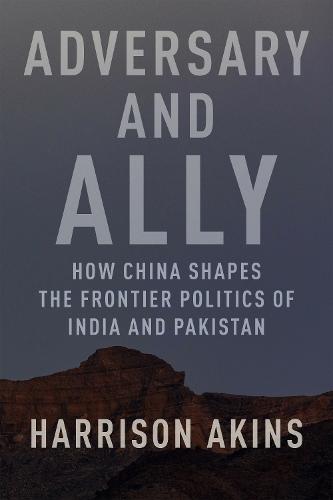
In recent years, China has played an increasingly significant role in international affairs, wielding its economic and political strength to solidify its position as a global power. Within its immediate neighborhood, however, Chinese influence is not new. Chinese actions have affected how the Indian and Pakistani states have perceived and responded to domestic governance and security challenges since the early days of independence. Connecting international politics with domestic security, Harrison Akins shows how India and Pakistan's engagement with China has shaped the two governments' policies toward their strategic frontiers over the past seventy years. He focuses on northeastern India and Pakistan's Balochistan Province, peripheries that have been at the center of both countries' relationships with China and that continue to present pressing security and development challenges. In contrast to the conventional focus on state-to-state relations, Akins emphasizes frontiers and their ties to central governments. He demonstrates that China's presence spurred the Indian and Pakistani governments to assert their sovereignty over these border regions, exacerbating conditions that led to the outbreak of antistate violence. Featuring comprehensive research and keen analysis, Adversary and Ally offers new insights into the pressures confronting South Asian governments and the limits of China's reach.
Full Product Details
Author: Harrison Akins
Publisher: Columbia University Press
Imprint: Columbia University Press
ISBN: 9780231221825
ISBN 10: 0231221827
Pages: 304
Publication Date: 24 March 2026
Audience:
College/higher education
,
Postgraduate, Research & Scholarly
Format: Paperback
Publisher's Status: Active
Availability: Manufactured on demand

We will order this item for you from a manufactured on demand supplier.
Reviews
Adversary and Ally offers a penetrating analysis of how China’s rise has reshaped the frontier politics of South Asia. Drawing on rich archival research and declassified sources, this book provides an essential framework for understanding the security consequences of China’s regional engagement for policymakers and scholars alike. -- Hassan Abbas, author of <i>The Return of the Taliban: Afghanistan After the Americans Left</i> Deftly integrating international influences with the dilemmas that South Asian states have with their frontiers and synthesizing a wealth of historical material, Adversary and Ally reveals how China has had long-term engagement with South Asian countries, in ways that not only shaped external relations but shaped state-society relations. -- Adnan A. Naseemullah, coauthor of <i>Righteous Demagogues: Populist Politics in South Asia and Beyond</i> Akins delivers a stark, urgent analysis of the political fault lines of South Asia and the rising dangers of great-power rivalry. Essential reading for global leaders and serious commentators. -- Akbar Ahmed, former Pakistani Ambassador and Ibn Khaldun Chair of Islamic Studies, American University Harrison Akins has produced an empirically masterful and analytically sophisticated study of how China's influence has shaped state-periphery relations in South Asia, examining northeastern India and Pakistan's Balochistan as illuminating parallel cases. This is a vital and timely read on China, India, and Pakistan's foreign relations and state formation processes. -- Asfandyar Mir, The Stimson Center
Adversary and Ally offers a penetrating analysis of how China’s rise has reshaped the frontier politics of South Asia in sharply different ways— emerging as a strategic adversary for India and an indispensable ally for Pakistan. Drawing on rich archival research and declassified sources, the book reveals how Beijing’s policies have intensified center–periphery tensions in India’s northeast and Pakistan’s Balochistan, often fueling instability rather than integration. By linking great-power competition to local insurgencies and domestic governance challenges, Akins provides an essential framework for understanding the security consequences of China’s regional engagement for policymakers and scholars alike. -- Hassan Abbas, author of <i>The Return of Taliban: Afghanistan After Americans Left</i> Deftly integrating international influences with the dilemmas that South Asian states have with their frontiers and synthesizing a wealth of historical material, Adversary and Ally reveals how China has had long-term engagement with South Asian countries, in ways that not only shaped external relations but shaped state-society relations. -- Adnan A. Naseemullah, coauthor of <i>Righteous Demagogues: Populist Politics in South Asia and Beyond</i>
Author Information
Harrison Akins is a political scientist and writer who holds a PhD from the University of Tennessee, Knoxville. For more than a decade, he has been researching, writing, and advising on South Asian politics and US foreign policy in both academia and government. His books include The Terrorism Trap: How the War on Terror Escalates Violence in America’s Partner States (Columbia, 2023).