|
|
|||
|
||||
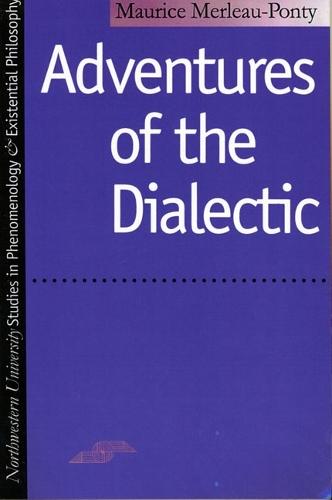
OverviewWe need a philosophy of both history and spirit to deal with the problems we touch upon here. Yet we would be unduly rigorous if we were to wait for perfectly elaborated principles before speaking philosophically of politics."" Thus Merleau-Ponty introduces Adventures of the Dialectic, his study of Marxist philosophy and thought. In this study, containing chapters on Weber, Lukacs, Lenin, Sartre, and Marx himself, Merleau-Ponty investigates and attempts to go beyond the dialectic. Full Product DetailsAuthor: Maurice Merleau-PontyPublisher: Northwestern University Press Imprint: Northwestern University Press Dimensions: Width: 15.30cm , Height: 2.00cm , Length: 22.70cm Weight: 0.412kg ISBN: 9780810105966ISBN 10: 0810105969 Pages: 237 Publication Date: 30 January 1973 Audience: General/trade , Professional and scholarly , General , Postgraduate, Research & Scholarly Format: Paperback Publisher's Status: Active Availability: In Print This item will be ordered in for you from one of our suppliers. Upon receipt, we will promptly dispatch it out to you. For in store availability, please contact us. Table of ContentsReviewsAuthor InformationMaurice Merleau-Ponty (14 March 1908 – 3 May 1961) was a French phenomenological philosopher, strongly influenced by Karl Marx, Edmund Husserl and Martin Heidegger in addition to being closely associated with Jean-Paul Sartre (who later stated he had been ""converted"" to Marxism by Merleau-Ponty) and Simone de Beauvoir. At the core of Merleau-Ponty's philosophy is a sustained argument for the foundational role that perception plays in understanding the world as well as engaging with the world. Like the other major phenomenologists Merleau-Ponty expressed his philosophical insights in writings on art, literature, linguistics, and politics. He was the only major phenomenologist of the first half of the twentieth century to engage extensively with the sciences and especially with descriptive psychology. Because of this engagement his writings have become influential in the recent project of naturalizing phenomenology, in which phenomenologists use the results of psychology and cognitive science. Tab Content 6Author Website:Countries AvailableAll regions |
||||