|
|
|||
|
||||
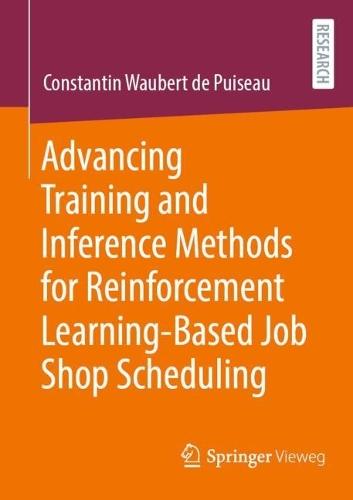
OverviewIndustrial production is facing growing challenges due to more complex supply chains, shorter development cycles, and greater product variance. At the same time, the availability of production data and advances in artificial intelligence mean that the opportunities for optimization are greater than ever before. Motivated by these developments, this book focuses on the use of deep reinforcement learning (DRL) for Job Shop Scheduling Problems. DRL agents are already capable of defeating humans in chess and computer games. The aim of the work presented is to create DRL-based systems that can generate the most efficient machine allocation schedules in a short computing time. The methods developed are based on modern achievements in related research areas: industrial planning, operations research, and deep learning. For example, the book examines how domain knowledge from industrial planning can be effectively incorporated into DRL training. On the other hand, inspiration is drawn from the field of curriculum learning, in which the difficulty of learning tasks is varied in a targeted manner throughout the learning process, similar to school curricula. In addition to new training methods, the more effective use of already trained DRL agents is also addressed. Finally, necessary future developments, especially with regard to reliability criteria, are outlined for this rising field of research. Full Product DetailsAuthor: Constantin Waubert de PuiseauPublisher: Springer Fachmedien Wiesbaden Imprint: Springer Vieweg ISBN: 9783658513047ISBN 10: 3658513047 Pages: 212 Publication Date: 01 May 2026 Audience: Professional and scholarly , College/higher education , Professional & Vocational , Postgraduate, Research & Scholarly Format: Paperback Publisher's Status: Forthcoming Availability: Not yet available This item is yet to be released. You can pre-order this item and we will dispatch it to you upon its release. Table of ContentsReviewsAuthor InformationTab Content 6Author Website:Countries AvailableAll regions |
||||