Overview
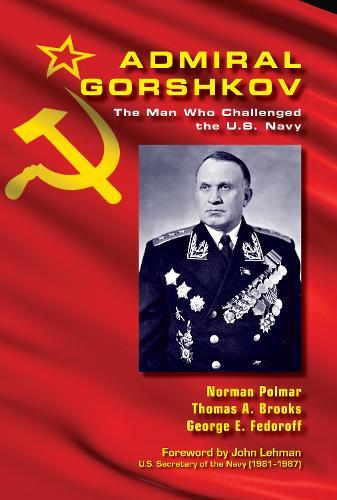
Admiral of the Fleet of the Soviet Union Sergei G. Gorshkov was the product of a tradition unlike those of his Western contemporaries. He had a unique background of revolution, civil war, world wars, and the forceful implementation of an all-controlling communist dictatorship. Out of this background of violence and overwhelming transformation came a man with a vivid appreciation of the role and value of navies, but with his own unique ideas about the kind of navy that the Soviet Union required and the role that navy should play in Soviet military and national strategy. Western naval observers have persisted in attempting to define Admiral Gorshkov in Western naval terms. Many of these observers have been baffled when they found that the man and his actions simply did not fit conventional narratives. This book lays out the tradition, background, experiences, and thinking of the man as they relate to the development of the Soviet Navy that Gorshkov commanded for almost three decades and that was able to directly challenge the maritime dominance of the United States-a traditional sea power. His influence persists to this day, as the Russian Navy that is at sea in the twenty-first century is, to a significant degree, based on the fleet that Admiral Gorshkov built.
Full Product Details
Author: Norman C. Polmar ,
Thomas A Brooks ,
George E. Fedoroff
Publisher: Naval Institute Press
Imprint: Naval Institute Press
Weight: 0.625kg
ISBN: 9781682473306
ISBN 10: 1682473309
Pages: 304
Publication Date: 02 May 2019
Audience:
General/trade
,
General
Format: Hardback
Publisher's Status: Active
Availability: Temporarily unavailable

The supplier advises that this item is temporarily unavailable. It will be ordered for you and placed on backorder. Once it does come back in stock, we will ship it out to you.
Reviews
This Triumvirate of Soviet Navy experts join forces to describe a legendary adversary Admiral during the Cold War. For the first time, Polmar, Fedoroff and Brooks explain and explore Gorshkov's revolutionary high-seas operations and forward employment of nuclear submarines. Timely, powerful, and relevant! --Admiral James G. Foggo III, USN Commander, U.S. Naval Forces Europe and Africa
Admiral Gorshkov is a major contribution to modern naval and Cold War history. The three expert authors have combined deep research in Russian language sources and declassified U.S. intelligence analyses into a book that will stand as a major source on the Soviet Navy and its long-time commander for decades to come. --David Alan Rosenberg is a professional historian and defense analyst who co-authored the Naval Institute book The Admirals' Advantage, U.S. Navy Operational Intelligence in World War II and the Cold War This examination of the role played by Admiral Sergei Gorshkov in the development of the Soviet Navy (1956-83) is an essential work for anyone hoping to interpret Vladimir Putin's contemporary naval adventures into the North Atlantic, Syria, as well as the Sea of Azov. It is a must read for Russian experts, historians and strategists alike. --Thomas Fedyszyn, Professor Emeritus, U.S. Naval War College, Senior Consultant, Russian Maritime Studies Institute Today's burgeoning field of 'adversary analytics' seeks to divine what's driving Xi, Kim, Khamenei and -- of course -- Putin. Its practitioners will find this work of inestimable value. Three long-time leading analysts show how it's done in their magisterial unpacking of Soviet naval leader Sergei Gorshkov's thinking and career. --Captain (retired) Peter M. Swartz, senior CNA strategy analyst and former Cold War US Navy strategist For most of the last half of the Twentieth Century Admiral Sergey Georgiyevich Gorshkov personified the principal challenge to the hegemony of the United States Navy on the high seas. This informative and well-written book tells in great, but never boring, detail how Gorshkov almost single-handedly grew the Soviet Navy into the potent challenger it became. --Robert F. Dunn, VADM USN (Ret), Past President, Naval Historical Foundation and air wing commander and operations officer U.S. Sixth Fleet during several Soviet confrontations This Triumvirate of Soviet Navy experts join forces to describe a legendary adversary Admiral during the Cold War. For the first time, Polmar, Fedoroff and Brooks explain and explore Gorshkov's revolutionary high-seas operations and forward employment of nuclear submarines. Timely, powerful, and relevant! --Admiral James G. Foggo III, USN Commander, U.S. Naval Forces Europe and Africa
Today's burgeoning field of 'adversary analytics' seeks to divine what's driving Xi, Kim, Khamenei and -- of course -- Putin. Its practitioners will find this work of inestimable value. Three long-time leading analysts show how it's done in their magisterial unpacking of Soviet naval leader Sergei Gorshkov's thinking and career. --Captain (retired) Peter M. Swartz, senior CNA strategy analyst and former Cold War US Navy strategist Admiral Gorshkov is a major contribution to modern naval and Cold War history. The three expert authors have combined deep research in Russian language sources and declassified U.S. intelligence analyses into a book that will stand as a major source on the Soviet Navy and its long-time commander for decades to come. --David Alan Rosenberg is a professional historian and defense analyst who co-authored the Naval Institute book The Admirals' Advantage, U.S. Navy Operational Intelligence in World War II and the Cold War This examination of the role played by Admiral Sergei Gorshkov in the development of the Soviet Navy (1956-83) is an essential work for anyone hoping to interpret Vladimir Putin's contemporary naval adventures into the North Atlantic, Syria, as well as the Sea of Azov. It is a must read for Russian experts, historians and strategists alike. --Thomas Fedyszyn, Professor Emeritus, U.S. Naval War College, Senior Consultant, Russian Maritime Studies Institute For most of the last half of the Twentieth Century Admiral Sergey Georgiyevich Gorshkov personified the principal challenge to the hegemony of the United States Navy on the high seas. This informative and well-written book tells in great, but never boring, detail how Gorshkov almost single-handedly grew the Soviet Navy into the potent challenger it became. --Robert F. Dunn, VADM USN (Ret), Past President, Naval Historical Foundation and air wing commander and operations officer U.S. Sixth Fleet during several Soviet confrontations This Triumvirate of Soviet Navy experts join forces to describe a legendary adversary Admiral during the Cold War. For the first time, Polmar, Fedoroff and Brooks explain and explore Gorshkov's revolutionary high-seas operations and forward employment of nuclear submarines. Timely, powerful, and relevant! --Admiral James G. Foggo III, USN Commander, U.S. Naval Forces Europe and Africa
For most of the last half of the Twentieth Century Admiral Sergey Georgiyevich Gorshkov personified the principal challenge to the hegemony of the United States Navy on the high seas. This informative and well-written book tells in great, but never boring, detail how Gorshkov almost single-handedly grew the Soviet Navy into the potent challenger it became. --Robert F. Dunn, VADM USN (Ret), Past President, Naval Historical Foundation and air wing commander and operations officer U.S. Sixth Fleet during several Soviet confrontations This Triumvirate of Soviet Navy experts join forces to describe a legendary adversary Admiral during the Cold War. For the first time, Polmar, Fedoroff and Brooks explain and explore Gorshkov's revolutionary high-seas operations and forward employment of nuclear submarines. Timely, powerful, and relevant! --Admiral James G. Foggo III, USN Commander, U.S. Naval Forces Europe and Africa
Author Information
Norman Polmar is an analyst, author, and consultant, specializing in naval, aviation, and technology subjects. He has directed studies related to the Soviet/Russian navies for various government organizations, and has been a consultant or advisor on related issues to three U.S. Senators, the Speaker of the House, the Deputy Counselor to the President, and three Secretaries of the Navy. He has visited the Soviet Union/Russia several times as a guest of the Navy commander-in-chief, the submarine design bureaus, and the Institute of U.S. Studies. Thomas A. Brooks retired from the U.S. Navy as a Rear Admiral. Brooks was a career intelligence officer, serving in assignments afloat and ashore, including in Vietnam. He served as Director of Naval Intelligence from 1988 to 1991. Upon retirement from the Navy, Admiral Brooks began a second career with AT&T, holding a senior position with the firm until 2001. Subsequently he was a faculty member at the National Defense Intelligence College for nine years, where he taught courses on intelligence history, warning, and industry-intelligence relationships. He has written extensively on intelligence-related subjects. George E. Fedoroff is the Senior Intelligence Officer for Russia matters within the Office of Naval Intelligence, where he has worked since 1971. He has visited the Soviet Union/Russia on numerous occasions: Since 1976 he has been a member of the U.S. Navy delegation to annual U.S.-Soviet/Russian Navy Incidents at Sea Agreement compliance reviews, and from 1991 through 2013 he participated in the annual multi-national meetings and at-sea exercises involving the Russian Navy. Fluent in Russian, he has acted as interpreter for the chairman of the U.S. Joint Chiefs of Staff, and participated in visit exchanges between senior U.S. and Soviet/Russian naval officials, numerous ship visits, meetings, and symposia on naval issues.