|
|
|||
|
||||
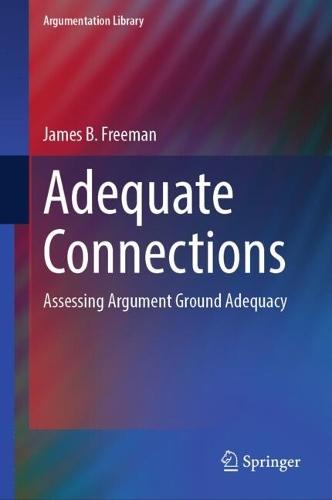
OverviewThis book presents a comprehensive picture of when the premises of an argument are adequately connected to its conclusion. The author draws upon the familiar Toulmin model, Rescher’s discussion of presumption and burden of proof, and L. Jonathan Cohen’s presentation of the method of relevant variables. The book first assesses the warrant or inference rule connecting the premises to the conclusion. To analyzes this, the author asks a series of questions such as - should the warrant be evaluated by conclusive or defeasible standards? Does the argument require that its premises, if acceptable, guarantee that the conclusion is acceptable also or does it allow the premises just to present a body of relevant evidence? Is the inference rule backed or supported a priori or a posteriori? These distinctions form four categories of warrants: conclusive a priori, defeasible a posteriori, defeasible a priori, and virtually conclusive a posteriori. The warrants in each category are evaluated differently for how strongly the premises support the conclusion of arguments instancing those warrants. After presenting the rationale for this division and discussing our nonprobabilistic approach, the author analyzes the connection adequacy for each of these types of warrants. This book is of interest to scholars of argumentation theory. Full Product DetailsAuthor: James B. FreemanPublisher: Springer International Publishing AG Imprint: Springer International Publishing AG Edition: 2025 ed. Volume: 38 ISBN: 9783031764769ISBN 10: 3031764765 Pages: 179 Publication Date: 26 March 2025 Audience: Professional and scholarly , Professional & Vocational Format: Hardback Publisher's Status: Active Availability: Manufactured on demand We will order this item for you from a manufactured on demand supplier. Table of ContentsReviewsAuthor InformationJames Freeman received his B.A. degree from Drew University and his Ph.D. from Indiana University, He taught logic and argumentation theory at Hunter College for 40 years. His publications include Thinking Logically, Dialectics and the Macrostructure of Arguments, Acceptable Premises, and Argument Structure: Representation and Theory together with many papers in informal logic and argumentation theory. Tab Content 6Author Website:Countries AvailableAll regions |
||||