|
|
|||
|
||||
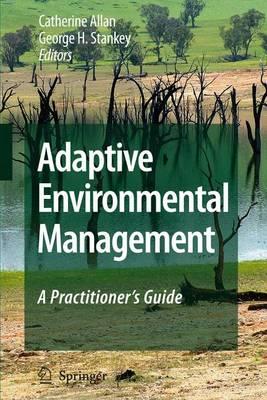
OverviewAdaptive management is the recommended means for continuing ecosystem management and use of natural resources, especially in the context of ‘integrated natural resource management’. Conceptually, adaptive management is simply learning from past management actions to improve future planning and management. However, adaptive management has proved difficult to achieve in practice. With a view to facilitating better practice, this new book presents lessons learned from case studies, to provide managers with ready access to relevant information. Cases are drawn from a number of disciplinary fields, including management of protected areas, watersheds and farms, rivers, forests, biodiversity and pests. Examples from Australia, New Zealand, the USA, Canada, the UK and Europe are presented at a variety of scales, from individual farms, through regional projects, to state-wide planning. While the book is designed primarily for practitioners and policy advisors in the fields of environmental and natural resource management, it will also provide a valuable reference for students and researchers with interests in environmental, natural resource and conservation management. Full Product DetailsAuthor: Catherine Allan , George Henry StankeyPublisher: Springer Imprint: Springer Edition: 2009 ed. Dimensions: Width: 15.50cm , Height: 1.90cm , Length: 23.50cm Weight: 1.140kg ISBN: 9789048127108ISBN 10: 9048127106 Pages: 351 Publication Date: 09 June 2009 Audience: Professional and scholarly , Professional & Vocational Format: Paperback Publisher's Status: Active Availability: In Print This item will be ordered in for you from one of our suppliers. Upon receipt, we will promptly dispatch it out to you. For in store availability, please contact us. Table of ContentsAcknowledgements.- Author biographies.- Section I: Understanding adaptive management. 1. Introduction; G. Stankey, C. Allan.- 2. Components of Adaptive Management; R.M. Argent.- Section II: Varying contexts. 3. Lessons learned from adaptive management practitioners in British Columbia, Canada; A. Smith.- 4. Using adaptive management to meet multiple goals for flows along the Mitta Mitta River in south-eastern Australia; C. Allan et al.- 5. Adaptive management of a sustainable wildlife enterprise trial in Australia’s Barrier Ranges; P. Ampt et al.- 6. Learning about the social elements of adaptive management in the South Island tussock grasslands of New Zealand; W. Allen, C. Jacobson.- 7. Kuka Kanyini, Australian Indigenous adaptive management; G. Wilson, M. Woodrow.- 8. Crisis as a positive role in implementing adaptive management after the Biscuit fire, Pacific Northwest, U.S.A.; B.T. Bormann, G.H. Stankey.- Section III: Tools for adaptive management. 9. Modelling and adaptive environmental management; T. Jakeman et al.- 10. Lessons learned from a computer-assisted participatory planning and management process in the Peak District National Park, England; K. Hubacek, M. Reed.- 11. Signposts for Australian Agriculture; J. Chesson et al.- 12. Environmental Management Systems as adaptive natural resource management: case studies from agriculture; G. Wilson et al.- 13. The adaptive management system for the Tasmanian Wilderness World Heritage Area - linking management planning with effectiveness evaluation; G. Jones.- Section IV: The importance ofpeople. 14. Adaptive management of environmental flows – 10 years on; T. Ladson.- 15. Collaborative learning as part of adaptive management of forests affected by deer; C. Jacobson et al.- 16. Effective leadership for adaptive management; L. Schultz, I.. Fazey.- 17. Institutionalising adaptive management: creating a culture of learning in New South Wales Parks and wildlife service; P. Stathis, C. Jacobson.- 18. Adaptive people for adaptive management; I. Fazey, L. Schultz.- Section V: Conclusion. 19. Synthesis of lessons; C. Allan, G. Stankey.-ReviewsAuthor InformationTab Content 6Author Website:Countries AvailableAll regions |
||||