Overview
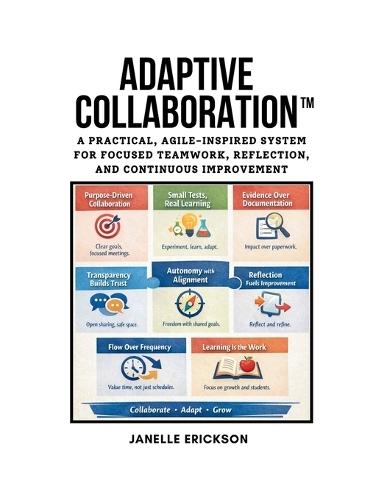
Collaboration is not the problem. Unfocused collaboration is. Too often, teams meet without clarity, talk without evidence, and leave without follow-through. Time is spent, but little changes. The Adaptive Collaboration Guidebook was created to solve that exact problem. This guidebook provides a clear, repeatable system for teams who want collaboration to lead to meaningful improvement-not just conversation. Designed for educators, school leaders, principals, superintendents, and agile-minded professionals across fields, this system blends instructional collaboration, Agile and Scrum-inspired practices, and reflective cycles into a structure teams can begin using immediately. The framework is intentionally designed to get teams off and running from the very beginning. It helps ensure all team members understand the purpose of the work, the expectations for engagement, and the shared commitment required before the first cycle even begins. This early clarity supports readiness, reduces resistance, and creates the conditions for productive collaboration and learning. At its core, Adaptive Collaboration models how agile-minded teams work to reach goals as efficiently and effectively as possible-by focusing on the right problem, setting a clear sprint goal, taking action, collecting evidence, reflecting together, and refining based on what is learned. Inside the guidebook, you will find: A collaboration framework that establishes shared agreements and team readiness A practical playbook that explains the why and how behind each collaboration event A reusable toolkit of templates that guide teams through focused, repeatable cycles The Toolkit is the repeatable engine of the system. The Playbook serves as a reference teams return to as they work. Together, they create a collaboration process that is structured enough to create clarity, yet flexible enough to adapt to different contexts, goals, and team needs. This guidebook is designed to work across levels and roles: School leadership teams Professional learning communities Department and grade-level teams Cross-functional improvement teams Classroom teachers using Agile, Scrum, or other collaborative workflows with students Classroom teachers can also use this system to design team-based learning workflows, support student collaboration, and guide reflective cycles during projects, labs, and problem-based learning experiences, with language and expectations adjusted as appropriate for students. To support immediate implementation, the guidebook includes appendices with: A complete sample collaboration cycle filled out with realistic team responses A suggested on-ramp for introducing the system to a full staff or large group Clear modeling of what ""good enough"" looks like when teams are actively engaged This is not a resource meant to be read once and set aside. It is a working guidebook, an idea generator, and a ready-to-use system that teams can adapt and return to again and again. If you are looking for a way to move collaboration from conversation to action- If you want teams aligned, engaged, and committed from the start- If you want a flexible, agile-inspired system that works in real-world conditions- The Adaptive Collaboration Guidebook was built for you.
Full Product Details
Author: Janelle Erickson
Publisher: Independently Published
Imprint: Independently Published
Dimensions:
Width: 21.60cm
, Height: 0.40cm
, Length: 27.90cm
Weight: 0.227kg
ISBN: 9798245594439
Pages: 64
Publication Date: 25 January 2026
Audience:
General/trade
,
General
Format: Paperback
Publisher's Status: Active
Availability: Available To Order

We have confirmation that this item is in stock with the supplier. It will be ordered in for you and dispatched immediately.