Overview
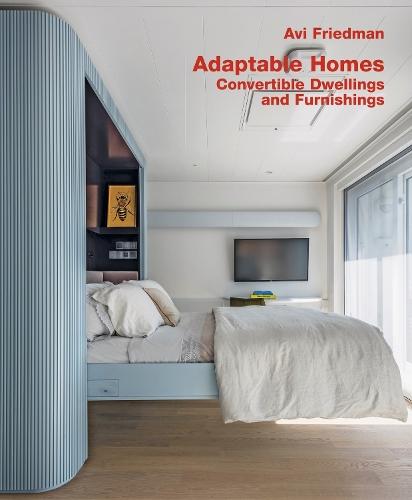
Rising housing and energy costs, the emergence of the non-traditional small household and an increase in the number of seniors have contributed to a renewed interest in adaptable dwellings. These designs can be defined as units or furnishings that permit change of space or function at any time. With their popularity rising rapidly around the world, people are becoming aware of the environmental and budgetary implications of owning a very large single-family home, especially when some spaces in these homes are hardly ever used. Notable additional advantages of adaptable homes are lower property taxes and construction costs, and time savings through possible prefabrication. To be efficient, adaptable dwellings must be carefully designed since minor decisions can have a large impact on their use. Light, boundaries, circulation, choice of materials and furnishings are some of the tools that can be used by designers to resolve challenges and expand spatial perception. Therefore, a good adapt- able design should not only be versatile and efficient but also avoid simplicity and dullness. Japanese architects, such as Shigeru Ban, have pioneered solutions to these problems by using curtains or shutters to separate between outdoors and indoors. Such fixtures can be opened during the day to let in light and fresh air but can be closed at night. Those designers also encourage the inhabitants to engage with the outside by creating large, easily accessible rooftop spaces that can used for outdoor seating, for example. When partitions must be installed, transparent ones are recommended since they still permit the dispersal of light. Moveable partitions, or sliding panels, are also useful in defining spaces since they allow one to temporarily redefine small spaces according to need. Lastly, an open floor concept with large exterior openings permit views of the outside which, as noted above, can increase the perception of a house’s size. Increasing the floor height can greatly expand space without enlarging the floor area. The book displays a collection of outstanding innovative residential projects and furnishings made to accommodate the daily or yearly changing living space needs of occupants.
Full Product Details
Author: Avi Friedman (Hochschullehrer)
Publisher: Edition Axel Menges
Imprint: Edition Axel Menges
Weight: 1.140kg
ISBN: 9783869050485
ISBN 10: 3869050489
Pages: 180
Publication Date: 28 February 2026
Audience:
General/trade
,
General
Format: Hardback
Publisher's Status: Forthcoming
Availability: Not yet available

This item is yet to be released. You can pre-order this item and we will dispatch it to you upon its release.
Author Information
Avi Friedman received his Bachelor’s degree in architecture and town planning from the Israel Institute of Technology, his Master’s degree from McGill University, and his Doctorate from the University of Montréal. At McGill, where he is a full professor, he cofounded the Affordable Homes Program. He also holds a visiting professor position in Lancaster University in the UK. He is the author of 25 books, the principal of Avi Friedman Consultants Inc. and the recipient of numerous awards including the Lifetime Achievement Award from Sustainable Buildings Canada and the World Habitat Award. Avi Friedman erwarb seinen Bachelor-Abschluß in Architektur und Stadtplanung am Israel Institute of Technology, seinen Master-Abschluß an der McGill University und seinen Doktortitel an der University of Montréal. An der McGill University, wo er als ordentlicher Professor tätig ist, war er Mitbegründer des »Affordable Homes Program«. Außerdem hat er eine Gastprofessur an der Lancaster University in Großbritannien inne. Er ist Autor von 25 Büchern, Geschäftsführer von Avi Friedman Consultants Inc. und Träger zahlreicher Auszeichnungen, darunter der »Lifetime Achievement Award« von Sustainable Buildings Canada und der »World Habitat Award«.