|
|
|||
|
||||
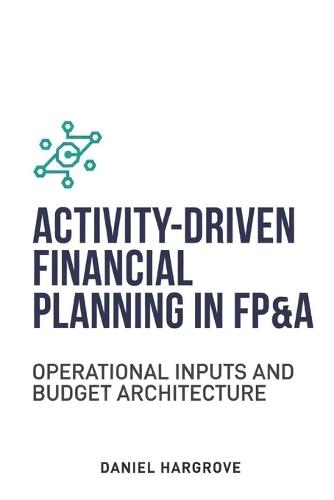
OverviewReactive PublishingModern FP&A teams are under pressure to move beyond static budgets and backward-looking variance reports. The organizations that outperform do not forecast in spreadsheets alone. They model the operational mechanics of the business itself. Activity-Driven Financial Planning in FP&A presents a structured approach to linking operational inputs with financial planning architecture. Rather than starting with revenue targets and cost ceilings, this book begins with business activity: volume drivers, capacity constraints, pricing mechanics, cost behavior, and resource intensity. From there, it builds a coherent planning framework that translates operational reality into financial structure. This book examines: How to identify and classify operational drivers across revenue, cost, and capital structures The difference between correlation-based forecasting and causal driver modeling Methods for constructing activity-linked revenue and expense models Designing planning frameworks that adapt to volume shifts, pricing changes, and cost elasticity Building driver trees and sensitivity layers for scenario analysis Integrating operational metrics into rolling forecasts and reforecast cycles Aligning planning architecture with strategic decision-making The emphasis is practical and system-oriented. Models are treated as living frameworks rather than static templates. Readers will learn how to structure planning systems that scale with business complexity and reduce reliance on arbitrary percentage adjustments. This book is written for FP&A professionals, finance managers, and financial analysts who want to deepen their technical modeling discipline and strengthen the link between operations and finance. It is particularly relevant for organizations operating in dynamic environments where traditional budgeting processes struggle to reflect real activity patterns. Instead of treating budgeting as an annual exercise, this work reframes planning as a structured representation of how the business actually functions. The result is a financial planning architecture grounded in operational logic and designed for adaptability. Full Product DetailsAuthor: Graham Wexler , Danny Munrow , Daniel F HargrovePublisher: Independently Published Imprint: Independently Published Dimensions: Width: 15.20cm , Height: 2.30cm , Length: 22.90cm Weight: 0.603kg ISBN: 9798248312849Pages: 456 Publication Date: 14 February 2026 Audience: General/trade , General Format: Paperback Publisher's Status: Active Availability: Available To Order We have confirmation that this item is in stock with the supplier. It will be ordered in for you and dispatched immediately. Table of ContentsReviewsAuthor InformationTab Content 6Author Website:Countries AvailableAll regions |
||||