Overview
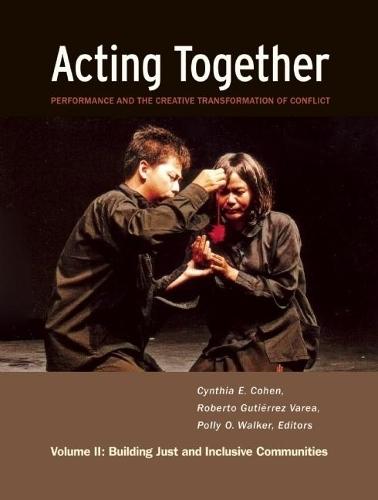
Acting Together, Volume ll, continues from where the first volume ends documenting exemplary peacebuilding performances in regions marked by social exclusion structural violence and dislocation. Acting Together: Performance and the Creative Transformation of Conflict is a two-volume work describing peacebuilding performances in regions beset by violence and internal conflicts. Volume I, Resistance and Reconciliation in Regions of Violence, emphasizes the role theatre and ritual play both in the midst and in the aftermath of direct violence, while Volume II: Building Just and Inclusive Communities, focuses on the transformative power of performance in regions fractured by ""subtler"" forms of structural violence and social exclusion. Volume I: Resistance and Reconciliation in Regions of Violence focuses on the role theatre and ritual play both in the midst and in the aftermath of violence. The performances highlighted in this volume nourish and restore capacities for expression, communication, and transformative action, and creatively support communities in grappling with conflicting moral imperatives surrounding questions of justice, memory, resistance, and identity. The individual chapters, written by scholars, conflict resolution practitioners, and artists who work directly with the communities involved, offer vivid firsthand accounts and analyses of traditional and nontraditional performances in Serbia, Uganda, Sri Lanka, Palestine, Israel, Argentina, Peru, India, Cambodia, Australia, and the United States. Complemented by a website of related materials, a documentary film, Acting Together on the World Stage, that features clips and interviews with the curators and artists, and a toolkit, or ""Tools for Continuing the Conversation,"" that is included with the documentary as a second disc, this book will inform and inspire socially engaged artists, cultural workers, peacebuilding scholars and practitioners, human rights activists, students of peace and justice studies, and whoever wishes to better understand conflict and the power of art to bring about social change. The Acting Together project is born of a collaboration between Theatre Without Borders and the Program in Peacebuilding and the Arts at the International Center for Ethics, Justice, and Public Life at Brandeis University. The two volumes are edited by Cynthia E. Cohen, director of the aforementioned program and a leading figure in creative approaches to coexistence and reconciliation; Roberto Gutierrez Varea, an award-winning director and associate professor at the University of San Francisco; and Polly O. Walker, director of Partners in Peace, an NGO based in Brisbane, Australia.
Full Product Details
Author: Cynthia Cohen ,
Roberto Gutiérrez Varea ,
Polly O. Walker ,
Senior Lecturer in Drama Education Mary Ann Hunter (University of Tasmania)
Publisher: New Village Press
Imprint: New Village Press
Dimensions:
Width: 15.20cm
, Height: 1.80cm
, Length: 22.90cm
Weight: 0.581kg
ISBN: 9781613320006
ISBN 10: 1613320000
Pages: 280
Publication Date: 01 December 2011
Audience:
Professional and scholarly
,
Professional & Vocational
Format: Paperback
Publisher's Status: Active
Availability: Manufactured on demand

We will order this item for you from a manufactured on demand supplier.
Language: English
Reviews
Advance Praise Humanity [has the] capacity to inflict great suffering and unfathomable misfortune. Yet art and, as we see in this work, theatre in particular, can show us that there is a greater force in creativity and a greater power in solidarity. It is in instances like these that art is not just contemplation and transcendence, but also a form of justice that cleanses and vindicates our species in a universal way. --Dr. Salomon Lerner Febres, former President, Truth and Reconciliation Commission of Peru Political and social failures begin and end in failures of imagination. Acting Together invites a major renewal of the dramatic imagination--for the sake of social healing and understanding. The project is itself an exemplar of the engaged imagination set free, a celebration and a challenge at once. --James Carroll, columnist and author, Jerusalem, Jerusalem This book gives Shakespeare's All the world's a stage new meaning. Experts in foreign policy and diplomacy, conflict resolution and peacemaking, as well as theatre and performance professionals, can learn from these extraordinary examples what theatre and performance can do to heal the wounds of violent conflict. --Ambassador Cynthia Schneider, PhD, Distinguished Professor in the Practice of Diplomacy, School of Foreign Service, Georgetown University Expert Reviews In Volume II of Acting Together, editors Cynthia E. Cohen, Roberto Gutierrez Varea, and Polly O. Walker present vigorous case studies on the use of performance to create just and inclusive communities. 'In situations characterized by structural violence, exclusion, and social injustice, building peace involves more than ending violent conflict, ' they write. In the aftermath of violence, structures to pursue justice and negotiate differences must be put in place. Silenced voices must be heard. --Jean Randich, Truthdig For the first time, the anthology and the Acting Together project provide a platform for peace-building artists to connect and to reflect on their work together with other scholars and practitioners. That in itself is already a significant achievement of the editors and curators of this complex and fascinating collection. --Serge Loode, Applied Theatre Research Advance Praise Humanity [has the] capacity to inflict great suffering and unfathomable misfortune. Yet art and, as we see in this work, theatre in particular, can show us that there is a greater force in creativity and a greater power in solidarity. It is in instances like these that art is not just contemplation and transcendence, but also a form of justice that cleanses and vindicates our species in a universal way. --Dr. Salomon Lerner Febres, former President, Truth and Reconciliation Commission of Peru Political and social failures begin and end in failures of imagination. Acting Together invites a major renewal of the dramatic imagination--for the sake of social healing and understanding. The project is itself an exemplar of the engaged imagination set free, a celebration and a challenge at once. --James Carroll, columnist and author, Jerusalem, Jerusalem This book gives Shakespeare's All the world's a stage new meaning. Experts in foreign policy and diplomacy, conflict resolution and peacemaking, as well as theatre and performance professionals, can learn from these extraordinary examples what theatre and performance can do to heal the wounds of violent conflict. --Ambassador Cynthia Schneider, PhD, Distinguished Professor in the Practice of Diplomacy, School of Foreign Service, Georgetown University Expert Reviews In Volume II of Acting Together, editors Cynthia E. Cohen, Roberto Gutierrez Varea, and Polly O. Walker present vigorous case studies on the use of performance to create just and inclusive communities. 'In situations characterized by structural violence, exclusion, and social injustice, building peace involves more than ending violent conflict, ' they write. In the aftermath of violence, structures to pursue justice and negotiate differences must be put in place. Silenced voices must be heard. --Jean Randich, Truthdig For the first time, the anthology and the Acting Together project provide a platform for peace-building artists to connect and to reflect on their work together with other scholars and practitioners. That in itself is already a significant achievement of the editors and curators of this complex and fascinating collection. --Serge Loode, Applied Theatre Research The recommendations of the Acting Together project are clear, grounded and convincing. The editors have demonstrated that performance can significantly contribute to the transformation of violent conflict, and can reach audiences that are inaccessible by other means. It also has the potential to support communities in mourning, those dealing with trauma and those celebrating resilience. Aesthetic excellence reinforces socio-political effectiveness if the integrity of the artistic process is respected. This comprises a strong argument for more peacebuilders to recognize and incorporate performance into their initiatives and for artists and peace-builders to explore their respective practices together. The recommendation of respecting the integrity of the artistic process will hopefully be a reminder for funders and NGOs to trust that the creative process of the performance will provide a transformative experience without the need for heavy-handed programmatic messages to be incorporated into the end-product. Finally, the anthology fills an important niche in connecting performers and peace practitioners. In the field of conflict resolution, artistic and creative initiatives are still seen as somewhat exotic, and are sometimes questioned with regards to their effectiveness. This has led to feelings of isolation and self-doubt among some practitioners. This anthology opens the curtain to showcase the beneficial effects of performance for creative conflict transformation and validates the courage, skill and determination of its proponents. For the first time, the anthology and the Acting Together project provide a platform for peace-building artists to connect and to reflect on their work together with other scholars and practitioners. That in itself is already a significant achievement of the editors and curators of this complex and fascinating collection. --Serge Loode Applied Theatre Research Humanity [has the] capacity to inflict great suffering and unfathomable misfortune. Yet art and, as we see in this work, theatre in particular, can show us that there is a greater force in creativity and a greater power in solidarity. It is in instances like these that art is not just contemplation and transcendence, but also a form of justice that cleanses and vindicates our species in a universal way. --Dr. Salomon Lerner Febres, former President, Truth and Reconciliation Commission of Peru Political and social failures begin and end in failures of imagination. Acting Together invites a major renewal of the dramatic imagination--for the sake of social healing and understanding. The project is itself an exemplar of the engaged imagination set free, a celebration and a challenge at once. --James Carroll, columnist and author, Jerusalem, Jerusalem This book gives Shakespeare's All the world's a stage new meaning. Experts in foreign policy and diplomacy, conflict resolution and peacemaking, as well as theatre and performance professionals, can learn from these extraordinary examples what theatre and performance can do to heal the wounds of violent conflict. --Ambassador Cynthia Schneider, PhD, Distinguished Professor in the Practice of Diplomacy, School of Foreign Service, Georgetown University In 1996, Back Bone Youth Arts devised a performance, Sk8 Grrl Space, to be shown only once in a male-dominated skateboarding park in Australia. Thirteen young women played scenes that addressed women's limited access to public space. One audience member became so riled he shattered a bottle on the steep-sided skate bowl where the women performed. The smashed bottle didn't shut the performance down, but instead was incorporated into the action. In Volume II of Acting Together, editors Cynthia E. Cohen, Roberto Gutierrez Varea, and Polly O. Walker present vigorous case studies on the use of performance to create just and inclusive communities. In situations characterized by structural violence, exclusion, and social injustice, building peace involves more than ending violent conflict, they write. In the aftermath of violence, structures to pursue justice and negotiate differences must be put in place. Silenced voices must be heard. In his foreword, Salomon Lerner Febres writes, .. . the violent act involves robbing the individual of the possibility of occupying a dignified space in the world of our lives, that is, of depriving her or him of their condition of person. This is why those who suffer any form of violence, experience an attack on their identity. ... The great power of representation lies precisely in its symbolic force, in its ability to restore, through re-enactment, the meaning inherent in the traumatic act. Francois Matarasso writes, Participation in the arts is a guarantor of other human rights because the first thing that is taken away from vulnerable, unpopular, or minority groups is the right to self-expression. Reading the powerful studies in Acting Together, you witness survivors of injustice reclaim their right to self-expression, and in so doing, awaken others. In these stories, theater makers, community leaders, actors, activists, scholars and others recount how they dealt with issues of pressing urgency to their communities such as economic or social inequality, gender-based violence, poverty and displacement of refugees. From storytelling to skateboarding, from hip-hop to Playback Theatre, the case studies highlight an astonishing diversity of performance modes. They document aesthetic surprises and how transformation occurs. How does transformation begin? How does it spread through a community to permeate the world at large? These are crucial questions in peace building that Acting Together addresses theoretically, aesthetically and practically. Click here to read the full review! --Jean Randich Truthdig (11/20/2012)
The recommendations of the Acting Together project are clear, grounded and convincing. The editors have demonstrated that performance can significantly contribute to the transformation of violent conflict, and can reach audiences that are inaccessible by other means. It also has the potential to support communities in mourning, those dealing with trauma and those celebrating resilience. Aesthetic excellence reinforces socio-political effectiveness if the integrity of the artistic process is respected. This comprises a strong argument for more peacebuilders to recognize and incorporate performance into their initiatives and for artists and peace-builders to explore their respective practices together. The recommendation of respecting the integrity of the artistic process will hopefully be a reminder for funders and NGOs to trust that the creative process of the performance will provide a transformative experience without the need for heavy-handed programmatic messages to be incorporated into the end-product.Finally, the anthology fills an important niche in connecting performers and peace practitioners. In the field of conflict resolution, artistic and creative initiatives are still seen as somewhat exotic, and are sometimes questioned with regards to their effectiveness. This has led to feelings of isolation and self-doubt among some practitioners. This anthology opens the curtain to showcase the beneficial effects of performance for creative conflict transformation and validates the courage, skill and determination of its proponents. For the first time, the anthology and the Acting Together project provide a platform for peace-building artists to connect and to reflect on their work together with other scholars and practitioners. That in itself is already a significant achievement of the editors and curators of this complex and fascinating collection.--Serge Loode Applied Theatre Research
<br> An invaluable resource for the community of practitioners, students, scholars and activists interested in the role of the arts in overcoming the worst of contemporary violence, war and disaster, this work will turn experience and intuition into a new form of expertise. It will provide both the advocates of the arts and those policymakers who work in conflict areas a major opportunity to understand how the arts can contribute to change--and a means to explain to those who remain skeptical. In short, Acting Together is a major resource for the learning that is needed in this field. <br>--James Thompson<br><br> When I was director of the Community Relations Council in Northern Ireland, we discovered that theatre and ritual were essential in 'outing' issues and feelings that were hidden or dismissed in formalized discussions, energizing discussions around very difficult issues, and encouraging creativity in seeking solutions to violent conflicts. Acting Together will assist in the dissemination of successful theatre and ritual initiatives, increasing the number of peacemaking tools available for use in conflicts worldwide. <br>--Mari Fitzduff<br><br> In Volume II of Acting Together , editors Cynthia E. Cohen, Roberto Gutierrez Varea, and Polly O. Walker present vigorous case studies on the use of performance to create just and inclusive communities. 'In situations characterized by structural violence, exclusion, and social injustice, building peace involves more than ending violent conflict, ' they write. In the aftermath of violence, structures to pursue justice and negotiate differences must be put in place. Silenced voices must be heard. <br>--Jean Randich, Truthdig
Author Information
Cynthia E. Cohen is director of the Program in Peacebuilding and the Arts at the International Center for Ethics, Justice, and Public Life at Brandeis University. Roberto Gutiérrez Varea began his career in theater in his native Argentina. His research and creative work focuses on live performance as means of resistance and peacebuilding, in the context of social conflict and state violence. Polly O. Walker is assistant professor of peace and conflict studies at Juniata College in Huntingdon, Pennsylvania. She is director of Partners in Peacebuilding, a private consulting organization based in Brisbane, Australia, and lectures widely on intercultural conflict resolution.