Awards
- Winner of Choice Outstanding Academic Title 2024
Overview
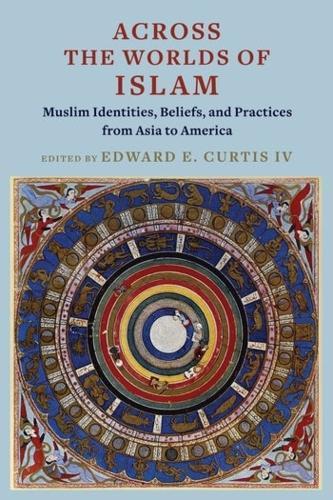
Muslim people are found all over the world. Most live outside the Middle East, from Asia to the Americas. The vast majority of contemporary Muslims are not fluent in Arabic, and speakers of languages such as Persian, Urdu, and Turkish have made essential contributions to Islamic history and culture. However, typical courses on Islam tend to downplay areas beyond the Middle East, focusing on Arabic texts and elite theological and doctrinal arguments. This book offers an inclusive view of the diversity and complexity of the many worlds of Islam, investigating ethics and aesthetics as much as scriptures and theology. By paying attention to Muslims who are socially, culturally, doctrinally, or politically marginalized, it provides a comprehensive and all-embracing vision of the religion and its many interrelated communities. Contributors from a range of personal and intellectual backgrounds explore the capaciousness of Muslim identities, helping readers achieve a broader understanding of the past, present, and future of the Muslim world. This book includes communities such as the Nation of Islam and Alevi Muslims, and it goes beyond rituals like prayer and fasting to consider a wider array of practices, such as tattooing. Across the Worlds of Islam is at once student-friendly and cutting-edge, written with both introductory courses and general readers in mind. Examining Muslim identity and practice from the perspective of the margins, it offers nuanced portraits of Muslim life across geographic and sectarian divisions.
Full Product Details
Author: Edward E. Curtis, IV (Millennium Chair of the Liberal Arts and Professor of Religious Studies, Indiana University-Purdue University Indianapolis)
Publisher: Columbia University Press
Imprint: Columbia University Press
ISBN: 9780231210645
ISBN 10: 0231210647
Pages: 328
Publication Date: 18 July 2023
Audience:
Professional and scholarly
,
Professional & Vocational
Format: Hardback
Publisher's Status: Active
Availability: Manufactured on demand

We will order this item for you from a manufactured on demand supplier.
Reviews
It extols without exhausting the search for humanity that underlies each chapter and unifies the book as a whole. It is not an easy or comfortable read, but it is a dazzling display of diversity across time and space, disciplines and methods, in pursuit of an Islam at once known and unknowable. * Journal of Islamic Studies * This text is exciting and probing....Highly recommended. * Choice * Engagingly written and thoughtful with a mix of theory and practice, this book claims a space in the centre of academic debates about how to teach “Islam” to draw our attention to the complexities and diversities of Islam as embodiment, performance, and guiding compass. * Journal of Religious History * I do not hesitate in recommending this book to students and teachers of religion generally, and of Islam in particular. -- Clinton Bennett * Religion * ...media producers, teachers, and politicians (to name a few) might take note of the volume’s suggested modus of inclusion, so that additional publics might better appreciate and apperceive the vast diversity that constitutes Muslim lives, past and present. * Reading Religion * This book ambitiously engages Islam as a global civilizational presence. It offers a fresh rethinking of how we imagine Muslims and Islam, putting Muslim communities and discourses usually treated as ‘marginal’ back in the center. Strongly recommended for both students of Islamic studies and religious studies more widely. -- Omid Safi, author of <i>Radical Love: Teachings from the Islamic Mystical Tradition</i> Across the Worlds of Islam points to an Islam that is full of both elasticity and contestation by foregrounding Muslims who are often seen as marginal or peripheral. It challenges how scholars have approached the field of Islamic studies and emphasizes the need for a more nuanced and ethnographic approach to the study of Islam in general and minority groups in particular. -- Liyakat Takim, author of <i>Shi’ism Revisited: Ijtihad and Reformation in Contemporary Times</i> Islam is more than Sunnism, Middle Eastern regions and language, and ‘orthodox’ norms. This book’s wide range of entries from scholars whose expertise spans the globe is a crucial addition to libraries, college classrooms, and public understanding—precisely because it shows just how much more Islam is than mainstream understandings allow. -- Ilyse R. Morgenstein Fuerst, author of <i>Indian Muslim Minorities and the 1857 Rebellion: Religion, Rebels, and Jihad</i>
Across the Worlds of Islam points to an Islam that is full of both elasticity and contestation by dealing with Muslims who are often seen as marginal or peripheral. It challenges how scholars have approached the field of Islamic studies and emphasizes the need for a more nuanced and ethnographic approach to the study of Islam in general and minority groups in particular. -- Liyakat Takim, author of <i>Shi'ism Revisited: Ijtihad and Reformation in Contemporary Times</i>
This book ambitiously engages Islam as a global civilizational presence. It offers a fresh rethinking of how we imagine Muslims and Islam, putting Muslim communities and discourses usually treated as 'marginal' back in the center. Strongly recommended for both students of Islamic studies and religious studies more widely. -- Omid Safi, author of <i>Radical Love: Teachings from the Islamic Mystical Tradition</i> Across the Worlds of Islam points to an Islam that is full of both elasticity and contestation by foregrounding Muslims who are often seen as marginal or peripheral. It challenges how scholars have approached the field of Islamic studies and emphasizes the need for a more nuanced and ethnographic approach to the study of Islam in general and minority groups in particular. -- Liyakat Takim, author of <i>Shi'ism Revisited: Ijtihad and Reformation in Contemporary Times</i> Islam is more than Sunnism, Middle Eastern regions and language, and 'orthodox' norms. This book's wide range of entries from scholars whose expertise spans the globe is a crucial addition to libraries, college classrooms, and public understanding-precisely because it shows just how much more Islam is than mainstream understandings allow. -- Ilyse R. Morgenstein Fuerst, author of <i>Indian Muslim Minorities and the 1857 Rebellion: Religion, Rebels, and Jihad</i>
Author Information
Edward E. Curtis IV is professor of religious studies, William M. and Gail M. Plater Chair of the Liberal Arts, and adjunct professor of American studies and Africana studies at the Indiana University School of Liberal Arts in Indianapolis. He is the author or editor of a number of books, including The Columbia Sourcebook of Muslims in the United States (2009) and Muslims of the Heartland: How Syrian Immigrants Made a Home in the American Midwest (2022).