Overview
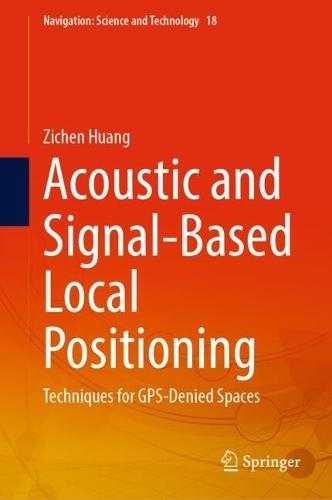
This book offers a comprehensive exploration of indoor acoustic positioning systems designed for environments where GPS is ineffective. It thoroughly examines the design and implementation of sound-based positioning systems (SPS), focusing on methods such as Time of Arrival (ToA), Angle of Arrival (AoA), and Time Difference of Arrival (TDoA) to achieve accurate 3D localization. The book addresses challenges including Doppler shifts from moving robots, signal reflections (multipath) due to obstacles, and environmental factors like wind and temperature variations that affect acoustic signal propagation. By providing detailed analysis and practical mitigation strategies, it equips readers with solutions to enhance SPS accuracy and reliability. Special features include illustrative diagrams, comprehensive tables, and an appendix containing key function code for building a ToA-based acoustic positioning system—facilitating hands-on learning and implementation. This resource will be invaluable to robotics engineers, indoor navigation system developers, and researchers in autonomous systems who seek to design and deploy reliable indoor positioning solutions in GPS-denied environments.
Full Product Details
Author: Zichen Huang
Publisher: Springer Verlag, Singapore
Imprint: Springer Verlag, Singapore
ISBN: 9789819560820
ISBN 10: 9819560829
Pages: 131
Publication Date: 03 April 2026
Audience:
Professional and scholarly
,
Professional & Vocational
Format: Hardback
Publisher's Status: Forthcoming
Availability: Not yet available

This item is yet to be released. You can pre-order this item and we will dispatch it to you upon its release.
Author Information
Zichen Huang received his B.E. in Agricultural Mechanization and Automation from Shenyang Agricultural University, China in 2015, and his M.S. and Ph.D. in Environmental Science and Technology from Kyoto University, Japan in 2017 and 2020, respectively. From 2020 to 2024, he was a Research Fellow at Kyoto University. Since April 2025, Dr. Huang has been a ZJU 100 Young Professor at Zhejiang University, China. Dr. Huang’s research focuses on intelligent perception systems and agricultural robotics for fruit and vegetable production. His interests include intelligent sensing of crop growth, robotic navigation in complex environments (including greenhouses), multi-factor coupled growth modeling, and intelligent decision-making models for water, fertilizer, and pesticide management. He has served as the principal investigator for three funded research projects. Dr. Huang was selected as a JSPS International Research Fellow. Since 2020, he has published 16 SCI-indexed papers as first or corresponding author. He has delivered four invited talks at prestigious international conferences (including events organized by the UN FAO) and served as a workshop chair three times at leading robotics conferences such as IEEE IROS. Additionally, he serves as a youth editorial board member for several academic journals, reflecting his active role in the research community.