Overview
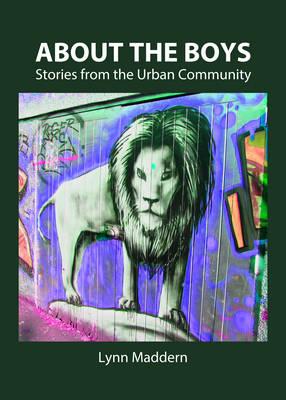
At a time of unprecedented international immigration, seven Somali and African Caribbean boys are working their way through primary and secondary education. It is inner city Bristol and, like large cities across the UK, local communities and schools are receiving many thousands of Somali refugees on their doorstep. As new priorities are swiftly established in the staff room, a new pecking order develops in the playground.In an attempt to improve relations between rival groups, seven boys are referred into a Year 6 social skills group run by the author. Five years later she meets the boys again, and at home with their mothers, grandmothers and siblings, hears stories of exclusion and disappointment, success and ambition as they progress towards their GCSE examinations.Drawn from the author's doctoral research, this engaging and emotionally honest book offers gripping stories from young people who live at the leading edge of demographic change; a critical discourse on the underachievement of Black and Somali children; a detailed account of the use of a performance narrative methodology; and an exploration of the author's positioning as a White researcher working with Black participants.About the Boys is vital reading for those interested in the attainment of Black and Somali children and in schools and communities coping with demographic change. It is of particular relevance to students and researchers of narrative inquiry.
Full Product Details
Author: Lynn Maddern
Publisher: Cambridge Scholars Publishing
Imprint: Cambridge Scholars Publishing
Edition: Unabridged edition
Dimensions:
Width: 14.80cm
, Height: 2.50cm
, Length: 21.20cm
Weight: 0.499kg
ISBN: 9781443849449
ISBN 10: 1443849448
Pages: 280
Publication Date: 05 November 2013
Audience:
College/higher education
,
Professional and scholarly
,
Postgraduate, Research & Scholarly
,
Professional & Vocational
Format: Hardback
Publisher's Status: Active
Availability: Available To Order

We have confirmation that this item is in stock with the supplier. It will be ordered in for you and dispatched immediately.
Reviews
This book is especially notable for modeling a commitment to dialectical communication practices. Maddern's pursuit of a flexible analytical framework that leads into dialectical processes is the strongest contribution this book makes to literature that exists on the intersection of youth, psychology, education, and Somali refugee communities in the United Kingdom. Not only does Maddern communicate with the families through lyric poetry, but she also communicates the research to clinical, academic, and community organizations, with translations in Somali to better reach the Somali community. Maddern finds that narrative inquiry sheds light on aspects of the research that she otherwise would not have seen. For the reader, this inquiry also sheds light on the important, yet often silenced issues of commonality and difference between researcher and study participants. -Dani M. Scherer, College of Education, University of Massachusetts Amherst; Anthropology and Education Quarterly 45.3 This book contains compelling stories of family and school life. The combination of urban and ethical know-how on the part of the writer, and engaging stories from her participants, makes the book a very good read in its own right. This work is quite evidently written 'with' and not 'about' the communities it is describing. It is written beautifully and poetically and, above all, is written from the heart. I read this book in its earlier incarnation as a PhD thesis. I read a lot of theses - an occupational hazard - but there are not many that have reduced me to tears and got me roaring with laughter as this one did. Lynn Maddern's work makes an original and substantive contribution to methodological innovations in psychological research, as well the literature of race, class and equality in education. - Jane Speedy, Emeritus Professor of Education, University of Bristol Lynn Maddern's engagingly written study yields fascinating insights into the lives and aspirations of young men from minority ethnic backgrounds in Bristol. She explores the challenges and rewards of inter-cultural encounters with admirable honesty, clarity and passion. - Dr Madge Dresser, Associate Professor of History, University of the West of England
This book is especially notable for modeling a commitment to dialectical communication practices. Maddern's pursuit of a flexible analytical framework that leads into dialectical processes is the strongest contribution this book makes to literature that exists on the intersection of youth, psychology, education, and Somali refugee communities in the United Kingdom. Not only does Maddern communicate with the families through lyric poetry, but she also communicates the research to clinical, academic, and community organizations, with translations in Somali to better reach the Somali community. Maddern finds that narrative inquiry sheds light on aspects of the research that she otherwise would not have seen. For the reader, this inquiry also sheds light on the important, yet often silenced issues of commonality and difference between researcher and study participants. -Dani M. Scherer, College of Education, University of Massachusetts Amherst; Anthropology and Education Quarterly 45.3 This book contains compelling stories of family and school life. The combination of urban and ethical know-how on the part of the writer, and engaging stories from her participants, makes the book a very good read in its own right. This work is quite evidently written 'with' and not 'about' the communities it is describing. It is written beautifully and poetically and, above all, is written from the heart. I read this book in its earlier incarnation as a PhD thesis. I read a lot of theses - an occupational hazard - but there are not many that have reduced me to tears and got me roaring with laughter as this one did. Lynn Maddern's work makes an original and substantive contribution to methodological innovations in psychological research, as well the literature of race, class and equality in education. -Jane Speedy, Emeritus Professor of Education, University of Bristol Lynn Maddern's engagingly written study yields fascinating insights into the lives and aspirations of young men from minority ethnic backgrounds in Bristol. She explores the challenges and rewards of inter-cultural encounters with admirable honesty, clarity and passion. -Dr Madge Dresser, Associate Professor of History, University of the West of England
This book is especially notable for modeling a commitment to dialectical communication practices. Maddern's pursuit of a flexible analytical framework that leads into dialectical processes is the strongest contribution this book makes to literature that exists on the intersection of youth, psychology, education, and Somali refugee communities in the United Kingdom. Not only does Maddern communicate with the families through lyric poetry, but she also communicates the research to clinical, academic, and community organizations, with translations in Somali to better reach the Somali community. Maddern finds that narrative inquiry sheds light on aspects of the research that she otherwise would not have seen. For the reader, this inquiry also sheds light on the important, yet often silenced issues of commonality and difference between researcher and study participants. -Dani M. Scherer, College of Education, University of Massachusetts Amherst; Anthropology and Education Quarterly 45.3 This book contains compelling stories of family and school life. The combination of urban and ethical know-how on the part of the writer, and engaging stories from her participants, makes the book a very good read in its own right. This work is quite evidently written 'with' and not 'about' the communities it is describing. It is written beautifully and poetically and, above all, is written from the heart. I read this book in its earlier incarnation as a PhD thesis. I read a lot of theses - an occupational hazard - but there are not many that have reduced me to tears and got me roaring with laughter as this one did. Lynn Maddern's work makes an original and substantive contribution to methodological innovations in psychological research, as well the literature of race, class and equality in education. -Jane Speedy, Emeritus Professor of Education, University of Bristol Lynn Maddern's engagingly written study yields fascinating insights into the lives and aspirations of young men from minority ethnic backgrounds in Bristol. She explores the challenges and rewards of inter-cultural encounters with admirable honesty, clarity and passion. -Dr Madge Dresser, Associate Professor of History, University of the West of England
Author Information
Lynn Maddern is a Consultant Clinical Psychologist with the Child and Adolescent Mental Health Service (CAMHS), North Bristol NHS Trust. Lynn is also a Visiting Fellow at the Graduate School of Education, University of Bristol, UK.