Overview
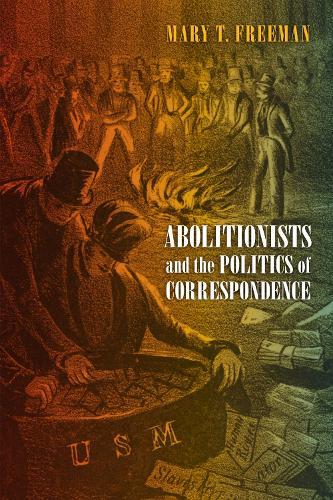
Argues that letter writing enabled a disparate and politically marginal assortment of abolitionists to take shape as a mass movement Abolitionists and the Politics of Correspondence examines how opponents of slavery harnessed the power of letter writing to further their political aims, arguing that this practice enabled a disparate and politically marginal assortment of people to take shape as a coherent and powerful movement. Mary T. Freeman fuses a political and social study of abolitionists with a focus on letter writing and epistolary culture. Through the analysis of correspondence, Freeman portrays abolitionism as a mass movement, made up of participants from a wide range of backgrounds, and she emphasizes the diversity of the movement's geography, membership, and political activities. The book highlights everyday Americans' involvement in abolition, shifting focus away from the affluent and publicly prominent white leadership. It pays particular attention to those who used letters to intervene in politics when other avenues were closed to them, especially women and Black Americans. Freeman expands scholarly understandings of abolitionism by showing how letters enabled activists to transmit information and ideas across long distances in a relatively secure format and how they connected people who otherwise would remain strangers. Correspondence also provided a means of political expression to people on the political fringes and disfranchised persons. Even antislavery leaders and those whose social positions were seemingly secure often used the semi-private medium of correspondence strategically. Letter writers could hone their ideas beyond the purview of public audiences, or, when private letters became public, cultural norms granted their contents a stamp of authenticity and directness. Abolitionists and the Politics of Correspondence concerns not just what people wrote about but also how they wrote about it: how they manipulated, exploited, and subverted cultural conventions to make political statements and claims.
Full Product Details
Author: Mary Freeman
Publisher: University of Pennsylvania Press
Imprint: University of Pennsylvania Press
ISBN: 9781512828955
ISBN 10: 1512828955
Pages: 312
Publication Date: 17 February 2026
Audience:
College/higher education
,
Postgraduate, Research & Scholarly
Format: Hardback
Publisher's Status: Active
Availability: Not yet available

This item is yet to be released. You can pre-order this item and we will dispatch it to you upon its release.
Reviews
""American abolitionism--the greatest social movement of the nineteenth century--relied on networks of activists. And until now no one has studied how those activists wrote the letters that made these networks possible. Mary T. Freeman's Abolitionists and the Politics of Correspondence will be the definitive study of the epistolatory practices of American abolitionists. In this elegantly written and exhaustively researched book, Freeman shows how abolitionists--both famous and unknown--used the written letter to make connections, argue doctrine, sustain each other's morale, and coordinate the movement.""-- ""Peter Wirzbicki, Princeton University""
""American abolitionism—the greatest social movement of the nineteenth century—relied on networks of activists. And until now no one has studied how those activists wrote the letters that made these networks possible. Mary T. Freeman's Abolitionists and the Politics of Correspondence will be the definitive study of the epistolatory practices of American abolitionists. In this elegantly written and exhaustively researched book, Freeman shows how abolitionists—both famous and unknown—used the written letter to make connections, argue doctrine, sustain each other's morale, and coordinate the movement."" - Peter Wirzbicki, Princeton University
Author Information
Mary T. Freeman is Assistant Professor of History at the University of Maine.