Overview
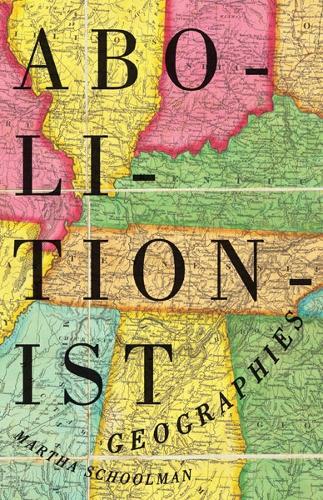
In Abolitionist Geographies, MarthaSchoolman contends that antislavery writers consistently refused standardgeographical terms, instead expressing their dissenting views by appealing toother anachronistic, partial, or entirely fictional northsouth and eastwestaxes. Schoolman reveals abolitionist literature's explicit and intentionalinvestment in geography as an idiom of political critique, by turns liberal andradical, practical and utopian.
Full Product Details
Author: Martha Schoolman
Publisher: University of Minnesota Press
Imprint: University of Minnesota Press
Dimensions:
Width: 14.00cm
, Height: 2.50cm
, Length: 21.60cm
Weight: 0.340kg
ISBN: 9780816680757
ISBN 10: 0816680752
Pages: 240
Publication Date: 07 October 2014
Audience:
General/trade
,
Professional and scholarly
,
General
,
Professional & Vocational
Format: Paperback
Publisher's Status: Active
Availability: Temporarily unavailable

The supplier advises that this item is temporarily unavailable. It will be ordered for you and placed on backorder. Once it does come back in stock, we will ship it out to you.
Reviews
Abolitionist Geographies offers exciting new ways of thinking about place, time, politics, and form in the antislavery writings of such important antebellum writers as Emerson, William Wells Brown, Martin Delany, and Stowe. Drawing on recent work in diasporic and hemispheric studies, Schoolman shows how key writers of the time made use of spatial experimentation to conceive of the nation well beyond North and South sectionalism. Abolitionist Geographies poses a fresh challenge to scholars of the period to address matters of nation and geography more complexly. -Robert S. Levine, author of Dislocating Race and Nation Whatever else it does in relation to the historiography of antebellum abolition - and indeed it does much - Schoolman's book teaches us to see this reopening of abolitionist time as an opening of abolitionist space as well. -Antipode Martha Schoolman's Abolitionist Geographies is a valuable contribution to the growing body of scholarship that explores connections between the literary and the geographic. -Journal of Historical Geography In Schoolman's skilled reading of its geographies, we now have a map to the abolitionist imagination. -Journal of American Studies Schoolman offers a nuanced, historically and geographically informed understanding of abolitionist discourses, and foregrounds the fine details and rough edges that often compromise cursory readings of abolition. [Abolitionist Geographies] is without doubt an important contribution to the renewed scholarly interest in abolitionist literature. -African American Review Martha Schoolman's Abolitionist Geographies contributes significantly to the history of the antislavery movement between British emancipation in 1833 and John Brown's 1859 Harpers Ferry raid. -Journal of American History Sophisticated and meticulously researched. -American Literature A nuanced topography that highlights the contradictory, the quotidian, and the contextual strategies ever present in nineteenth-century abolitionist geographies. -Common-Place Abolitionist Geographies offers an exciting model of a micropolitical approach to American literatures, where hierarchies, solidarities, and fissures among racial-ethnic groups and what we think of as their literatures emerge in relation to and against regions' multinational histories. -MELUS A timely and engaging study of spatial imaginaries and geographical practices in U.S. antislavery literature. -Emerson Society Papers Schoolman's ambitious chronology compellingly argues for the importance of space to abolitionist thought, and demonstrates that geography is a means to remap established genealogies of the abolition movement, and to rethink its canonical literature. -Year's Work in English Studies
Whatever else it does in relation to the historiography of antebellum abolition--and indeed it does much--Schoolman s book teaches us to see this reopening of abolitionist time as an opening of abolitionist space as well. Antipode Martha Schoolman's Abolitionist Geographies is a valuable contribution to the growing body of scholarship that explores connections between the literary and the geographic. Journal of Historical Geography In Schoolman s skilled reading of its geographies, we now have a map to the abolitionistimagination. Journal of American Studies Schoolman offers a nuanced, historically and geographically informed understanding of abolitionist discourses, and foregrounds the fine details and rough edges that often compromise cursory readings of abolition. [ Abolitionist Geographies ] is without doubt an important contribution to the renewed scholarly interest in abolitionist literature. African American Review Schoolman s Abolitionist Geographies contributes significantly to the history of the antislavery movement between British emancipation in 1833 and John Brown s 1859 Harpers Ferry raid. Journal of American History
Whatever else it does in relation to the historiography of antebellum abolition - and indeed it does much - Schoolman s book teaches us to see this reopening of abolitionist time as an opening of abolitionist space as well. <i>Antipode</i></p> Martha Schoolman's <i>Abolitionist Geographies</i> is a valuable contribution to the growing body of scholarship that explores connections between the literary and the geographic. <i>Journal of Historical Geography</i></p> In Schoolman s skilled reading of its geographies, we now have a map to the abolitionist imagination. <i>Journal of American Studies</i></p> Schoolman offers a nuanced, historically and geographically informed understanding of abolitionist discourses, and foregrounds the fine details and rough edges that often compromise cursory readings of abolition. [<i>Abolitionist Geographies</i>] is without doubt an important contribution to the renewed scholarly interest in abolitionist literature. <i>African American Review</i></p> Martha Schoolman s <i>Abolitionist Geographies</i> contributes significantly to the history of the antislavery movement between British emancipation in 1833 and John Brown s 1859 Harpers Ferry raid. <i>Journal of American History</i></p> Sophisticated and meticulously researched. <i>American Literature</i></p> A nuanced topography that highlights the contradictory, the quotidian, and the contextual strategies ever present in nineteenth-century abolitionist geographies. <i>Common-Place</i></p> A timely and engaging study of spatial imaginaries and geographical practices in U.S. antislavery literature. <i>Emerson Society Papers</i></p> Schoolman s ambitious chronology compellingly argues for the importance of space to abolitionist thought, and demonstrates that geography is a means to remap established genealogies of the abolition movement, and to rethink its canonical literature. <i>Year s Work in English Studies</i></p>
Abolitionist Geographies offers exciting new ways of thinking about place, time, politics, and form in the antislavery writings of such important antebellum writers as Emerson, William Wells Brown, Martin Delany, and Stowe. Drawing on recent work in diasporic and hemispheric studies, Schoolman shows how key writers of the time made use of spatial experimentation to conceive of the nation well beyond North and South sectionalism. Abolitionist Geographies poses a fresh challenge to scholars of the period to address matters of nation and geography more complexly. --Robert S. Levine, author of Dislocating Race and Nation
Author Information
Martha Schoolman teaches in the English Department at Dickinson College. She is coeditor of the essay collection Abolitionist Places.