Overview
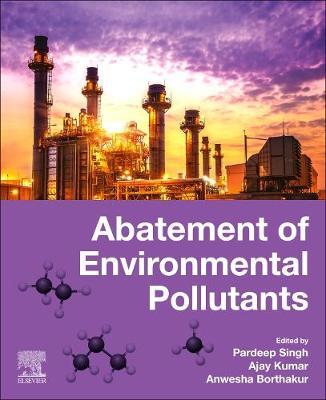
Abatement of Environmental Pollutants: Trends and Strategies addresses new technologies and provides strategies for environmental scientists, microbiologists and biotechnologists to help solve problems associated with the treatment of industrial wastewater. The book helps readers solve pollution challenges using microorganisms in bioremediation technologies, including discussions on global technologies that have been adopted for the treatment of industrial wastewater and sections on the lack of proper management. Moreover, limited space, more stringent waste disposal regulations and public consciousness have made the present techniques expensive and impractical. Therefore, there is an urgent need to develop sustainable management technologies for industries and municipalities. To remove the damaging effect of organic pollutants on the environment, various new technologies for their degradation have been recently discovered.
Full Product Details
Author: Pardeep Singh (Assistant Professor, Department of Environmental Science, PGDAV College, University of Delhi, New Delhi, India) ,
Ajay Kumar (Assistant Professor, Amity Institute of Biotechnology, Amity University, Noida, Uttar Pradesh, India) ,
Anwesha Borthakur (Leuven International and European Studies (LINES), KU Leuven, Belgium) ,
Anwesha Borthakur (Research Fellow, Centre for Studies in Science Policy, Jawaharlal Nehru University (JNU), New Delhi, India)
Publisher: Elsevier Science Publishing Co Inc
Imprint: Elsevier Science Publishing Co Inc
Weight: 0.770kg
ISBN: 9780128180952
ISBN 10: 0128180951
Pages: 378
Publication Date: 28 August 2019
Audience:
Professional and scholarly
,
Professional & Vocational
Format: Paperback
Publisher's Status: Active
Availability: Manufactured on demand

We will order this item for you from a manufactured on demand supplier.
Author Information
Pardeep Singh is Professor and Head at the School of Advanced Chemical Sciences, Shoolini University, Solan, India. He is specialized in physical chemistry and heads a lab of research scholars who work on photocatalysis with the aim of generating new knowledge on graphene-based photocatalytic materials and processes to develop novel de-pollution treatments with enhanced efficiency and pilot-scale applicability. He is also exploring the generation of bio-waste material-based activated carbon for adsorption-based removal of aqueous phase pollutants. Dr. Ajay Kumar is currently working as an assistant professor at Amity Institute of Biotechnology, Amity University, Noida, India. Dr. Kumar recently completed his tenure as a visiting scientist from Agriculture Research Organization, Volcani Center, Israel. He has published more than 175 research, review articles, and book chapters in international and national journals. He serves as an associate editor for Frontiers in Microbiology and as guest editor for various journals such as Plants, Microorganisms, and Sustainability. Dr. Kumar has also edited more than 32 books with the leading publishers such as Elsevier, Springer, and Wiley. Dr. Kumar has wide area of research experience, especially in the field of plant-microbe Interactions, microbial biocontrol, Postharvest management of fruits, microbial endophytes related to medicinal plants and cyanobacteria-pesticides interactions. Dr. Anwesha Borthakur is a research fellow at the Centre for Studies in Science Policy, Jawaharlal Nehru University, New Delhi. She has an M.Phil and PhD in Science Policy Studies. The area of her both M.Phil and PhD studies was waste management and policy implications in India. She has published more than 30 papers/chapters in international peer-reviewed journals and books. Presently working as a Post Doctoral Fellow.