Overview
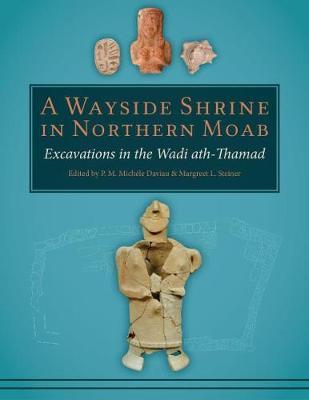
Major recent excavations have shed much light on the complexity of Iron Age society and religion in southern Palestine, a region where both Judeans and Edomites lived. However, it is not clear whether the religious practices attested at these sites were a reflection of localised customs or were common rituals for peoples of Cisjordan and we do not know their extent. An isolated shrine site at Wadi ath-Thamad Site WT-13 in northern Moab which contained numerous finds of Iron Age figurines and statues has been the subject of detailed excavation. The rich harvest of figurines, ceramic statues, beads, miniature ceramic vessels, architectural models, faunal remains and shells and fossils constitutes the evidence for repeated cultic activities. Although dating to the Iron Age at the time of the consolidation of the kingdom of Moab, there is insufficient evidence at present to determine the full range of cultic practices and deities venerated by the peoples of the lands within ancient Moab and by those visitors to the shrine. The links between WT-13 and the surrounding town sites is only now coming to light with excavation at Atarus and Khirbat al-Mudayna, as well as at the Ammonite site of Tall Damiyah in the Jordan Valley, where a comparable shrine has recently been uncovered. WT-13 clearly serves as a link between the Jordan Valley and the Negev, adding to our knowledge of local and foreign influences in the region during the Iron Age.
Full Product Details
Author: P Michèle Daviau ,
Margreet L Steiner
Publisher: Oxbow Books
Imprint: Oxbow Books
ISBN: 9781785707087
ISBN 10: 1785707086
Pages: 272
Publication Date: 15 September 2017
Audience:
Professional and scholarly
,
Professional & Vocational
Format: Hardback
Publisher's Status: Active
Availability: Available To Order

We have confirmation that this item is in stock with the supplier. It will be ordered in for you and dispatched immediately.
Reviews
A Wayside Shrine in Moab is a splendid volume for both the archaeology of the Levant broadly construed and for religion in the Levant. As an all too often understudied region, the volume is a welcome addition. Moreover, with a large range of data-data also available online-scholars will undoubtedly engage it and link it with other finds throughout the region. * The Biblical Reviewer * We have to thank [the author] for such an impressive work of one of the major discoveries of the last decades... a stimulating excavation report and a valuable source of information for every scholar interested in ancient religion, the ancient Near East and material culture in general. * Bibliotheca Orientalis *
We have to thank [the author] for such an impressive work of one of the major discoveries of the last decades... a stimulating excavation report and a valuable source of information for every scholar interested in ancient religion, the ancient Near East and material culture in general. * Bibliotheca Orientalis *
Author Information
P. M. Michèle Daviau (University of Toronto, 1990) is professor emerita of Near Eastern Archaeology at Wilfrid Laurier University. She has excavated in North America, Israel and Jordan, where she directed excavations at Tall Jawa, south of Amman and is currently director of the Wadi ath-Thamad Project in northern Moab. She edited The World of the Aramaeans and has published four volumes, Excavations at Tall Jawa, and is now preparing a study of the Iron Age pottery. She has a special interest in religious iconography and the domestic cult and in the archaeology of Jordan. Margreet L. Steiner (University of Leiden, 1994) is an independent scholar in Leiden, The Netherlands. She has produced final publications of Kathleen Kenyon’s excavations in Jerusalem and is the co-editor of The Oxford Handbook of the Archaeology of the Levant (10.000 – 350 BCE). For the past thirty-five years she has participated in or directed excavations in Jordan, Syria, Lebanon and the Palestinian Territories. Currently she is co-director of the renewed excavations of Tell Abu Sarbut, Jordan. Margreet Steiner has published widely on the archaeology of the Levant.