Overview
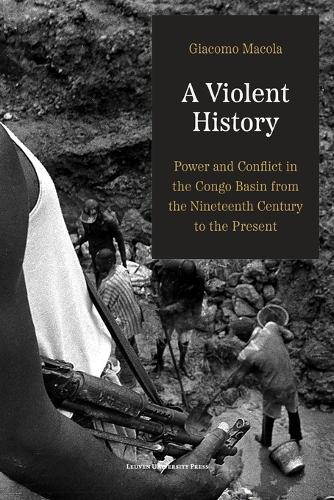
The first long-durée history of large-scale violence in the Congo Basin Since the early nineteenth century, political and military violence has played an exceptionally significant role in the territory corresponding to the present-day Democratic Republic of Congo. By emphasising the periodic re-occurrence of “warlordism” and the economy of plunder that characterises it, Giacomo Macola offers new analytical tools to interpret the history of the societies of the Congo Basin over the past two hundred years. In the concluding chapters, the author dwells on more recent events, detailing the collapse of Mobutu’s Zaire, the “Great African War” and the reasons for the continuing armed instability in the east of the country. Supplementing analyses of the contemporary dimension of African conflicts, Macola makes a case for the enduring importance of studying precolonial history. This book will be made open access within three years of publication thanks to Path to Open, a program developed in partnership between JSTOR, the American Council of Learned Societies (ACLS), University of Michigan Press, and The University of North Carolina Press to bring about equitable access and impact for the entire scholarly community, including authors, researchers, libraries, and university presses around the world. Learn more at https://about.jstor.org/path-to-open/
Full Product Details
Author: Giacomo Macola
Publisher: Leuven University Press
Imprint: Leuven University Press
Weight: 0.454kg
ISBN: 9789462704510
ISBN 10: 9462704511
Pages: 272
Publication Date: 03 September 2025
Audience:
General/trade
,
General
Format: Paperback
Publisher's Status: Active
Availability: In Print

This item will be ordered in for you from one of our suppliers. Upon receipt, we will promptly dispatch it out to you. For in store availability, please contact us.
Reviews
Giacomo Macola fills a gap in scholarly literature on Central Africa: linking pre-colonial, colonial and the present times, he unravels the long-term mechanisms producing (extreme) violence in this troubled region. - Guy Vanthemsche, Vrije Universiteit Brussel 'A Violent History' compellingly employs warlordism as an analytical tool to study the history of the Congo Basin over the last 150 years. With this book, Macola shows that the study of the precolonial period is crucial for a full understanding of later developments, including contemporary dynamics. A must read for all historians working on the region and on conflicts in Africa. - Karin Pallaver, University of Bologna Macola's book represents a fundamental contribution to the understanding of the continuities that characterise the power dynamics in the Congo Basin and that have made it, for over two centuries, one of the most violent areas in the world. - Luca Jourdan, University of Bologna
Author Information
Giacomo Macola is Associate Professor of African History at “La Sapienza” University of Rome. He is a corresponding member of the Académie Royale des Sciences d’Outre-Mer.