Overview
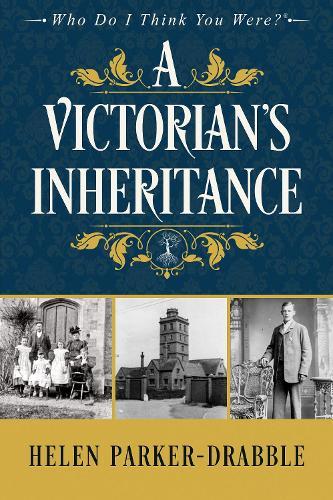
Anxiety. Addiction. Depression.We associate these words with the challenges of modern life. Rarely do we consider how these conditions shaped past generations. Using archival sources, testimonies, and her grandfather Walter Parker's experiences, the author not only paints a vivid picture of life in an English Victorian village, but she also draws upon psychological theory to explore the lives of her working-class ancestors. What did your forebears inherit from their parents? Which psychological characteristics did your ancestors hand down? A Victorian's Inheritance can help you find answers.
Full Product Details
Author: Helen Parker-Drabble
Publisher: Animi Press
Imprint: Animi Press
Volume: ONE
Dimensions:
Width: 15.20cm
, Height: 2.40cm
, Length: 22.90cm
Weight: 0.635kg
ISBN: 9781916246614
ISBN 10: 1916246613
Pages: 354
Publication Date: 03 May 2021
Audience:
General/trade
,
General
Format: Paperback
Publisher's Status: Active
Availability: Available To Order

We have confirmation that this item is in stock with the supplier. It will be ordered in for you and dispatched immediately.
Reviews
A Fascinating and Thought-Provoking Read Helen's book works on many levels. It's a moving, true family story and a fascinating observation of social history. But it's also an exploration of who we are, and to what extent that is predetermined by our 'psychological inheritance'. The book is thought-provoking, well-written, meticulously researched and packed with intriguing revelations and photographs. Whether you have an interest in Helen's family (and I did not, at the outset) there is much to discover and enjoy. I'm looking forward to the next two parts. Thoroughly recommended. Author Alex Dunlevy A definite keeper for both genealogists and psychologists This book covers two great topics, genealogy research and mental health in a manner that provides the reader insights on tackling both areas well. Often the past can provide a look at circumstances and events in a new light. Genealogy research can find a descendant wondering why a particular ancestor left a family, landed in prison, or became a deserter in a war. Helen Parker Drabble tackles these kinds of situations in such a way as to say, Oh, I get it, I understand. Adding the context surrounding a persons' life is not an easy task and Helen has done this very well. I highly recommended this book for anyone who had crossed paths with wondering why about an ancestor! The clues and guidance provided in this book will help the reader learn how to find those answers. Enjoy!' Claire, USA I thoroughly enjoyed this book. The author's understanding of mental health issues and her interest in epigenetics shines through and helps us to understand where the main character (Walter) is coming from and what forms him. I have immense compassion for his mother - who, had she been born in more recent times, may have received better support. The book clearly illustrates the Victorian attitudes towards women and the general culture The author has obviously spent much time researching her subject but has also written from the heart. The book contains lots of lovely photographs and copies of documents which further enrich the reader experience. I highly recommend this, even if you have never thought of reading this kind of book before now. You won't be disappointed! Carol, UK A must read for genealogists A fascinating insight into the lives of Walter and his family, the book is a tribute to the passion for and detailed research of, family history, by its author. Her blend of professional counselling experience and commitment to detailed research, produces an engrossing and entertaining book. It demonstrates what can be done to those of us who have simple marriage, birth and death dates in our family trees. This book fills in the gaps using a range of historical sources, family archives and marvellous photographs. Stephen, UK This book has given me a fascinating insight into the lives of my ancestors. A whole new side to genealogy that I had not considered has inspired me to look at some of my own ancestors in a new light. I did need to work out the family tree a bit before I got too far into the book, but I found it all interesting and thought provoking. Jill, UK
"A Fascinating and Thought-Provoking Read Helen's book works on many levels. It's a moving, true family story and a fascinating observation of social history. But it's also an exploration of who we are, and to what extent that is predetermined by our 'psychological inheritance'. The book is thought-provoking, well-written, meticulously researched and packed with intriguing revelations and photographs. Whether you have an interest in Helen's family (and I did not, at the outset) there is much to discover and enjoy. I'm looking forward to the next two parts. Thoroughly recommended. Author Alex Dunlevy A definite keeper for both genealogists and psychologists This book covers two great topics, genealogy research and mental health in a manner that provides the reader insights on tackling both areas well. Often the past can provide a look at circumstances and events in a new light. Genealogy research can find a descendant wondering why a particular ancestor left a family, landed in prison, or became a deserter in a war. Helen Parker Drabble tackles these kinds of situations in such a way as to say, ""Oh, I get it, I understand."" Adding the context surrounding a persons' life is not an easy task and Helen has done this very well. I highly recommended this book for anyone who had crossed paths with wondering why about an ancestor! The clues and guidance provided in this book will help the reader learn how to find those answers. Enjoy!' Claire, USA I thoroughly enjoyed this book. The author's understanding of mental health issues and her interest in epigenetics shines through and helps us to understand where the main character (Walter) is coming from and what forms him. I have immense compassion for his mother - who, had she been born in more recent times, may have received better support. The book clearly illustrates the Victorian attitudes towards women and the general culture The author has obviously spent much time researching her subject but has also written from the heart. The book contains lots of lovely photographs and copies of documents which further enrich the reader experience. I highly recommend this, even if you have never thought of reading this kind of book before now. You won't be disappointed! Carol, UK A must read for genealogists A fascinating insight into the lives of Walter and his family, the book is a tribute to the passion for and detailed research of, family history, by its author. Her blend of professional counselling experience and commitment to detailed research, produces an engrossing and entertaining book. It demonstrates what can be done to those of us who have simple marriage, birth and death dates in our family trees. This book fills in the gaps using a range of historical sources, family archives and marvellous photographs. Stephen, UK This book has given me a fascinating insight into the lives of my ancestors. A whole new side to genealogy that I had not considered has inspired me to look at some of my own ancestors in a new light. I did need to work out the family tree a bit before I got too far into the book, but I found it all interesting and thought provoking. Jill, UK"
Author Information
Helen, a former counsellor, and family historian has become a 'geneatherapist' whose mission is to use historical and current understanding of mental health, psychology, and neuroscience to deepen our understanding of our ancestors and benefit present and future generations. Helen holds a Diploma in counselling. Fascinated by psychological theory and the stories we develop to make sense of ourselves and our family, her original quest was to understand her Victorian grandfather, Walter Parker, born in 1885 in the English village of Upwell on the Norfolk/Cambridgeshire border. Walter migrated to Canada in 1907. Helen believes family history doesn't survive unless it's in print, so she pondered how to share what she had learnt. Inspired by the few trailblazers, she set out to write an engaging and accessible book that would not only explore working-class life in an English village, but could encourage other family historians to pass on what they have painstakingly discovered. During her research, a transgenerational legacy of loss, trauma, anxiety, and depression unravelled. It revealed repeated patterns of behaviour that she too had unwittingly passed on. This discovery helped her understand her work's focus. Helen says, 'It is through acknowledging and exploring psychology, neuroscience, and our ancestor's behaviour that you can develop a deeper understanding of those who came before you, and pass on a healthier legacy.'