|
|
|||
|
||||
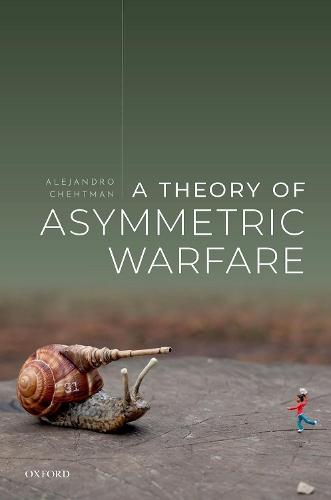
OverviewWars are becoming increasingly asymmetrical: conflicts where one party adopts 'different' and often morally controversial means, strategies, and organizational structures to gain the upper hand. Not only terrorist organizations and guerrilla forces, but also some states, including Brazil, Venezuela, and several others, have been known to use asymmetrical conflict strategies as official policy. Tactics including the use of drone planes, cyber-attacks, deployment of child soldiers, and targeted killings are challenging the current legal framework.Chehtman examines how laws initially devised for more traditional forms of warfare must adapt to contemporary conflicts, and to such tactics. A crucial book on a growing issue, he weighs conflicting theories that either see the law of armed conflicts as accepting the reality of war or consider that the rules should not apply differently in conflict situations as they do in peace. Full Product DetailsAuthor: Alejandro Chehtman (Assistant Professor, Assistant Professor, University Torcuato Di Tella)Publisher: Oxford University Press Imprint: Oxford University Press ISBN: 9780199670031ISBN 10: 019967003 Pages: 280 Publication Date: 27 February 2026 Audience: Professional and scholarly , Professional & Vocational Format: Hardback Publisher's Status: Forthcoming Availability: To order Table of ContentsReviewsAuthor InformationAlejandro Chehtman holds a BA from the University of Buenos Aires and an MSc in Political Theory from the LSE. In 2009, he was awarded his PhD in Law from the LSE for his thesis 'The Morality of Extraterritorial Punishment'. Alejandro has taught Public International Law at the LSE as a Teaching Fellow (2005-9), for which he received a teaching award. He has also taught Criminal Law and Criminal Procedure Law at the University of Buenos Aires, and International Criminal Law at the University Torcuato Di Tella in Argentina. He joined the Faculty of Law at UCL in September 2008 as Research Associate for the Centre for International Courts and Tribunals. At UCL he works on the DOMAC Project, on the impact of international criminal tribunals on domestic prosecutions in mass atrocity cases. He has published articles in Law and Philosophy and the New Criminal Law Review. Tab Content 6Author Website:Countries AvailableAll regions |
||||