Overview
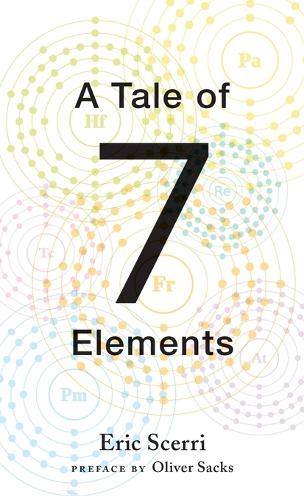
In 1913, English physicist Henry Moseley established an elegant method for ""counting"" the elements based on atomic number, ranging them from hydrogen (#1) to uranium (#92). It soon became clear, however, that seven elements were mysteriously missing from the line up--seven elements unknown to science. In his well researched and engagingly narrative, Eric Scerri presents the intriguing stories of these seven elements--protactinium, hafnium, rhenium, technetium, francium, astatine and promethium. The book follows the historical order of discovery, roughly spanning the two world wars, beginning with the isolation of protactinium in 1917 and ending with that of promethium in 1945. For each element, Scerri traces the research that preceded the discovery, the pivotal experiments, the personalities of the chemists involved, the chemical nature of the new element, and its applications in science and technology. We learn for instance that alloys of hafnium--whose name derives from the Latin name for Copenhagen (hafnia)--have some of the highest boiling points on record and are used for the nozzles in rocket thrusters such as the Apollo Lunar Modules. Scerri also tells the personal tales of researchers overcoming great obstacles. We see how Lise Meitner and Otto Hahn--the pair who later proposed the theory of atomic fission--were struggling to isolate element 91 when World War I intervened, Hahn was drafted into the German army's poison gas unit, and Meitner was forced to press on alone against daunting odds. The book concludes by examining how and where the twenty-five new elements have taken their places in the periodic table in the last half century. A Tale of Seven Elements paints a fascinating picture of chemical research--the wrong turns, missed opportunities, bitterly disputed claims, serendipitous findings, accusations of dishonesty--all leading finally to the thrill of discovery.
Full Product Details
Author: Eric Scerri
Publisher: Oxford University Press Inc
Imprint: Oxford University Press Inc
Dimensions:
Width: 21.10cm
, Height: 3.10cm
, Length: 14.50cm
Weight: 0.431kg
ISBN: 9780195391312
ISBN 10: 0195391314
Pages: 304
Publication Date: 18 July 2013
Audience:
General/trade
,
General
Format: Hardback
Publisher's Status: Active
Availability: Manufactured on demand

We will order this item for you from a manufactured on demand supplier.
Reviews
<br> highly recommended for all curious science readers and historians of science -Library Journal<br><p><br>
<br> Scerri's vivid storytelling, and the letters and journals he quotes, allow us to see chemistry, and science generally, as an essentially historical enterprise-a human adventure that shows the best, and sometimes the worst, of human nature. -- from the preface by Oliver Sacks <br><p><br> Few areas of chemistry have inspired such a competitive spirit and bruised so many egos as the discovery of new elements. Chemists will enjoy reading Scerri's illuminating and detailed account of the personal, political, and scientific tensions behind the true discoveries and the vanishing of many false identifications. -- Peter Atkins<p><br> Some of the best stories out involve elements you never talk about in chemistry classes. A Tale of Seven Elements picks out some of the best of those stories, and shows their deep relevance for understanding how modern science works. -- Sam Kean, author of The Disappearing Spoon and The Violinist's Thumb. <br><p><br> Reading this book is like going away on holiday to an obscure little place you'd never normally think of visiting, and finding it packed with local interest and charm. Who would have thought that this odd collection of little-known elements would have so many stories to tell, so many characters and intrigues and eccentricities? For anyone curious about chemistry, it's a trip I can warmly recommend. -- Philip Ball, author of Elements, A Very Short Introduction and Molecules, A Very Short Introduction. <br><p><br> This is a story of exploration at the boundaries of chemistry, as scientists searched for the missing elements which they knew must exist but had yet to be been found. Where were they hiding? What guided them in their search? And who finally found them? Scerri explains not only the science of their discoveries, but also tells equally intriguing stories of the people themselves. This remarkable and well-researched book is truly a goldmine of information. -- John Emsley, author of Nature's Building Blocks. <br><p><br>
[This is a brilliant book about the interface of chemistry and physics. Above all, the stories argue powerfully for curiosity-driven research, and show how hard it is to see the wood for the trees in the thick of a scientific battle. They are powerful reminders, too, that the scientific method always allows the truth to shine through, you just have to be patient. --New Scientist Scerri's Tale gives an absorbing account of scientific process in the early 20th century, when nationalism drove chemists and physicists to seek the glory that would result from discovering a new element. -- Science News [A]n excellent read, and it is warmly recommended to all students and practitioners of chemistry and related fields, and to all those who are interested in the history and the culture of science. --Structural Chemistry.. .these are fascinating stories. -- Chemical & Engineering News Highly recommended for all curious science readers and historians of science -- Library Journal Scerri details the fascinating backstories of the discoverers and discoveries of the last seven chemical elements in this engaging scientific history. -- Publishers Weekly Scerri's vivid storytelling, and the letters and journals he quotes, allow us to see chemistry, and science generally, as an essentially historical enterprise-a human adventure that shows the best, and sometimes the worst, of human nature. -- from the preface by Oliver Sacks Few areas of chemistry have inspired such a competitive spirit and bruised so many egos as the discovery of new elements. Chemists will enjoy reading Scerri's illuminating and detailed account of the personal, political, and scientific tensions behind the true discoveries and the vanishing of many false identifications. -- Peter Atkins Reading this book is like going away on holiday to an obscure little place you'd never normally think of visiting, and finding it packed with local i
<br> Scerri's vivid storytelling, and the letters and journals he quotes, allow us to see chemistry, and science generally, as an essentially historical enterprise-a human adventure that shows the best, and sometimes the worst, of human nature. -- from the preface by Oliver Sacks <br><p><br> Few areas of chemistry have inspired such a competitive spirit and bruised so many egos as the discovery of new elements. Chemists will enjoy reading Scerri's illuminating and detailed account of the personal, political, and scientific tensions behind the true discoveries and the vanishing of many false identifications. -- Peter Atkins<p><br> highly recommended for all curious science readers and historians of science -- Library Journal<p><br> Reading this book is like going away on holiday to an obscure little place you'd never normally think of visiting, and finding it packed with local interest and charm. Who would have thought that this odd collection of little-known elements would have so many stories to tell, so many characters and intrigues and eccentricities? For anyone curious about chemistry, it's a trip I can warmly recommend. -- Philip Ball, author of Elements, A Very Short Introduction and Molecules, A Very Short Introduction. <br><p><br> Scerri details the fascinating backstories of the discoverers and discoveries of the last seven chemical elements in this engaging scientific history. --Publishers Weekly<br><p><br> If you wish to deepen your understanding of the nature of the elements, and the nature of the men and women who made it their business to discover them, you can't go wrong with this delightful volume from the preeminent authority on the history and philosophy of the periodic table. -- Theodore Gray, Popular Science columnist and author of The Elements, Mad Science, and Mad Science 2 <br><p><br> Attractive, Promising Reassessment Frames Particularly Helpful Teaching. <br>In short, an intriguing and worthwhile book! -- Martyn Poliakoff FRS, The Univ
compulsory reading for those who wish to inject some life into the story of the elements and the periodic table. * Kevin de Berg, Science and Education * You could say the periodic table is elementary, but Eric Scerri shows that the stories behind the key discoveries in chemistry were dramatic, political and full of blind alleys. * New Scientist * It's an extraordinary rich and complete book, not only regarding the chemistry of each of the studied elements, but also on the nature of science [translation] * Revista Eureka sobre Ensenanza y Divulgacion de las Ciencias * fascinating stories, full of priority disputes, nationalistic squabbles, firm announcements of non-existent elements, and flashes of comedy and tragedy. * Virginia Trimble, The Observatory * As a professional historian of chemistry who thought that he already knew these stories, I was surprised by how much novel and interesting material Scerri has unearthed in this admirable book. He offers corrections to many long-standing textbook errors, both historical and scientific, and presents a fresh, thoroughly researched understanding of a complex web of interacting research during a period of about 30 years... chemists, historians and philosophers of science, as well as educated laypeople, will unquestionably find this book an entertaining and highly instructive read. * Alan Rocke, THE * Eric Scerri offers us a fascinating account of the discovery of these seven elements. Author of The Periodic Table: Its Story and Its Significance (2007), Scerri is superbly qualified for this task: chemist, philosopher of science and historian, he is the foremost contemporary analyst of the periodic table. * Alan Rocke, THE * it is an excellent read, and it is warmly recommended to all students and practitioners of chemistry and related fields, and to all those who are interested in the history and the culture of science. * Istvan Hargittai, Journal of Structural Chemistry *
Eric Scerri offers us a fascinating account of the discovery of these seven elements. Author of The Periodic Table: Its Story and Its Significance (2007), Scerri is superbly qualified for this task: chemist, philosopher of science and historian, he is the foremost contemporary analyst of the periodic table. Alan Rocke, THE As a professional historian of chemistry who thought that he already knew these stories, I was surprised by how much novel and interesting material Scerri has unearthed in this admirable book. He offers corrections to many long-standing textbook errors, both historical and scientific, and presents a fresh, thoroughly researched understanding of a complex web of interacting research during a period of about 30 years... chemists, historians and philosophers of science, as well as educated laypeople, will unquestionably find this book an entertaining and highly instructive read. Alan Rocke, THE It's an extraordinary rich and complete book, not only regarding the chemistry of each of the studied elements, but also on the nature of science [translation] Revista Eureka sobre Ensenanza y Divulgacion de las Ciencias
<br> Scerri's vivid storytelling, and the letters and journals he quotes, allow us to see chemistry, and science generally, as an essentially historical enterprise-a human adventure that shows the best, and sometimes the worst, of human nature. -- from the preface by Oliver Sacks <br><p><br> Few areas of chemistry have inspired such a competitive spirit and bruised so many egos as the discovery of new elements. Chemists will enjoy reading Scerri's illuminating and detailed account of the personal, political, and scientific tensions behind the true discoveries and the vanishing of many false identifications. -- Peter Atkins<p><br> Highly recommended for all curious science readers and historians of science -- Library Journal<p><br> Reading this book is like going away on holiday to an obscure little place you'd never normally think of visiting, and finding it packed with local interest and charm. Who would have thought that this odd collection of little-known elements would have so many stories to tell, so many characters and intrigues and eccentricities? For anyone curious about chemistry, it's a trip I can warmly recommend. -- Philip Ball, author of Elements, A Very Short Introduction and Molecules, A Very Short Introduction. <br><p><br> Scerri details the fascinating backstories of the discoverers and discoveries of the last seven chemical elements in this engaging scientific history. -- Publishers Weekly<br><p><br> If you wish to deepen your understanding of the nature of the elements, and the nature of the men and women who made it their business to discover them, you can't go wrong with this delightful volume from the preeminent authority on the history and philosophy of the periodic table. -- Theodore Gray, Popular Science columnist and author of The Elements, Mad Science, and Mad Science 2<br><p><br> Attractive, Promising Reassessment Frames Particularly Helpful Teaching. <br>In short, an intriguing and worthwhile book! -- Martyn Poliakoff FRS, The Uni
Author Information
Eric Scerri is a leading philosopher of science specializing in the history and philosophy of the periodic table. He is also the founder and editor in chief of the international journal Foundations of Chemistry and has been a full-time lecturer at UCLA for the past twelve years where he regularly teaches classes of 350 chemistry students as well as classes in history and philosophy of science. He is the author of The Periodic Table: Its Story and Its Significance and has given invited lectures all over the world.