Full Product Details
Author: Prof. Steven Fielding (University of Nottingham, Nottingham)
Publisher: Bloomsbury Publishing PLC
Imprint: Bloomsbury Publishing PLC
Dimensions:
Width: 15.60cm
, Height: 2.30cm
, Length: 23.40cm
Weight: 0.590kg
ISBN: 9781849669788
ISBN 10: 1849669783
Pages: 312
Publication Date: 24 April 2014
Audience:
General/trade
,
General
Format: Hardback
Publisher's Status: Active
Availability: Manufactured on demand

We will order this item for you from a manufactured on demand supplier.
Reviews
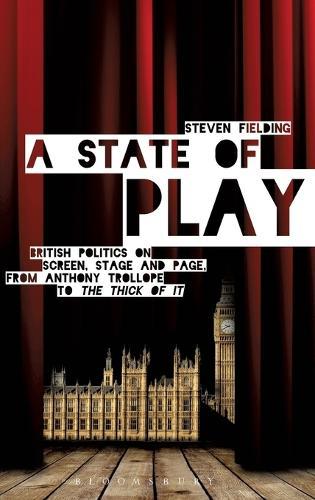
Well researched and judiciously selective, not to mention fastidiously politically correct — nearly every chapter includes a sub-section on women — Steven Fielding’s study makes a concise and thought-provoking shadow history of modern British politics. -- Houman Barekat * The Spectator * [A] brilliant analysis of a simple, obvious and usually overlooked idea: that what people think about politics is formed as much by popular fictions as by media reporting of politics itself. -- John Rentoul * The Independent * Britain has an honourable tradition of puncturing the pomposity of the powerful. But Professor Steven Fielding contends that rather than merely reflect the problems with our politics, such satires help to create them. Unable to distinguish between fact and fiction, viewers are left with a view of MPs as irremediably crooked. It is an argument that liberals will instinctively revolt against, but by the end of Fielding’s analysis, at least some will be left with the uneasy feeling that he may well be right. * New Statesman * Steven Fielding has grasped something that has been staring British politics in the face for years without anyone else seeming to notice. Fiction and screen representations don't simply reflect the crisis of politics. As Fielding shows, they are an active part of that crisis too * Martin Kettle, The Guardian * In a witty, empirically dense and provocative book, Fielding argues that culture has always informed, for good and ill, popular perceptions of politics. It entwines fiction, films, plays and politics – where else can you find obscure turn-of-the-century cinema gems and forgotten ITV dramas alongside Anthony Trollope and Malcolm Tucker? Could this be a book that nudges political history out of its methodological impasse? -- Lawrence Black * Times Higher Education * Fielding is a prodigious reader and his book will lead aficionados towards many long-forgotten novels. * Times Higher Education Supplement * [A State of Play] is a scholarly and meticulously research study of how novels, plays, films and television have influenced the way we view our politicians. Fielding has written a cosy, engrossing treatise, informing and educating the reader even as you enjoy the comfortable familiarity of all the examples and case studies he cites -- Sarla Langdon * The Bay, Issue 59 * [A] richly detailed and rewarding book. -- Jeffrey Richards * History Today * Steven Fielding's book provides an insightful overview of British political fiction ... A useful and entertaining book; one with a good deal of useful analysis on how the British have interpreted politics over time. * Political Studies Review *
Well researched and judiciously selective, not to mention fastidiously politically correct - nearly every chapter includes a sub-section on women - Steven Fielding's study makes a concise and thought-provoking shadow history of modern British politics. -- Houman Barekat * The Spectator * [A] brilliant analysis of a simple, obvious and usually overlooked idea: that what people think about politics is formed as much by popular fictions as by media reporting of politics itself. -- John Rentoul * The Independent * Britain has an honourable tradition of puncturing the pomposity of the powerful. But Professor Steven Fielding contends that rather than merely reflect the problems with our politics, such satires help to create them. Unable to distinguish between fact and fiction, viewers are left with a view of MPs as irremediably crooked. It is an argument that liberals will instinctively revolt against, but by the end of Fielding's analysis, at least some will be left with the uneasy feeling that he may well be right. * New Statesman * Steven Fielding has grasped something that has been staring British politics in the face for years without anyone else seeming to notice. Fiction and screen representations don't simply reflect the crisis of politics. As Fielding shows, they are an active part of that crisis too * Martin Kettle, The Guardian * In a witty, empirically dense and provocative book, Fielding argues that culture has always informed, for good and ill, popular perceptions of politics. It entwines fiction, films, plays and politics - where else can you find obscure turn-of-the-century cinema gems and forgotten ITV dramas alongside Anthony Trollope and Malcolm Tucker? Could this be a book that nudges political history out of its methodological impasse? -- Lawrence Black * Times Higher Education * Fielding is a prodigious reader and his book will lead aficionados towards many long-forgotten novels. * Times Higher Education Supplement * [A State of Play] is a scholarly and meticulously research study of how novels, plays, films and television have influenced the way we view our politicians. Fielding has written a cosy, engrossing treatise, informing and educating the reader even as you enjoy the comfortable familiarity of all the examples and case studies he cites -- Sarla Langdon * The Bay, Issue 59 * [A] richly detailed and rewarding book. -- Jeffrey Richards * History Today * Steven Fielding's book provides an insightful overview of British political fiction ... A useful and entertaining book; one with a good deal of useful analysis on how the British have interpreted politics over time. * Political Studies Review *
Author Information
Steven Fielding is Professor of Political History in the School of Politics and International Relations at the University of Nottingham, UK, where he is also Director of the Centre for British Politics. His books include England Arise! The Labour Party and Popular Politics in 1940s Britain (1995, with Peter Thompson and Nick Tiratsoo) and The Labour Party: Continuity and Change in the Making of 'New' Labour (2003). He is a regular writer and broadcaster on the fictional representation of formal politics.