|
|
|||
|
||||
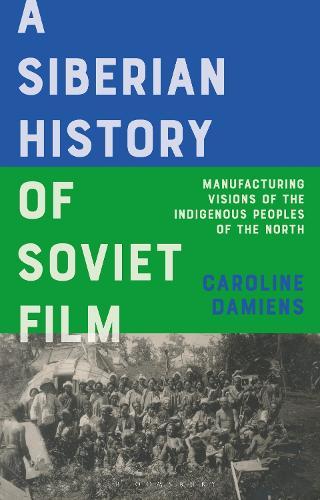
OverviewWinner of the British Association of Film, Television and Screen Studies Best First Monograph Award In A Siberian History of Soviet Film, Caroline Damiens explores how the depictions of the indigenous 'Peoples of the North' in Soviet cinema and television evolved between 1920 and 1980. Damiens combines a detailed analysis of key works such as Forest People (1928), Igdenbu (1930), Dersu Uzala (1961 & 1975), Tymancha’s Friend (1969) and The Most Beautiful Ships (1972), with primary sources like press articles, archives, and interviews, to reveal how these cinematic portrayals were created and negotiated, providing insight into the concepts of progress and authenticity in the Soviet context. She emphasises the role of indigenous individuals in shaping their cinematic image, both in front of and behind the camera, highlighting the works of lesser-known figures like Suntsai Geonka, Zinaida Pikunova, and Iurii Rytkheu. In doing so, Damiens emphasises the multifaceted nature of film, where interpretations differ based on the perspectives of those involved. Using a decolonial approach and drawing from extensive archival materials, Damiens prompts a re-evaluation of the Soviet cinematic past and present by centring indigenous voices in the narrative. In doing so, she provides a thorough exploration of the intricate relationship between culture, representation, and identity in Soviet cinema. Full Product DetailsAuthor: Caroline DamiensPublisher: Bloomsbury Publishing PLC Imprint: Bloomsbury Academic Dimensions: Width: 14.00cm , Height: 2.20cm , Length: 22.00cm Weight: 0.560kg ISBN: 9781350269880ISBN 10: 1350269883 Pages: 320 Publication Date: 03 October 2024 Audience: College/higher education , Tertiary & Higher Education Format: Hardback Publisher's Status: Active Availability: Manufactured on demand We will order this item for you from a manufactured on demand supplier. Table of ContentsAcknowledgements Note on Transliteration Glossary Introduction - Manufacturing, imag(in)ing, representing, and negotiating the peoples of the North on screen I Shooting with indigenous people: expeditionary practices and filmic co-construction in the outskirts (1926-1935) 1.Filming the “Other” in the Soviet context: decolonising film practices and ways of seeing 2.Out in the field: filmer-filmed relations on expedition shoots II Indigenous people in Soviet discourse on modernity: the politics of casting and representation (1935-1979) 3.The Stalinist era: stories of Soviet progress and the invisibility of indigenous people 4.Judging modernity: indigenous people as emblems of burgeoning ecological awareness III On TV: towards visual sovereignty (1969-1982) 5.A new audio-visual space: TV fiction films and indigenous actors 6.The moving image reappropriated by indigenous screenwriter Iurii Rytkheu Epilogue: rediscovering indigenous voices in Soviet cinema Notes Filmography Bibliography IndexReviewsDamiens highlights the role of indigenous individuals in shaping their cinematic image, emphasizing lesser-known figures. Using a decolonial approach and extensive archival materials, she diligently re-evaluates Soviet cinema by centring indigenous voices, exploring the relationship between culture, representation, and identity. -- BAFTSS Best First Monograph Award judging panel Author InformationCaroline Damiens is Associate Professor in film studies at the University of Paris Nanterre, France. She gained her PhD at the National Institute of Oriental Languages and Civilisations, Paris, and was a postdoctoral fellow at the Department of Research and Higher Education at the Quai Branly Museum, Paris. Tab Content 6Author Website:Countries AvailableAll regions |
||||