Overview
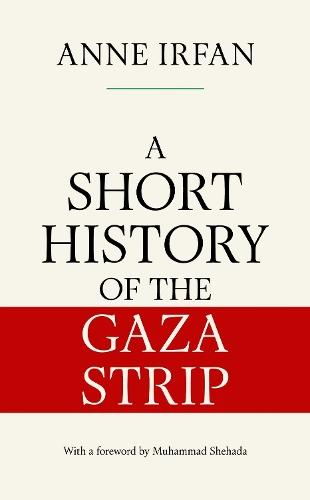
One of BBC History Magazine’s Books of the Year The world’s eyes are on the Gaza Strip. After more than a year of Israeli military bombardment, it is the scene of unimaginable destruction. It is also one of the most politically significant territories on the planet. Yet how many of us know anything of its history? In this vital book, Anne Irfan, a leading historian of Palestine-Israel, examines six key moments that bring us to the present day. She begins with Israel’s expulsion of the Palestinian people in 1948, when Israel was established and the Gaza region was truncated to a tiny territory of just 141 square miles. Going on to detail Israel’s occupations of Gaza, the Palestinian national struggle and formation of the PLO, the first intifada, the creation of the Palestinian Authority and the rise of Hamas, Irfan argues that, collectively, these events help explain how we have arrived at the catastrophe of the 2020s and the genocidal violence unleashed by Israel in Gaza after the Hamas-led attacks of October 7. Written with remarkable clarity, A Short History of the Gaza Strip draws on a decade of meticulous research, weaving in the voices and stories of Palestinians from farmers and teachers to poets and activists. It is an indispensable read for anyone seeking to deepen their knowledge of Palestine and the wider region. In Irfan’s words, ‘History matters, especially in Palestine’ – and never more so than today.
Full Product Details
Author: Anne Irfan
Publisher: Simon & Schuster Ltd
Imprint: Simon & Schuster Ltd
Dimensions:
Width: 13.50cm
, Height: 2.20cm
, Length: 21.60cm
ISBN: 9781398536197
ISBN 10: 1398536199
Pages: 304
Publication Date: 28 August 2025
Audience:
General/trade
,
General
Format: Hardback
Publisher's Status: Active
Availability: In Print

This item will be ordered in for you from one of our suppliers. Upon receipt, we will promptly dispatch it out to you. For in store availability, please contact us.
Reviews
‘Written with passion, precision and clarity’ * <B><i>Irish Times</i></B> * ‘A timely, short, highly informative history that is sure to dispel many of the misconceptions and misinformation circulating and currently widespread about Gaza. It will remind readers of what the area was like and what was lost in the course of Israel's aggression, as well as recognising Gaza's resilience. It could also help bring to the mind of readers the Gaza that was’ -- <B>Raja Shehadeh, author of <I>What Does Israel Fear From Palestine?</I></B> ‘In lean and unsparing prose, Anne Irfan exposes the history of occupation and oppression that explains the tragedy of Gaza from 1948 to the present day. A brilliant book that will inform debate and make clear to policy makers how Gaza’s future must in no way resemble its recent past’ -- <B>Eugene Rogan, author of <I>The Arabs: A History</I></B> ‘In this stunning book, Anne Irfan contextualises the violence unfolding in Gaza today without losing sight of the humanity of Palestinians. She describes the horrors of history with a nuanced kindness and reminds us that these events are not all that matter – because the Palestinian people that experienced them matter too’ -- <B>Nadya Hajj, author of <I>Networked Refugees</I></B> ‘Beautifully written, erudite, humane: an essential guide to understanding the way the Israeli settler colonial project in and around Gaza has evolved into a brutal genocide’ -- <B>Eyal Weizman, author of <I>Hollow Land: The Architecture of Israel's Occupation</I></B> ‘With Gaza in ruins and its people bombed, starved and displaced, accounting for Israel’s genocidal campaign and its impact on Palestinians is an urgent necessity. In this accessible analytical narrative, Anne Irfan convincingly shows how the destruction condenses the confrontation between the long-term Israeli ambition to deport Gaza’s Palestinian inhabitants – mostly descended from Nakba refugees – and their obdurate determination to remain in their homeland. A Short History of the Gaza Strip is a much-needed historical contextualisation’ -- <B>A. Dirk Moses, author of <I>The</I> <I>Problems of Genocide</I></B> ‘An incredible, informative and powerful book. It tells us that you can’t understand the current destruction of Gaza without going back to the beginning and then does exactly that, in such a readable and devastating way’ -- <B>Rachel Shabi, author of <I>Off-White: The Truth About Antisemitism</I></B>
‘An excellent primer . . . essential reading for those hungry to know more about this ancient territory so as to better understand the current, desperate chapter in its history’ -- <B>William Dalrymple</B> * <B><i>Guardian</i></B> * ‘Written with passion, precision and clarity’ * <B><i>Irish Times</i></B> * ‘The restrained clarity of this work provides a much-needed perspective on this fraught and bloody moment in history’ * <B><i>Sydney Morning Herald</i></B> * ‘In A Short History of the Gaza Strip, Irfan, an academic at London’s University College, explains the pressures building up to the explosion of violence’ * <B><I>Financial Times</I></B> * ‘a timely addition to an important corpus of literature . . . Overall, the book is excellently written, with Irfan providing a detailed and easily accessible history of Gaza’s foundational part in Palestinian resistance. It should be necessary reading for anyone seeking to gain an introductory understanding of some of the complex and contradictory issues that litter the Palestinian/Israeli conflict. Most importantly, it provides Gazans and Palestinians an opportunity to tell their own stories about their life under Israeli occupation’ * <I><B>Conversation</B></I> * ‘A timely, short, highly informative history that is sure to dispel many of the misconceptions and misinformation circulating and currently widespread about Gaza. It will remind readers of what the area was like and what was lost in the course of Israel's aggression, as well as recognising Gaza's resilience. It could also help bring to the mind of readers the Gaza that was’ -- <B>Raja Shehadeh, author of <I>What Does Israel Fear From Palestine?</I></B> ‘In lean and unsparing prose, Anne Irfan exposes the history of occupation and oppression that explains the tragedy of Gaza from 1948 to the present day. A brilliant book that will inform debate and make clear to policy makers how Gaza’s future must in no way resemble its recent past’ -- <B>Eugene Rogan, author of <I>The Arabs: A History</I></B> ‘In this stunning book, Anne Irfan contextualises the violence unfolding in Gaza today without losing sight of the humanity of Palestinians. She describes the horrors of history with a nuanced kindness and reminds us that these events are not all that matter – because the Palestinian people that experienced them matter too’ -- <B>Nadya Hajj, author of <I>Networked Refugees</I></B> ‘Beautifully written, erudite, humane: an essential guide to understanding the way the Israeli settler colonial project in and around Gaza has evolved into a brutal genocide’ -- <B>Eyal Weizman, author of <I>Hollow Land: The Architecture of Israel's Occupation</I></B> ‘An incredible, informative and powerful book. It tells us that you can’t understand the current destruction of Gaza without going back to the beginning and then does exactly that, in such a readable and devastating way’ -- <B>Rachel Shabi, author of <I>Off-White: The Truth About Antisemitism</I></B>
‘A timely, short, highly informative history that is sure to dispel many of the misconceptions and misinformation circulating and currently widespread about Gaza. It will remind readers of what the area was like and what was lost in the course of Israel's aggression, as well as recognizing Gaza's resilience. It could also help bring to the mind of readers the Gaza that was’ -- <B>Raja Shehadeh, author of <I>What Does Israel Fear From Palestine?</I></B> ‘In lean and unsparing prose, Anne Irfan exposes the history of occupation and oppression that explains the tragedy of Gaza from 1948 to the present day. A brilliant book that will inform debate and make clear to policy makers how Gaza’s future must in no way resemble its recent past’ -- <B>Eugene Rogan, author of <I>The Arabs: A History</I></B> ‘In this stunning book, Anne Irfan contextualizes the violence unfolding in Gaza today without losing sight of the humanity of Palestinians. She describes the horrors of history with a nuanced kindness and reminds us that these events are not all that matter – because the Palestinian people that experienced them matter too’ -- <B>Nadya Hajj, author of <I>Networked Refugees</I></B> ‘Beautifully written, erudite, humane: an essential guide to understanding the way the Israeli settler colonial project in and around Gaza has evolved into a brutal genocide’ -- <B>Eyal Weizman, author of <I>Hollow Land: The Architecture of Israel's Occupation</I></B> ‘With Gaza in ruins and its people bombed, starved and displaced, accounting for Israel’s genocidal campaign and its impact on Palestinians is an urgent necessity. In this accessible analytical narrative, Anne Irfan convincingly shows how the destruction condenses the confrontation between the long-term Israeli ambition to deport Gaza’s Palestinian inhabitants – mostly descended from Nakba refugees – and their obdurate determination to remain in their homeland. A Short History of the Gaza Strip is a much-needed historical contextualization’ -- <B>A. Dirk Moses, author of <I>The</I> <I>Problems of Genocide</I></B> ‘An incredible, informative and powerful book. It tells us that you can’t understand the current destruction of Gaza without going back to the beginning and then does exactly that, in such a readable and devastating way’ -- <B>Rachel Shabi, author of <I>Off-White: The Truth About Antisemitism</I></B>
Author Information
Anne Irfan is a multiple award-winning historian and lecturer in Interdisciplinary Race, Gender and Postcolonial Studies at University College London, where her work focuses on Palestine-Israel. She is a leading expert on Palestinian refugee rights and in 2023 published the academic book Refuge and Resistance: Palestinians and the International Refugee System. She was previously lecturer at the University of Oxford's Refugee Studies Centre and has also taught at the London School of Economics.