Overview
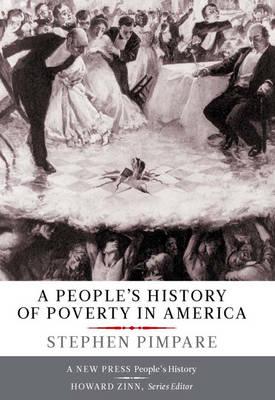
A compulsively-readable social history and a brilliant new addition to New Press' acclaimed People's History series in which Pimpare vividly describes poverty from the perspective of poor and welfare-reliant Americans from the big cities to the rural countryside. Through prodigious archival research and lucid analysis, Pimpare details the ways in which charity and aid for the poor have been inseparable from the scorn and disapproval of those who could help them.
Full Product Details
Author: Stephen Pimpare
Publisher: The New Press
Imprint: The New Press
Dimensions:
Width: 15.50cm
, Height: 2.70cm
, Length: 23.50cm
Weight: 0.617kg
ISBN: 9781565849341
ISBN 10: 1565849345
Pages: 322
Publication Date: 02 December 2008
Audience:
General/trade
,
General
Format: Hardback
Publisher's Status: No Longer Our Product
Availability: In Print

This item will be ordered in for you from one of our suppliers. Upon receipt, we will promptly dispatch it out to you. For in store availability, please contact us.
Reviews
Pimpare (political science, Yeshiva Coll.; The New Victorians: Poverty, Politics, and Propaganda in Two Gilded Ages) has written a concise and distinctive bottom-up history, arguing that there are myths about America's poor that have been around since our country's founding. Some of the myths include the belief that being poor is a moral failure and that the poor are lazy, buy too many luxury items, and have more children just to stay on welfare. Pimpare knocks down these myths one by one, lifting us from our ignorance in the process. The book's strength is the use of firsthand accounts from the poor, but while this is not a comprehensive history of policy, policy is not ignored. Pimpare is honest about his viewpoints, which might put off some politically conservative readers. He supports an improved welfare state, noting that historically, the United States has done a bad job of helping the poor, especially in the last 40 years. His arguments are provocative and are welcome in the study of public policy. Recommended for academic libraries. -Bryan Craig, MLS, Nellysford, VA
Illuminating history of America's poor, disproving many stereotypes while emphasizing that the social safety net varies depending upon who you are, when you live, and where you live. As Barbara Ehrenreich showed in Nickel and Dimed (2001), and as social historian Pimpare (American Politics and Social Welfare Policy, Yeshiva Univ.; The New Victorians: Poverty, Politics, and Propaganda in Two Gilded Ages, 2004) accords, the poor are seldom deserving of their status. Most have a steady history of work, at least when it is available; most of the chronically poor are disabled and cannot work, or are under or over working age, so that, as Pimpare wryly puts it, most poor people are 'deserving' due to old age, youth, or infirmity. Those who do work are at the mercy of economic shifts, but then so is everyone. As Pimpare also demonstrates, aspects of poverty are strongly correlated to ethnicity, health, education and many other markers. Substantial numbers of the poor today, as in the past, are homeless; Pimpare reckons that some 14 percent of all Americans are homeless at least once, a count augmented by returning veterans of Iraq and Afghanistan. Even the homeless work, he adds, if not consistently. The consequences of poverty are not just a lack of money or material goods: With poverty comes poor health, obesity ( high-calorie, high-fat, and high-sugar foods are typically cheaper than more nutritionally rich fresh foods ), victimization by crime and violence and often encountering government not through welfare agencies but through the police and prison. Pimpare allows that the absolute rate of poverty has been declining: It was 40 percent in 1900, 25 percent in the mid '50s and less than 15 percent today. Small solace to the poor, though, for, as Pimpare remarks, Most Americans aspire to more than mere subsistence. Surrounded by opulence, who can fault them?A useful counter against those who blame the poor for their bad luck. (Kirkus Reviews)