Overview
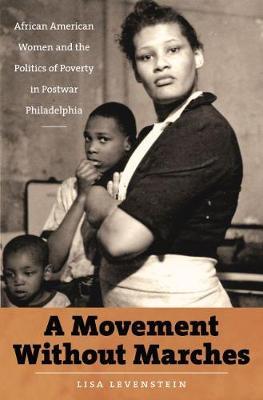
Government services come with strings attached. In this bold interpretation of U.S. history, Lisa Levenstein reframes highly charged debates over the origins of chronic African American poverty and the social and political struggles that led to the postwar urban crisis.""A Movement Without Marches"" follows poor black women as they traveled from some of Philadelphia's most impoverished neighborhoods into its welfare offices, courtrooms, public housing, schools, and hospitals, laying claim to an unprecedented array of government benefits and services. Levenstein uncovers the constraints that led women to public institutions, emphasizing the importance not only of deindustrialization and racial discrimination but also of women's experiences with sex discrimination, inadequate public education, child rearing, domestic violence, and chronic illness.Women's claims on public institutions brought a range of new resources into poor African American communities. With these resources came new constraints, as public officials frequently responded to women's efforts by limiting benefits and attempting to control their personal lives. Scathing public narratives about women's 'dependency' and their children's 'illegitimacy' placed black women and public institutions at the center of the growing opposition to black migration and civil rights in northern U.S. cities. Countering stereotypes that have long plagued public debate, ""A Movement Without Marches"" offers a new paradigm for understanding postwar U.S. history.
Full Product Details
Author: Lisa Levenstein
Publisher: The University of North Carolina Press
Imprint: The University of North Carolina Press
Edition: New edition
Dimensions:
Width: 15.60cm
, Height: 2.80cm
, Length: 23.50cm
Weight: 0.606kg
ISBN: 9780807832721
ISBN 10: 0807832723
Pages: 320
Publication Date: 30 April 2009
Audience:
General/trade
,
General
Format: Hardback
Publisher's Status: Out of Print
Availability: In Print

Limited stock is available. It will be ordered for you and shipped pending supplier's limited stock.
Reviews
An important contribution to our understanding of the gendered construction of African American urban poverty. <br>- Neue Politische Literatur
Is it possible to write about poor women as active agents without fitting them within a social movement framework? . . . Levenstein has already achieved that balance in this important work. . . . A full understanding of African American poverty must include the women Levenstein so powerfully analyzes. <br>- American Historical Review
A path-breaking account. . . . [Levenstein's] wide-ranging study of five public institutions suggests a pervasiveness, depth, and force of this phenomenon that historians have not recognized. The field of twentieth-century U.S. politics desperately needs Vivid stories of individual women. . . . Each one of them offers an original and compelling interpretation of its subject. Tightly interconnected as they are, each could also stand alone as a major addition to the historiography of public institutions. - An excellent local study....The narrative of self-empowerment and persistent agency that Levenstein constructs of poor African American women defying all stereotypes in the face of crippling hurdles does not disappoint. -- The Journal of African A Is it possible to write about poor women as active agents without fitting them within a social movement framework? . . . Levenstein has already achieved that balance in this important work. . . . A full understanding of African American poverty must incl Is it possible to write about poor women as active agents without fitting them within a social movement framework? . . . Levenstein has already achieved that balance in this important work. . . . A full understanding of African American poverty must include the women Levenstein so powerfully analyzes.--American Historical Review An important contribution to our understanding of the gendered construction of African American urban poverty.--Neue Politische Literatur Vivid stories of individual women. . . . Each one of them offers an original and compelling interpretation of its subject. Tightly interconnected as they are, each could also stand alone as a major addition to the historiography of public institutions.--Journal of Social History Challenges scholarship on black urban poverty. . . . Instructive to students of urban history, migration, race, gender, and poverty.--The Journal of American History An excellent local study....The narrative of self-empowerment and persistent agency that Levenstein constructs of poor African American women defying all stereotypes in the face of crippling hurdles does not disappoint.--The Journal of African American History Excellent. . . . Levenstein becomes a skilled storyteller and weaves narratives from her oral histories throughout the book to support the detailed analysis. . . . Does not disappoint.--Journal of African American History Levenstein's focus on the 1950s and 1960s serves to explore the roots of political and social activism embraced by so many younger black people in the subsequent decade. . . . Highly recommended.--Choice A path-breaking account. . . . [Levenstein's] wide-ranging study of five public institutions suggests a pervasiveness, depth, and force of this phenomenon that historians have not recognized. The field of twentieth-century U.S. politics desperately needs more of her sustained analysis.--Pennsylvania Magazine of History and Biography An excellent local study .The narrative of self-empowerment and persistent agency that Levenstein constructs of poor African American women defying all stereotypes in the face of crippling hurdles does not disappoint.--The Journal of African American History Levenstein's focus on the 1950s and 1960s serves to explore the roots of political and social activism embraced by so many younger black people in the subsequent decade. . . . Highly recommended. -- Choice Challenges scholarship on black urban poverty. . . . Instructive to students of urban history, migration, race, gender, and poverty. -- The Journal of American History Excellent. . . . Levenstein becomes a skilled storyteller and weaves narratives from her oral histories throughout the book to support the detailed analysis. . . . Does not disappoint. -- Journal of African American History An important contribution to our understanding of the gendered construction of African American urban poverty. -- Neue Politische Literatur An excellent local study . The narrative of self-empowerment and persistent agency that Levenstein constructs of poor African American women defying all stereotypes in the face of crippling hurdles does not disappoint. - The Journal of African American History A Movement Without Marches is a deeply humane account of poor women's struggles for dignity and survival. Lisa Levenstein combines history from the bottom up with an unparalleled account of the institutions, from courts to schools, that shaped and constrained black women's lives. Her book opens up new ways of thinking about the unfinished history of race, gender, and civil rights in modern America. -Thomas J. Sugrue, author of Sweet Land of Liberty: The Forgotten Struggle for Civil Rights in the North If we could persuade our elected representatives to consider the historical context in which they make policies regarding welfare and poverty that impact the lives of women and their families this would be one book they should read. The stories here challenge one-dimensional sound bites that too often suffice in public discourse on these issues. -Tera W. Hunter, author of To 'Joy My Freedom: Southern Black Women's Lives and Labors After the Civil War A Movement Without Marches offers a subtle and illuminating portrait not only of political and civic activism, but also of social and economic citizenship in the making, as we learn how African American working-class women worked to make Philadelphia's public institutions work for rather than against their needs, interests, and rights. -Alice O'Connor, author of Poverty Knowledge: Social Science, Social Policy, and the Poor in Twentieth-Century United States History
Challenges scholarship on black urban poverty. . . . Instructive to students of urban history, migration, race, gender, and poverty.--The Journal of American History An excellent local study....The narrative of self-empowerment and persistent agency that Levenstein constructs of poor African American women defying all stereotypes in the face of crippling hurdles does not disappoint.--The Journal of African American History Is it possible to write about poor women as active agents without fitting them within a social movement framework? . . . Levenstein has already achieved that balance in this important work. . . . A full understanding of African American poverty must include the women Levenstein so powerfully analyzes.--American Historical Review An important contribution to our understanding of the gendered construction of African American urban poverty.--Neue Politische Literatur Vivid stories of individual women. . . . Each one of them offers an original and compelling interpretation of its subject. Tightly interconnected as they are, each could also stand alone as a major addition to the historiography of public institutions.--Journal of Social History Excellent. . . . Levenstein becomes a skilled storyteller and weaves narratives from her oral histories throughout the book to support the detailed analysis. . . . Does not disappoint.--Journal of African American History Levenstein's focus on the 1950s and 1960s serves to explore the roots of political and social activism embraced by so many younger black people in the subsequent decade. . . . Highly recommended.--Choice A path-breaking account. . . . [Levenstein's] wide-ranging study of five public institutions suggests a pervasiveness, depth, and force of this phenomenon that historians have not recognized. The field of twentieth-century U.S. politics desperately needs more of her sustained analysis.--Pennsylvania Magazine of History and Biography
Levenstein's focus on the 1950s and 1960s serves to explore the roots of political and social activism embraced by so many younger black people in the subsequent decade. . . . Highly recommended. <br>- Choice
Author Information
LISA LEVENSTEIN is assistant professor of history at the University of North Carolina at Greensboro.