Overview
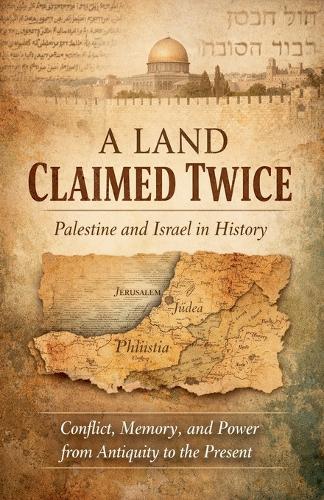
A Land Claimed Twice: Palestine and Israel in History Conflict, Memory, and Power from Antiquity to the Present This book offers a sweeping, deeply researched history of one of the world's most enduring and contested conflicts. From ancient empires to modern nation-states, A Land Claimed Twice traces how Palestine and Israel became bound together by faith, conquest, displacement, nationalism, and competing visions of justice. Rather than beginning in 1948, this history reaches back to antiquity, exploring how successive empires-Assyrian, Persian, Roman, Byzantine, Islamic, Ottoman, and European-shaped the land and its peoples. It examines how sacred narratives, imperial administration, and demographic change laid foundations that would later be mobilized by modern nationalism. By situating the conflict within a long historical arc, the book challenges the idea that today's crisis emerged suddenly or can be understood through a single moment alone. The modern chapters explore the rise of Zionism, the collapse of the Ottoman Empire, British rule, and the catastrophic rupture of 1948 that Palestinians remember as the Nakba and Israelis remember as independence. The book follows the evolution of Israeli statehood and Palestinian dispossession through war, occupation, resistance, diplomacy, and international intervention. Particular attention is given to the lived consequences of political decisions-refugeehood, settlement expansion, military rule, and the fragmentation of Palestinian society. Later chapters examine the wars of 1967 and 1973, the rise of the Palestinian national movement, the First and Second Intifadas, the Oslo process and its collapse, the transformation of Gaza under blockade, and the repeated cycles of violence that defined the early twenty-first century. These events are not treated as isolated episodes but as interconnected outcomes of structural power imbalances, failed diplomacy, and unresolved historical trauma. Throughout, the book foregrounds memory as a political force. Competing narratives of victimhood, survival, and legitimacy are shown to shape policy, identity, and international alignment. Israeli fears rooted in the Holocaust and regional hostility are examined alongside Palestinian experiences of displacement, military occupation, and statelessness. Neither narrative is dismissed; both are critically analyzed. Written in a clear, narrative style grounded in historical scholarship, A Land Claimed Twice avoids slogans and simplifications. It does not seek to assign moral absolutes but to explain how power operates, why peace efforts repeatedly faltered, and how human lives have been shaped by decisions made far beyond their control. This is a book for readers seeking understanding rather than affirmation-students, general history readers, and anyone trying to make sense of a conflict that continues to shape global politics. It argues that peace requires more than negotiations and treaties; it demands historical reckoning, recognition of competing memories, and an honest confrontation with the structures that sustain injustice. History does not end on the final page. It continues-in the streets of Jerusalem, the camps of the diaspora, the walls and borders that divide communities, and the voices of a new generation searching for dignity, security, and belonging. A Land Claimed Twice offers the context needed to understand not only how the conflict began, but why it remains unresolved-and why its future still matters to the world.
Full Product Details
Author: Ivo Vichev
Publisher: Ivo Vichev
Imprint: Ivo Vichev
Dimensions:
Width: 14.00cm
, Height: 1.50cm
, Length: 21.60cm
Weight: 0.336kg
ISBN: 9798233898846
Pages: 288
Publication Date: 21 December 2025
Audience:
General/trade
,
General
Format: Paperback
Publisher's Status: Active
Availability: Available To Order

We have confirmation that this item is in stock with the supplier. It will be ordered in for you and dispatched immediately.
Author Information
I was born in Varna, Bulgaria, on the edge of the Black Sea - a place where history is never really ""past"". Growing up between old empires and new borders, I was surrounded by stories of wars, occupations, disappearances and sudden changes of flag. Later I moved to Warsaw, Poland, where I studied history and public relations at the Polish Academy of Sciences (PAN). Warsaw is a city built on ruins and memories, and it forced me to ask one question over and over again: Why is so much of our most important history told in the most boring way possible? From dry facts to living storiesLike every history student, I spent endless hours buried in heavy academic books - dates, treaties, footnotes stacked on footnotes. I respected the work, but I often felt like the life had been drained out of the events themselves. That changed when I discovered Ryszard Kapuściński. His books had that rare tone I'd been searching for: history and politics told through people, scenes and atmosphere. It was factual, but it breathed. From that moment I knew what I wanted to do: take serious history and tell it with the clarity and tension of a documentary - so future generations don't have to suffer through dead, lifeless books to understand the past. What I write aboutMy books focus on the places where power is most visible - and most hidden: Wars and battles Espionage and cyber conflict Country histories Some books are big, sweeping national histories. Others zoom in on a single battle, uprising or covert operation. All of them try to answer the same question: What really happened here, and what does it mean for the people who had to live through it? How I tell historyIf you read my books, you can expect narrative, scene-by-scene storytelling - not just lists of dates. Serious research from archives, memoirs, official reports and investigative journalism. Clear explanations of complex events like cyberattacks and proxy wars. And a refusal to simplify messy, uncomfortable truths. I don't write official history. I don't write propaganda. I write stories that are honest, human and readable - the kind of books I was always looking for as a student and rarely found. If you care about how we got from trenches and partitions to cyberwar and drone strikes - and you don't want to fall asleep over another textbook - I wrote these books for you.