Overview
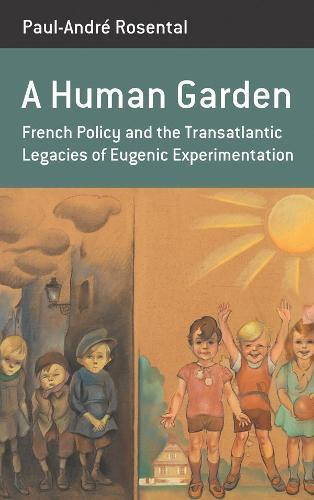
Well into the 1980s, Strasbourg, France, was the site of a curious and little-noted experiment: Ungemach, a garden city dating back to the high days of eugenic experimentation that offered luxury living to couples who were deemed biologically fit and committed to contractual childbearing targets. Supported by public authorities, Ungemach aimed to accelerate human evolution by increasing procreation among eugenically selected parents. In this fascinating history, Paul-André Rosental gives an account of Ungemach’s origins and its perplexing longevity. He casts a troubling light on the influence that eugenics continues to exert—even decades after being discredited as a pseudoscience—in realms as diverse as developmental psychology, postwar policymaking, and liberal-democratic ideals of personal fulfilment.
Full Product Details
Author: Paul-André Rosental
Publisher: Berghahn Books
Imprint: Berghahn Books
Volume: 16
ISBN: 9781789205435
ISBN 10: 1789205433
Pages: 248
Publication Date: 01 December 2019
Audience:
Professional and scholarly
,
Professional & Vocational
,
Postgraduate, Research & Scholarly
Format: Hardback
Publisher's Status: Active
Availability: In Print

This item will be ordered in for you from one of our suppliers. Upon receipt, we will promptly dispatch it out to you. For in store availability, please contact us.
Reviews
“With skills and empathy, Rosental integrates his story into the broader debate about French eugenics during the twentieth century. Within that context, Rosental pushes both conceptual and chronological boundaries…As we continue to debate the legacies of eugenics, this is an important study. It should pave the way for further research into how the obsession with desirable eugenic traits in the population shaped public health, social assistance and welfare policies during the second part of the twentieth century and beyond.” • Cultural and Social History “Paul-André Rosental has recovered each of the threads that led to this remarkable experiment … we discover piece by piece, within the history of Ungemach Gardens, the scientific and moral wellsprings of eugenics.” • Le Monde “[The book’s] wide-ranging and provocative insights ought to fuel real reflection about twentieth-century eugenics’ living legacies. Scholars of housing, municipal planning, social welfare policy, psychology, and demography, both in France and elsewhere, will find much here to ponder.” • Journal of Modern History “A richly detailed micro-history … Rosental manages to give us in considerable detail the local and the national contexts that makes sense of this extraordinary experiment on the one hand, but never to fall into the trap of national exceptionalism in so doing.” • Philippa Levine “Historian Paul-André Rosental has delivered a genuine historical scoop. In beautiful prose, A Human Garden correlates the factual record with intellectual history and shows how eugenics suffused the development of policies for managing and protecting populations.” • L’Obs
Paul-Andre Rosental has recovered each of the threads that led to this remarkable experiment ... we discover piece by piece, within the history of Ungemach Gardens, the scientific and moral wellsprings of eugenics. Le Monde
Author Information
Paul-André Rosental is a professor at Sciences Po in Paris. His research focuses on the field dubbed “biopolitics” by Michel Foucault, where the studies of society, demographics, and health intersect.