Overview
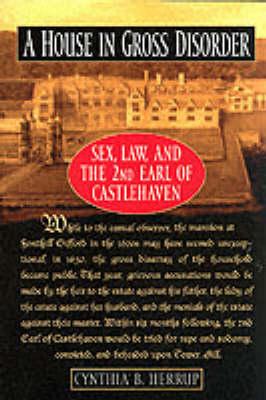
Sex, privilege, corruption, and revenge--these are elements that we expect to find splashed across today's tabloid headlines. But 17th century England saw a sex scandal that brought disgrace to the ruling class and ended with the beheading of an earl. In A House in Gross Disorder, Cynthia Herrup presents a strikingly new interpretation of the case of the 2nd Earl of Castlehaven and of the sexual and social anxieties it cast into such bold relief. Castlehaven was convicted of assisting in the rape of his own wife and of committing sodomy with his servants. But more than that, he stood accused of inverting the natural order of his household by reveling in rather than restraining the intemperate passions of those he was expected to rule and protect. Herrup argues that because an orderly house was considered both an example and endorsement of aristocratic governance, the riotousness presided over by Castlehaven was the most damning evidence against him. Avoiding simple conclusions about guilt or innocence, Herrup focuses instead on the fascinating legal, social and political dynamics of the case and its subsequent retellings. In riveting prose, she reconsiders a scandal that still speaks to contemporary anxieties about sex, good governance, and the role of law in regulating both.
Full Product Details
Author: Cynthia Herrup (Professor of History and Law, Professor of History and Law, Duke University)
Publisher: Oxford University Press Inc
Imprint: Oxford University Press Inc
Edition: New edition
Dimensions:
Width: 21.60cm
, Height: 1.60cm
, Length: 13.90cm
Weight: 0.322kg
ISBN: 9780195139259
ISBN 10: 0195139259
Pages: 232
Publication Date: 29 March 2001
Audience:
General/trade
,
General
Format: Paperback
Publisher's Status: Active
Availability: To order

Stock availability from the supplier is unknown. We will order it for you and ship this item to you once it is received by us.
Reviews
"""Thoughtful, scrupulously researched...A clearheaded and instructive book.""--Jonathan Yardley, Washington Post ""Cynthia Herrup's A House in Gross Disorder makes us rethink most everything we thought we knew about the notorious 1631 'sodomy' trial of Mervin Touchet, the 2nd Earl of Castlehaven. Beautifully written and meticulously crafted, Herrup's study unfolds like a good detective story.""--Jean Howard, Department of English, Columbia University, and Director of the Institute for Research on Women and Gender ""Cynthia Herrup's scrupulous reconstruction of the Castlehaven scandal and its legacy is an utterly fascinating read. But it is also rich in theoretical implications for the history of sexuality. Herrup shows how obscure conflicts within Castlehaven's household embodied virtually all the social and political tensions of the period, and thus how a routine dispute over property and inheritance could quickly escalate into a sensational trial for rape and sodomy. The nature of Castlehaven's transgression, which subsequent retelling of the story have radically simplified, recovers here its tantalizing ambiguity and complexity.""--David M. Halperin, author of One Hundred Years of Homosexuality and Saint Foucalt ""This is an extraordinary tale extraordinarily well told, but told with an ear cocked to the ways in which contemporaries themselves told and retold it. Like the trial itself, Herrup never quite gets to the bottom of 'what really happened,' but en route to that acceptance of indeterminacy the book sets the Castlehaven affair precisely on a number of pressure points and fault lines in the culture and society of early modern England. The result is a book with considerable resonance for anyone interested in the political, legal, social, cultural, or gender history of seventeenth-century England.""--Peter Lake, Department of History, Princeton University ""To this sorry tale of a grossly disordered household, of a weak patriarch, loveless marriages, corrupt and venal servants, is added the betrayal of a son, fearful of losing his inheritance, the irregularities, if not worse, of prejudiced court and irregular trial procedure, of predatory aristocratic relatives, and of Castlehaven's dubious connection with Catholicism and Ireland...It is a cautionary tale on many levels that haunted succeeding generations; its eloquent retelling ought now to haunt ours.""--Paul Seaver, Department of History, Stanford University ""[C]omplex and subtle...the central story of how charges against the earl took shape, the trial itself, and the verdict, is clearly told in lively and elegant prose...[A] general reader will learn much from Herrup about the nature of early modern society and how it functioned...[S]he contributes an important dimension to social history...[T]he text is beautifully written and the argument clearly expounded...Herrup is to be commended for a fine piece of historical scholarship: this book is a great read.""--American Historical Review ""This is proper, grown-up history, analyzing an event with detachment and drawing considered conclusions backed up by exhaustive research.""--Lucy Moore, The Washington Times ""A good choice for legal and academic collections.""--Library Journal ""Herrup...takes us back to Stuart England to explore the legal, social, and political implications of the Castlehaven trial. Castlehaven's household was a paragon of family dysfunction. The earl favored his male servants over his own son, encouraged one servant to rape his wife, and engaged in sodomy with the household staff. Herrup theorizes that the case against Castlehaven went far beyond these shocking allegations, tapping into deep-seated cultural anxieties about power and hierarchy.""--Kirkus Reviews ""In 1631, the 2d Earl of Castlehaven was decapitated for having sex with a male servant and participating in the rape of his own wife. The accusations, depositions and trial that brought the earl to the headsman's block form the basis of Cynthia Herrup's engrossing study of social values in 17th century England.""--National Law Journal ""The book succeeds admirably both in conveying an interesting criminal case and analyzing the broader societal patterns that it revealed.""--Journal of Interdisciplinary History"
<br> Thoughtful, scrupulously researched.... A clearheaded and instructive book. --Jonathan Yardley, Washington Post<p><br> Cynthia Herrup's A House in Gross Disorder makes us rethink most everything we thought we knew about the notorious 1631 sodomy' trial of Mervin Touchet, the 2nd Earl of Castlehaven. Beautifully written and meticulously crafted, Herrup's study unfolds like a good detective story. --Jean Howard, Department of English, Columbia University, and Director of the Institute for Research on Women and Gender<p><br> Cynthia Herrup's scrupulous reconstruction of the Castlehaven scandal and its legacy is an utterly fascinating read. But it is also rich in theoretical implications for the history of sexuality. Herrup shows how obscure conflicts within Castlehaven's household embodied virtually all the social and political tensions of the period, and thus how a routine dispute over property and inheritance could quickly escalate into a sensational trial for rape and sodomy. The nature of Castlehaven's transgression, which subsequent retelling of the story have radically simplified, recovers here its tantalizing ambiguity and complexity. --David M. Halperin, author of One Hundred Years of Homosexuality and Saint Foucalt<p><br> This is an extraordinary tale extraordinarily well told, but told with an ear cocked to the ways in which contemporaries themselves told and retold it. Like the trial itself, Herrup never quite gets to the bottom of what really happened, ' but en route to that acceptance of indeterminacy the book sets the Castlehaven affair precisely on a number of pressure points and fault lines in the culture and society of early modern England. The result is a book with considerable resonance for anyone interested in the political, legal, social, cultural, or gender history of seventeenth-century England. --Peter Lake, Department of History, Princeton University<p><br> To this sorry tale of a grossly disordered household, of a weak patriarch, loveless
Thoughtful, scrupulously researched...A clearheaded and instructive book. --Jonathan Yardley, Washington Post Cynthia Herrup's A House in Gross Disorder makes us rethink most everything we thought we knew about the notorious 1631 'sodomy' trial of Mervin Touchet, the 2nd Earl of Castlehaven. Beautifully written and meticulously crafted, Herrup's study unfolds like a good detective story. --Jean Howard, Department of English, Columbia University, and Director of the Institute for Research on Women and Gender Cynthia Herrup's scrupulous reconstruction of the Castlehaven scandal and its legacy is an utterly fascinating read. But it is also rich in theoretical implications for the history of sexuality. Herrup shows how obscure conflicts within Castlehaven's household embodied virtually all the social and political tensions of the period, and thus how a routine dispute over property and inheritance could quickly escalate into a sensational trial for rape and sodomy. The nature of Castlehaven's transgression, which subsequent retelling of the story have radically simplified, recovers here its tantalizing ambiguity and complexity. --David M. Halperin, author of One Hundred Years of Homosexuality and Saint Foucalt This is an extraordinary tale extraordinarily well told, but told with an ear cocked to the ways in which contemporaries themselves told and retold it. Like the trial itself, Herrup never quite gets to the bottom of 'what really happened,' but en route to that acceptance of indeterminacy the book sets the Castlehaven affair precisely on a number of pressure points and fault lines in the culture and society of early modern England. The result is a book with considerable resonance for anyone interested in the political, legal, social, cultural, or gender history of seventeenth-century England. --Peter Lake, Department of History, Princeton University To this sorry tale of a grossly disordered household, of a weak patriarch, loveless marriages, corrupt and venal servants, is added the betrayal of a son, fearful of losing his inheritance, the irregularities, if not worse, of prejudiced court and irregular trial procedure, of predatory aristocratic relatives, and of Castlehaven's dubious connection with Catholicism and Ireland...It is a cautionary tale on many levels that haunted succeeding generations; its eloquent retelling ought now to haunt ours. --Paul Seaver, Department of History, Stanford University [C]omplex and subtle...the central story of how charges against the earl took shape, the trial itself, and the verdict, is clearly told in lively and elegant prose...[A] general reader will learn much from Herrup about the nature of early modern society and how it functioned...[S]he contributes an important dimension to social history...[T]he text is beautifully written and the argument clearly expounded...Herrup is to be commended for a fine piece of historical scholarship: this book is a great read. --American Historical Review This is proper, grown-up history, analyzing an event with detachment and drawing considered conclusions backed up by exhaustive research. --Lucy Moore, The Washington Times A good choice for legal and academic collections. --Library Journal Herrup...takes us back to Stuart England to explore the legal, social, and political implications of the Castlehaven trial. Castlehaven's household was a paragon of family dysfunction. The earl favored his male servants over his own son, encouraged one servant to rape his wife, and engaged in sodomy with the household staff. Herrup theorizes that the case against Castlehaven went far beyond these shocking allegations, tapping into deep-seated cultural anxieties about power and hierarchy. --Kirkus Reviews In 1631, the 2d Earl of Castlehaven was decapitated for having sex with a male servant and participating in the rape of his own wife. The accusations, depositions and trial that brought the earl to the headsman's block form the basis of Cynthia Herrup's engrossing study of social values in 17th century England. --National Law Journal The book succeeds admirably both in conveying an interesting criminal case and analyzing the broader societal patterns that it revealed. --Journal of Interdisciplinary History
Thoughtful, scrupulously researched.... A clearheaded and instructive book. --Jonathan Yardley, Washington Post<br> Cynthia Herrup's A House in Gross Disorder makes us rethink most everything we thought we knew about the notorious 1631 sodomy' trial of Mervin Touchet, the 2nd Earl of Castlehaven. Beautifully written and meticulously crafted, Herrup's study unfolds like a good detective story. --Jean Howard, Department of English, Columbia University, and Director of the Institute for Research on Women and Gender<br> Cynthia Herrup's scrupulous reconstruction of the Castlehaven scandal and its legacy is an utterly fascinating read. But it is also rich in theoretical implications for the history of sexuality. Herrup shows how obscure conflicts within Castlehaven's household embodied virtually all the social and political tensions of the period, and thus how a routine dispute over property and inheritance could quickly escalate into a sensational trial for rape and sodomy. The nature of Castlehaven's transgression, which subsequent retelling of the story have radically simplified, recovers here its tantalizing ambiguity and complexity. --David M. Halperin, author of One Hundred Years of Homosexuality and Saint Foucalt<br> This is an extraordinary tale extraordinarily well told, but told with an ear cocked to the ways in which contemporaries themselves told and retold it. Like the trial itself, Herrup never quite gets to the bottom of what really happened, ' but en route to that acceptance of indeterminacy the book sets the Castlehaven affair precisely on a number of pressure points and fault lines in the culture and society of early modern England. The result is a book withconsiderable resonance for anyone interested in the political, legal, social, cultural, or gender history of seventeenth-century England. --Peter Lake, Department of History, Princeton University<br> To this sorry tale of a grossly disordered household, of a weak patriarch, loveless marriages, corrupt and venal servants, is added the betrayal of a son, fearful of losing his inheritance, the irregularities, if not worse, of prejudiced court and irregular trial procedure, of predatory aristocratic relatives, and of Castlehaven's dubious connection with Catholicism and Ireland.... It is a cautionary tale on many levels that haunted succeeding generations; its eloquent retelling ought now to haunt ours. --Paul Seaver, Department of History, Stanford University<br>
Thoughtful, scrupulously researched.... A clearheaded and instructive book. --Jonathan Yardley, Washington Post Cynthia Herrup's A House in Gross Disorder makes us rethink most everything we thought we knew about the notorious 1631 sodomy' trial of Mervin Touchet, the 2nd Earl of Castlehaven. Beautifully written and meticulously crafted, Herrup's study unfolds like a good detective story. --Jean Howard, Department of English, Columbia University, and Director of the Institute for Research on Women and Gender Cynthia Herrup's scrupulous reconstruction of the Castlehaven scandal and its legacy is an utterly fascinating read. But it is also rich in theoretical implications for the history of sexuality. Herrup shows how obscure conflicts within Castlehaven's household embodied virtually all the social and political tensions of the period, and thus how a routine dispute over property and inheritance could quickly escalate into a sensational trial for rape and sodomy. The nature of Castlehaven's transgression, which subsequent retelling of the story have radically simplified, recovers here its tantalizing ambiguity and complexity. --David M. Halperin, author of One Hundred Years of Homosexuality and Saint Foucalt This is an extraordinary tale extraordinarily well told, but told with an ear cocked to the ways in which contemporaries themselves told and retold it. Like the trial itself, Herrup never quite gets to the bottom of what really happened, ' but en route to that acceptance of indeterminacy the book sets the Castlehaven affair precisely on a number of pressure points and fault lines in the culture and society of early modern England. The result is a book with considerable resonance for anyone interested in the political, legal, social, cultural, or gender history of seventeenth-century England. --Peter Lake, Department of History, Princeton University To this sorry tale of a grossly disordered household, of a weak patriarch, loveless
Author Information
Cynthia Herrup is Professor of History and Law, Duke University. She is the former editor of the Journal of British Studies and the author of The Common Peace: Participation and the Criminal Law in 17th Century England. She lives in Durham, North Carolina.