Overview
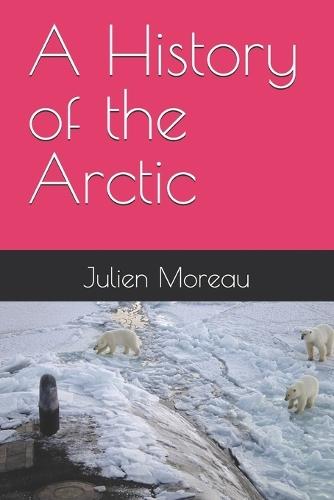
A History of the Arctic offers a sweeping narrative of the Earth's most misunderstood frontier, tracing its transformation from a lush Eocene rainforest to the frozen landscape of the modern era. The journey begins with the geological forging of the North and the arrival of the first human hunters across the Bering Land Bridge. It explores the incredible ingenuity of Paleo-Eskimo cultures and the great expansion of the Thule people, the direct ancestors of the modern Inuit. By detailing the sophisticated indigenous knowledge systems-Inuit Qaujimajatuqangit-the book reveals how human societies flourished in an environment often viewed by outsiders as a desolate wasteland. The narrative shifts to the era of European contact and the obsessive search for the fabled Northwest and Northeast Passages. Readers are taken aboard the fragile vessels of explorers like Henry Hudson and Willem Barentsz, navigating a world of maritime myths, magnetic mountains, and ""sea monsters."" This age of discovery eventually gives way to the brutal commercialization of the North, as whalers and fur traders tethered the remote wilderness to global markets. The book chronicles the high-stakes drama of the Victorian era, including the tragic disappearance of the Franklin expedition and the controversial, ego-driven race to be the first to stand at the North Pole. In the twentieth century, the Arctic transformed from a theater of adventure into a strategic chessboard of global significance. The text examines the region's role as a critical frontline during the Cold War, marked by the construction of the Distant Early Warning (DEW) Line and the silent patrol of nuclear submarines beneath the ice. This period of militarization paradoxically gave birth to a new age of systematic inquiry, as international scientific cooperation began to unlock the secrets of the polar atmosphere and the deep ocean basin, laying the groundwork for modern climate science. The book also provides a vital account of the political awakening of the Arctic's Indigenous peoples. It documents the hard-won struggle for land claims and self-determination, from the creation of the Nunavut territory in Canada to Home Rule in Greenland and the establishment of Saami Parliaments in Scandinavia. This rise of Indigenous governance is presented alongside the birth of the Arctic Council, a unique forum that sought to foster a ""zone of peace"" and cooperation among polar nations following the collapse of the Soviet Union. The final chapters confront the ""Great Unfreezing""-the rapid onset of climate change that is currently remaking the North. As the sea ice retreats, the book explores the emergence of a new blue-water ocean, the opening of competitive shipping lanes, and a renewed rush for ""black gold"" and diamonds. By positioning the Arctic as a global bellwether, the narrative illustrates how the thawing permafrost and melting ice sheets are no longer remote issues, but are instead inextricably linked to the future of the entire planet's climate, economy, and geopolitical stability.
Full Product Details
Author: Julien Moreau
Publisher: Independently Published
Imprint: Independently Published
Dimensions:
Width: 15.20cm
, Height: 1.00cm
, Length: 22.90cm
Weight: 0.259kg
ISBN: 9798258027979
Pages: 188
Publication Date: 19 April 2026
Audience:
General/trade
,
General
Format: Paperback
Publisher's Status: Active
Availability: Available To Order

We have confirmation that this item is in stock with the supplier. It will be ordered in for you and dispatched immediately.