Overview
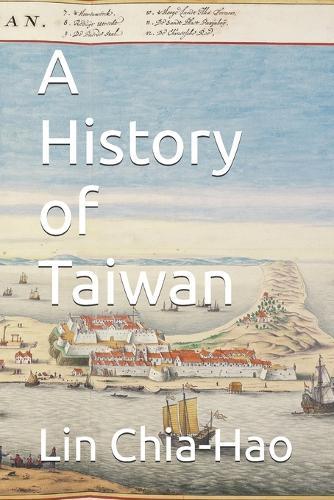
From a prehistoric homeland for seafaring Austronesian peoples to a flashpoint in modern geopolitics, the island of Taiwan holds a history of remarkable depth and complexity. Once sighted by Portuguese sailors and named Ilha Formosa, the ""Beautiful Island,"" its strategic location ensured it would not remain isolated. This comprehensive history chronicles the island's layered past, beginning with its indigenous cultures and the first European encounters. It details the arrival of the Dutch and Spanish, the establishment of the Ming-loyalist Kingdom of Tungning by Koxinga, and the two centuries of Qing Dynasty rule that transformed Taiwan into a volatile frontier society, forging a unique identity in the crucible of migration and resistance. The narrative follows Taiwan through its dramatic turn at the end of the 19th century when it was ceded to Japan. The book explores the fifty years of Japanese colonial rule, a period of profound transformation that brought rapid modernization in infrastructure and public health at the cost of a strict assimilation policy. This era, however, inadvertently nurtured a shared Taiwanese consciousness distinct from both Japan and mainland China. The story then pivots to the tumultuous aftermath of World War II, detailing the arrival of the Kuomintang (KMT), the deep societal wound of the 228 Incident, and the subsequent decades of martial law known as the ""White Terror,"" a period of harsh political suppression. Against the backdrop of Cold War politics, this history recounts Taiwan's stunning economic transformation. It examines the successful land reforms and the export-oriented policies that fueled the ""Taiwan Miracle,"" turning a poor agricultural island into an industrial powerhouse and a critical node in the global high-tech economy. While the economy liberalized, the authoritarian KMT state remained, creating a profound contradiction between a modern, prosperous society and an archaic political system, setting the stage for a dramatic struggle for freedom. The final chapters trace Taiwan's inspiring and peaceful transition to democracy. From the rise of the ""Dangwai"" opposition and the galvanizing Kaohsiung Incident to the lifting of martial law and the sweeping constitutional reforms of the Lee Teng-hui era, the book charts the island's journey to becoming a vibrant, multi-party democracy. This culminated in the first peaceful transfer of power in 2000 and the flourishing of a confident, progressive society. The narrative concludes by examining contemporary Taiwan as it stands today: a beacon of liberalism, a linchpin of the world's semiconductor supply chain, and a nation navigating the immense challenges of its relationship with China and its pivotal role in the 21st-century Indo-Pacific.
Full Product Details
Author: Lin Chia-Hao
Publisher: Independently Published
Imprint: Independently Published
Dimensions:
Width: 15.20cm
, Height: 0.80cm
, Length: 22.90cm
Weight: 0.209kg
ISBN: 9798270937379
Pages: 148
Publication Date: 21 October 2025
Audience:
General/trade
,
General
Format: Paperback
Publisher's Status: Active
Availability: Available To Order

We have confirmation that this item is in stock with the supplier. It will be ordered in for you and dispatched immediately.