|
|
|||
|
||||
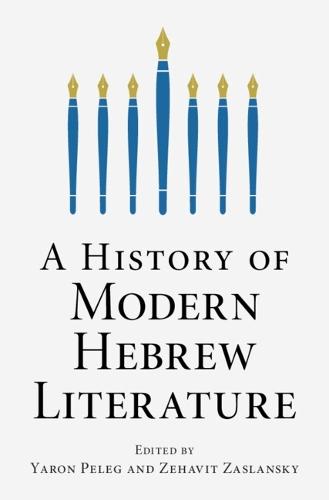
OverviewThis book is a new and comprehensive history of modern Hebrew literature that revitalizes older histories while integrating contemporary theories on literature, culture, identity, and canon formation. The collection aims to deterritorialize this history by emphasizing the broad geographic spread of Hebrew literary activity, encompassing developments before and beyond the State of Israel. By expanding the scope of representation, this updated history provides a platform for a more diverse array of contributors and highlights previously understudied communities and works. This approach allows for a richer understanding of modern Hebrew literature, recognizing its global contexts and the varied voices that have shaped its evolution. Full Product DetailsAuthor: Yaron Peleg (University of Cambridge) , Zehavit Zaslansky (University of Cambridge)Publisher: Cambridge University Press Imprint: Cambridge University Press Weight: 0.500kg ISBN: 9781009667395ISBN 10: 1009667394 Pages: 470 Publication Date: 22 January 2026 Audience: College/higher education , Postgraduate, Research & Scholarly Format: Hardback Publisher's Status: Forthcoming Availability: Not yet available, will be POD This item is yet to be released. You can pre-order this item and we will dispatch it to you upon it's release. This is a print on demand item which is still yet to be released. Table of ContentsIntroduction Zehavit Zaslansky and Yaron Peleg; 1. The Hebrew canon: twenty first century reflections Eran Kaplan; Part I. Early Hebrew Modernisms: 2. Historiographical montage: Hasidic popular literature and the making of Jewish modernity Chen Mandel-Edrei; 3. Genre and the emergence of Hebrew modernism in the nineteenth century Lilah Netanel; 4. Maskilic Hebrew as a modern literary idiom: colloquial dialogues and lexical innovations Lily Kahn and Sonya Yampolskaya; 5. The role of non-literary genres in the consolidation of modern Hebrew literary realism Svetlana Natkovich; 6. Bilingual writing, counterfactuals and the self-translational mode of modern Hebrew literature, Yaakov Herskovitz; 7. City of darkness: the New York literary scene in the works of Simon Halkin and Abraham Zvi Halevy Shachar Levanon; 8. Global Haskalah: translation and the making of Jewish literary modernity Lital Levy; Part II. Territorial Dimensions: 9. The crisis and tragedy of Hebrew literary criticism Shai Ginsburg; 10. O My Land, My Homeland: Hebrew poetry encounters the land of Israel Avner Holtzman; 11. Zelda's Shabbat, a materialist reading Yoavl Ronel and Tafat Hacohen-Bick; 12. The in-betweens of Mizrahi literature Almog Behar; 13. Sami Michael and Israeli literature: the social novels of Sami Michael Yigal Schwartz; 14. Tel Aviv East: a tale of Mizrahi geography and resistance Yuval Evri; 15. Disruptive daughters: Orly Castel-Bloom, Ronit Matalon, and the Zionist master- narrative Nancy Berg; 16. Marginal space and blurring boundaries: the birth of an Arab-Jewish bilingual literary journal Xinyi Chen; Part III. Hebrew in the 'Post' Era: 17. An Ashkenazi school of Hebrew literature Yaron Peleg; 18. The people's camp: Palestinian Marxism and the magazine in Mizrahi fiction Chana Morgenstern; 19. Ramy Ditzanny and Hebrew poetry of the 1980s: historiography, nationalism, and global capitalism Hamutal Tsamir; 20. Why does Hebrew literature need the goy? The motif of the non-Jewish Other in contemporary Hebrew literature Yagoda Budzik; 21. From internetica to mediatization: literary practices and their meanings in the digital age Noa Shakargy.ReviewsAuthor InformationYaron Peleg is Kennedy-Leigh Professor in Modern Hebrew Studies, University of Cambridge. He is the Editor-in-Chief of the Journal of Modern Jewish Studies. Zehavit Zaslansky has a Ph.D. in modern Hebrew literature from the University of Cambridge. Tab Content 6Author Website:Countries AvailableAll regions |
||||