Overview
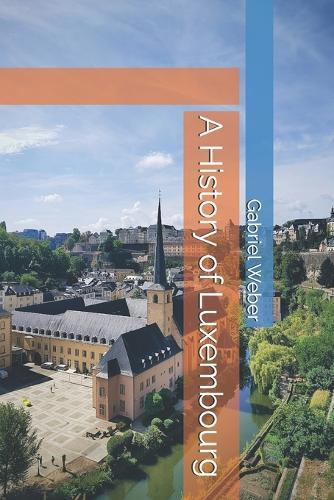
Discover the improbable story of a nation that survived for a thousand years at the heart of Europe's conflicts. From its humble origins in 963 as a small castle on a rocky outcrop known as Lucilinburhuc, Luxembourg grew into one of the most formidable fortresses on the continent. This strategic importance made it a coveted prize, passed between a succession of European powers including the Burgundians, Habsburgs, and French Bourbons. This comprehensive history chronicles the long struggle for survival that forged a unique national identity and gave birth to the nation's defiant motto, Mir wëlle bleiwe wat mir sinn (""We want to remain what we are""). It is a tale of how a territory, long defined by its military significance as the ""Gibraltar of the North,"" was forced to constantly adapt to survive. This narrative traces the birth of the modern Grand Duchy, from its creation at the Congress of Vienna in 1815 to the painful partition of 1839 that gave the country its modern borders and sparked a distinct cultural identity. Explore the pivotal moment in 1867 when the great fortress walls were ordered to be dismantled, stripping the country of its military purpose and forcing it to embark on the first of several radical reinventions. Delve into the age of iron and steel, when the discovery of ore in the nation's ""Red Lands"" transformed a poor, agrarian society into an industrial powerhouse, driven by the might of the steel giant ARBED and fueled by waves of Italian and Portuguese immigrants who would forever change the country's social fabric. Witness Luxembourg's journey through the crucibles of the twentieth century. This book details the country's trials during two German occupations, particularly the brutal Nazi annexation from 1940 to 1945, where acts of mass defiance and the steadfast broadcasts of the exiled Grand Duchess Charlotte solidified the national will to resist. Learn why, after emerging from the devastation of the Second World War, Luxembourg abandoned its long-held neutrality to become a passionate and pioneering advocate for European integration. The former fortress became a capital of the new Europe, hosting key institutions and giving the name of a small wine-making village, Schengen, to the revolutionary concept of a border-free continent. The story culminates in Luxembourg's stunning modern transformation. Faced with a devastating steel crisis in the 1970s, the nation pivoted with astonishing success to become one of the world's leading centers for banking, finance, and investment funds. This economic miracle was followed by audacious ventures into new frontiers, from establishing a global satellite communications leader to pioneering the legal framework for mining resources in outer space. The book explores the consequences of this immense prosperity: a hyper-diverse, multilingual society where nearly half the residents are foreign nationals, grappling with the twenty-first-century challenges of globalization, from the Eurozone debt crisis to the COVID-19 pandemic.
Full Product Details
Author: Gabriel Weber
Publisher: Independently Published
Imprint: Independently Published
Dimensions:
Width: 15.20cm
, Height: 0.80cm
, Length: 22.90cm
Weight: 0.213kg
ISBN: 9798271798023
Pages: 154
Publication Date: 27 October 2025
Audience:
General/trade
,
General
Format: Paperback
Publisher's Status: Active
Availability: Available To Order

We have confirmation that this item is in stock with the supplier. It will be ordered in for you and dispatched immediately.