Overview
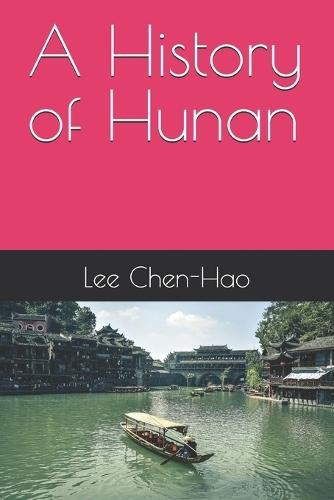
*A History of Hunan* offers a comprehensive exploration of one of China's most consequential inland provinces, a region known as the ""land of fish and rice"" that has served as a pivotal laboratory for the ideas and armies that shaped the modern nation. Tucked away in the south-central heartland and ringed by mountains, Hunan fostered a populace renowned for its fierce independence and revolutionary spirit. From the ancient, mystical Kingdom of Chu to the birthplace of Mao Zedong, this book traces the province's journey from a prehistoric frontier to a contemporary industrial powerhouse. The narrative begins with the deep roots of Hunanese civilization, highlighting the world's earliest cultivated rice and the sophisticated bronze and silk cultures of the Han dynasty, famously preserved in the Mawangdui tombs. As the centuries progressed, Hunan transformed into the ""rice bowl"" of the Chinese Empire during the Tang and Song dynasties, while also emerging as a center for Neo-Confucian thought at the renowned Yuelu Academy. This period of cultural and economic flourishing laid the groundwork for a province that would eventually balance tradition with radical intellectual shifts. The book provides a detailed account of Hunan's central role in the existential crises of the 19th century. It examines the devastating Taiping Rebellion and the rise of the Hunanese scholar-general Zeng Guofan, whose personal ""Xiang Army"" saved the Qing dynasty but inadvertently set the stage for regional militarism. The subsequent chapters navigate the chaos of the Warlord Era and the birth of the Republic, illustrating how the province's social misery and political instability created a vacuum filled by the burgeoning Communist movement and the early organizing efforts of a young Mao Zedong. Hunan's 20th-century experience is portrayed as a microcosm of the broader Chinese struggle, covering the heroic defense of Changsha against Japanese invasion and the subsequent victory of the People's Liberation Army. The text does not shy away from the tumultuous years of the People's Republic, detailing the radical social engineering of the Great Leap Forward and the Cultural Revolution. Through these chapters, the book reveals the resilience of a people who weathered both man-made catastrophes and the violent shifts of ideological campaigns. In its final sections, the book chronicles Hunan's stunning transformation during the Era of Reform and Opening Up. From the agricultural breakthroughs of ""Father of Hybrid Rice"" Yuan Longping to the rise of global industrial giants like Sany and Zoomlion, the narrative captures a province in a state of high-speed modernization. Today, as Hunan navigates the challenges of environmental sustainability and high-tech innovation, it remains a vital crossroads of commerce and culture-a province that continues to bridge its stubborn, proud past with an ambitious, global future.
Full Product Details
Author: Lee Chen-Hao
Publisher: Independently Published
Imprint: Independently Published
Dimensions:
Width: 15.20cm
, Height: 0.80cm
, Length: 22.90cm
Weight: 0.213kg
ISBN: 9798195533281
Pages: 152
Publication Date: 04 May 2026
Audience:
General/trade
,
General
Format: Paperback
Publisher's Status: Active
Availability: Available To Order

We have confirmation that this item is in stock with the supplier. It will be ordered in for you and dispatched immediately.