Overview
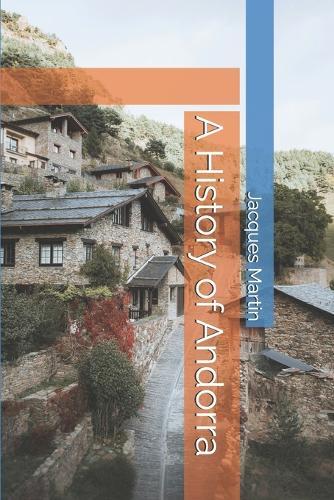
Nestled high in the Pyrenees between France and Spain, the Principality of Andorra is a nation whose very existence is a historical marvel. This book tells the story of this unlikely survivor, tracing its path from a remote mountain frontier to a modern European state. The narrative begins in the deep past, exploring the valleys' geological origins, their first inhabitants, and their brief mention in the annals of Hannibal's war with Rome. It delves into the foundational myth of Charlemagne and the crucible of the early Middle Ages, where conflicts between local counts and bishops culminated in the Paréages of 1278 and 1288. These ingenious medieval treaties established the world's only co-principality, a unique system of dual lordship under a French count and a Spanish bishop that would secure Andorra's independence for over 700 years. The history then chronicles the remarkable resilience of Andorran society under this shared sovereignty. Readers will discover the creation of the Consell de la Terra (Council of the Land) in 1419, one of Europe's oldest parliaments, which enabled a robust tradition of self-governance. The book paints a vivid picture of life in the valleys through the centuries, an existence dictated by the rhythms of a pastoral economy based on sheep, iron forges, and the vital trade conducted by muleteers over treacherous mountain passes. It details how Andorra skillfully navigated the great power struggles of Europe, maintaining a delicate neutrality through the wars between the Habsburgs and Bourbons, the upheaval of the French Revolution, and the turmoil of Spain's Carlist Wars, which turned the region into a haven for refugees and smugglers. The narrative accelerates into the 20th century, a period of dramatic and often convulsive change. The book recounts Andorra's first steps out of centuries of isolation with the construction of its first roads, the arrival of hydro-electric power, and the political awakening of the 1933 crisis that led to universal male suffrage. It provides a gripping account of the nation's perilous journey between two fires, maintaining its neutrality during the Spanish Civil War and serving as a crucial escape route for downed Allied airmen and refugees fleeing the Holocaust during World War II. This era of hardship set the stage for an unprecedented post-war transformation that would change the face of the nation forever. In its final section, the book charts the ""Andorran Miracle,"" the explosive post-war boom that turned one of Europe's poorest countries into one of its most prosperous. Fueled by the rise of a massive duty-free shopping industry and a burgeoning ski tourism sector, and underpinned by a discreet banking system built on fiscal advantages, Andorra underwent a dizzying period of growth. This prosperity, however, brought new challenges, leading to the landmark decision to adopt a written constitution in 1993, which transformed the ancient co-principality into a sovereign parliamentary democracy and allowed it to take its seat at the United Nations. The story concludes by examining the Andorra of the 21st century as it navigates the complex challenges of a globalized world-from the end of banking secrecy and the shock of the 2015 financial crisis to the resilience shown during the COVID-19 pandemic, and its ongoing quest to diversify its economy and define its future relationship with the European Union.
Full Product Details
Author: Jacques Martin
Publisher: Independently Published
Imprint: Independently Published
Dimensions:
Width: 15.20cm
, Height: 0.80cm
, Length: 22.90cm
Weight: 0.209kg
ISBN: 9798271843129
Pages: 150
Publication Date: 27 October 2025
Audience:
General/trade
,
General
Format: Paperback
Publisher's Status: Active
Availability: Available To Order

We have confirmation that this item is in stock with the supplier. It will be ordered in for you and dispatched immediately.